
Blue Marlin
Makaira nigricans
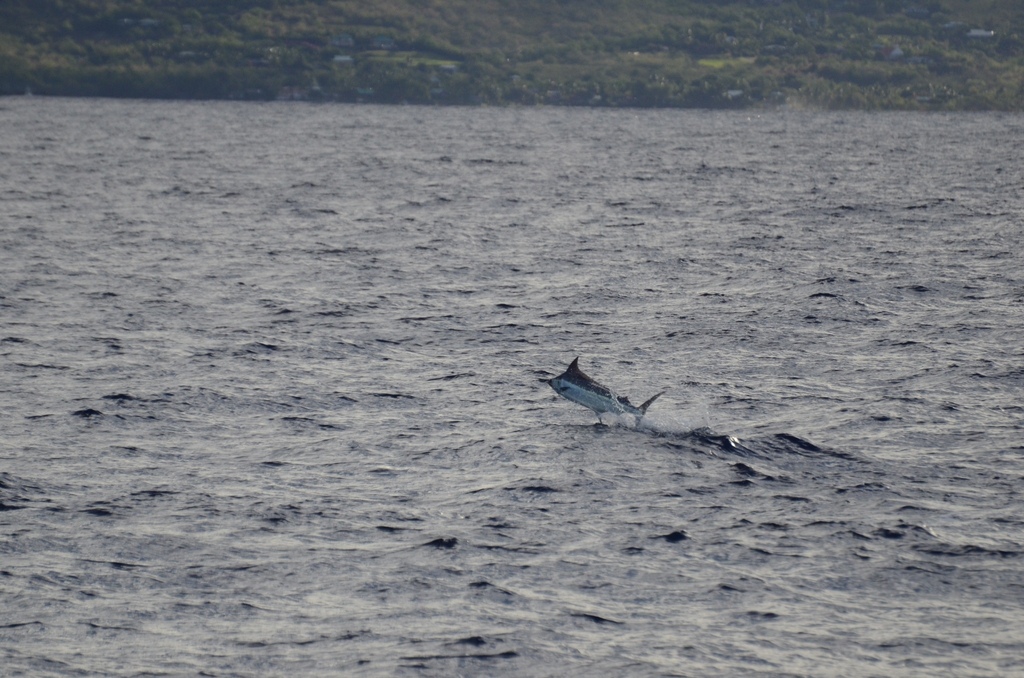
The Atlantic blue marlin (Makaira nigricans) is a species of marlin endemic to the Atlantic Ocean.
- Kingdom
- Animalia
- Phylum
- Chordata
- Order
- Perciformes
- Family
- Istiophoridae
- Genus
- Makaira
- Species
- Makaira nigricans
Description
The Atlantic blue marlin (Makaira nigricans) is a species of marlin endemic to the Atlantic Ocean. It is closely related to, and usually considered conspecific with, the Indo-Pacific blue marlin, then simply called blue marlin. Some authorities consider both species distinct. Blue marlin are distributed throughout the tropical and subtropical waters of the Atlantic Ocean. It is a bluewater fish that spends the majority of its life in the open sea far from land. The blue marlin preys on a wide variety of marine organisms, mostly near the surface, often using its bill to stun or injure its prey then returning to eat the injured or stunned fish. Females can grow up to four times the weight of males. The maximum published weight is 818 kg (1,803 lb) and length 5 m (16.4 ft). Greater lengths have been claimed unofficially. Estimates of the maximum swimming speed of the blue marlin commonly go as high as 72 km/h, though the casual swimming speed at which it moves most of the time is under 4.5 km/h. They are sought after as a highly prized game fish by anglers and are taken by commercial fishermen, both as a directed catch and as bycatch in major industrial tuna fisheries. Blue marlin are currently considered a threatened species by the IUCN due to overfishing, particularly in the international waters off the coast of Portugal where they migrate to breed in the June/July months. Some other historic English names for the blue marlin are Cuban black marlin, ocean gar, and ocean guard. The relatively high fat content of its meat makes it commercially valuable in certain markets. It is the national fish of the Commonwealth of The Bahamas and is featured on its coat of arms.
En aquarium
Espèce d'eau de mer évoluant plutôt en pleine eau. Paramètres d'eau relevés dans son milieu : température de 22 à 31 °C. Sur le plan biologique, elle atteint jusqu'à 500 cm, vit jusqu'à 20 ans, son régime est piscivore.
Paramètres relevés dans le milieu naturel de l’espèce (données scientifiques FishBase). À adapter aux besoins précis de l’espèce en captivité.
Ajouter des photos
Partagez vos photos de cette espèce (jusqu'à 20 à la fois) : elles sont vérifiées automatiquement, puis publiées.
Répartition
Occurrences observées (données GBIF). Les zones hors aire d'origine peuvent indiquer une présence introduite ou invasive.
Sources et crédits
Informations provenant de plusieurs sources vérifiées. Dernière mise à jour : .
Crédits photos (1)
- Photo : Bill Fintel (@bill6711) · CC BY-NC 4.0 · via iNaturalist
Mentions de licence
Texte disponible sous licence CC BY-SA 4.0. Il adapte notamment Wikipedia (CC BY-SA) : Atlantic blue marlin (Wikipédia, auteurs dans l’historique de l’article).
- Taxonomie : GBIF Backbone Taxonomy (CC BY 4.0)
- Carte : occurrences GBIF, fond © contributeurs OpenStreetMap (ODbL)
- Statut de conservation : Liste rouge de l'UICN, via Wikidata (CC0)
- Paramètres d'aquarium : FishBase (faits reformulés)
Détail : Sources et licences.
Discussion (0)
Aucun message pour l’instant. Lancez la discussion sur cette fiche (sources, précisions, débats éditoriaux).
Connectez-vous pour participer à la discussion.