
Murray Cod
Maccullochella peelii
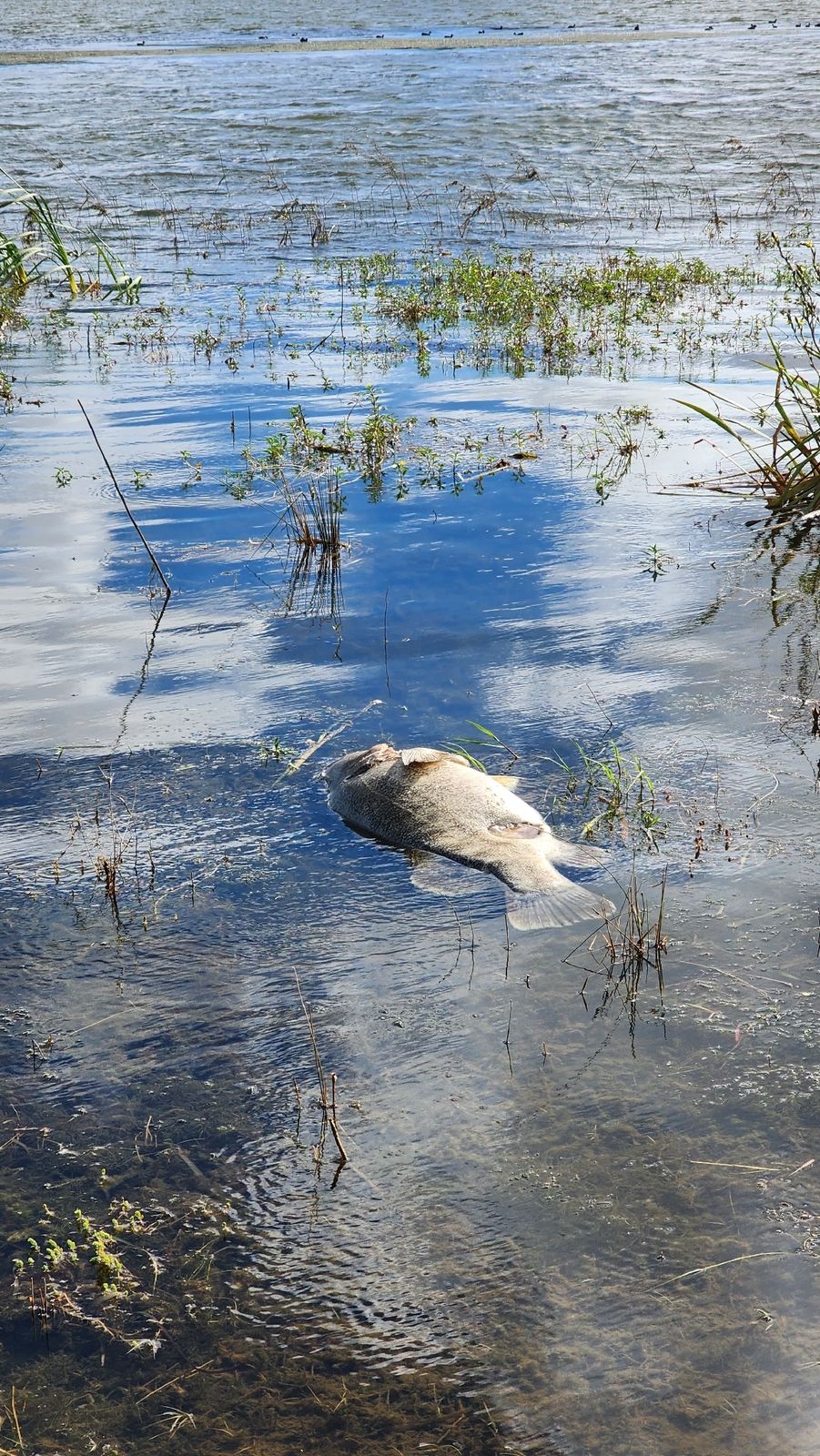
The Murray cod (Maccullochella peelii) is a large Australian predatory freshwater fish of the genus Maccullochella in the family Percichthyidae.
- Kingdom
- Animalia
- Phylum
- Chordata
- Order
- Perciformes
- Family
- Percichthyidae
- Genus
- Maccullochella
- Species
- Maccullochella peelii
Description
The Murray cod (Maccullochella peelii) is a large Australian predatory freshwater fish of the genus Maccullochella in the family Percichthyidae. Although the species is called a cod in the vernacular, it is not related to the Northern Hemisphere marine cod (Gadus) species. The Murray cod is an important part of Australia's vertebrate wildlife-as an apex predator in the Murray-Darling River system-and also significant in Australia's human culture. The Murray cod is the largest exclusively freshwater fish in Australia, and one of the largest in the world. Other common names for Murray cod include cod, greenfish, goodoo, Mary River cod, Murray perch, ponde, pondi and Queensland freshwater cod. The scientific name of Murray cod derives from an early Australian fish researcher Allan Riverstone McCulloch and the river from which the explorer Major Mitchell first scientifically described the species, the Peel River. This was for a number of years changed to M. peelii peelii to differentiate Murray cod from Mary River cod, which were designated as a subspecies of Murray cod. However, as of 2010, Mary River cod have been raised to full species status (M. mariensis), thus Murray cod have reverted simply to M. peelii. Murray cod populations have declined severely since European colonisation of Australia due to a number of causes, including severe overfishing, river regulation, and habitat degradation and are now a listed threatened species. However, they once inhabited almost the entire Murray-Darling basin, Australia's largest river system, in very great numbers. A long-lived fish, adult Murray cod are carnivorous and eat crustaceans (shrimp, yabbies, crays), fish and freshwater mussels. The species exhibits a high degree of parental care for their eggs, which are spawned in the spring and are generally laid in hollow logs or on other hard surfaces. Murray cod are a popular angling target and aquaculture species. Often available through the aquarium trade, they are also a popular aquarium species in Australia.
En aquarium
Espèce d'eau douce évoluant plutôt près du fond. Sur le plan biologique, elle atteint jusqu'à 180 cm, vit jusqu'à 48 ans, son régime est piscivore.
Paramètres relevés dans le milieu naturel de l’espèce (données scientifiques FishBase). À adapter aux besoins précis de l’espèce en captivité.
Gallery
Ajouter des photos
Partagez vos photos de cette espèce (jusqu'à 20 à la fois) : elles sont vérifiées automatiquement, puis publiées.
Répartition
Occurrences observées (données GBIF). Les zones hors aire d'origine peuvent indiquer une présence introduite ou invasive.
Sources et crédits
Informations provenant de plusieurs sources vérifiées. Dernière mise à jour : .
Crédits photos (10)
- Photo : ispot · CC BY-NC 4.0 · via GBIF
- Photo : Kagan Vainisi · CC BY-NC 4.0 · via GBIF
- Photo : chartothemander · CC BY-NC 4.0 · via GBIF
- Photo : kylajane21 · CC BY-NC 4.0 · via GBIF
- Photo : glendenningfamily · CC BY-NC 4.0 · via GBIF
- Photo : aidanf15 · CC BY-NC 4.0 · via GBIF
- Photo : lupanda26 · CC BY-NC 4.0 · via GBIF
- Photo : Kagan Vainisi · CC BY-NC 4.0 · via GBIF
- Photo : acacia123 · CC BY-NC 4.0 · via GBIF
- Photo : Henry Albert · CC BY-NC 4.0 · via GBIF
Mentions de licence
Texte disponible sous licence CC BY-SA 4.0. Il adapte notamment Wikipedia (CC BY-SA) : Murray cod (Wikipédia, auteurs dans l’historique de l’article).
- Taxonomie : GBIF Backbone Taxonomy (CC BY 4.0)
- Carte : occurrences GBIF, fond © contributeurs OpenStreetMap (ODbL)
- Statut de conservation : Liste rouge de l'UICN, via Wikidata (CC0)
- Paramètres d'aquarium : FishBase (faits reformulés)
Détail : Sources et licences.
Discussion (0)
Aucun message pour l’instant. Lancez la discussion sur cette fiche (sources, précisions, débats éditoriaux).
Connectez-vous pour participer à la discussion.