
Nile Perch
Lates niloticus
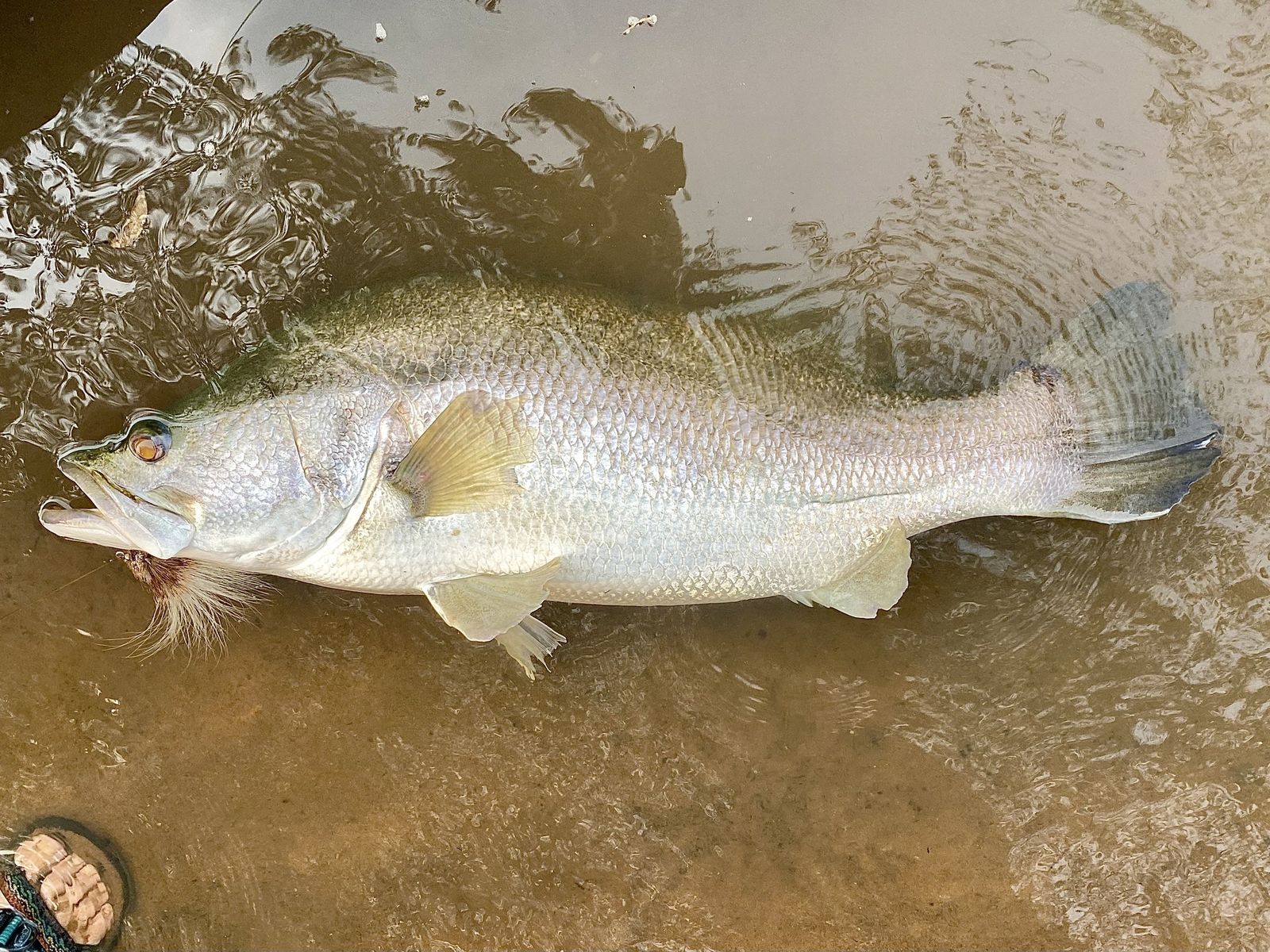
The Nile perch (Lates niloticus), also known as the African snook, Goliath perch, Nile lates, African lates, Goliath lates, Victoria lates, African barramundi, Goliath barramundi, Giant lates or the Victoria perch, is a species of…
- Kingdom
- Animalia
- Phylum
- Chordata
- Order
- Perciformes
- Family
- Latidae
- Genus
- Lates
- Species
- Lates niloticus
Description
The Nile perch (Lates niloticus), also known as the African snook, Goliath perch, Nile lates, African lates, Goliath lates, Victoria lates, African barramundi, Goliath barramundi, Giant lates or the Victoria perch, is a species of freshwater fish in the family Latidae of the order Carangiformes. It is widespread throughout much of the Afrotropical realm, being native to the Congo, Nile, Senegal, Niger and Lake Chad, Volta, Lake Turkana, and other river basins. It also occurs in the brackish waters of Lake Maryut in Egypt. The Nile perch is a fish of substantial economic and food-security importance in East Africa. Originally described as Labrus niloticus, among the marine wrasses, the species has also been referred to as Centropomus niloticus. Common names include African snook, Victoria perch (a misleading trade name, as the species is not native to Lake Victoria, though they have been introduced there), and many local names in various African languages, such as the Luo name mbuta or mputa. In Tanzania, it is called sangara, sankara, or chenku. In Francophone African countries, it is known as capitaine. Its name in the Hausa language is giwan ruwa, meaning "water elephant".
En aquarium
Espèce d'eau douce évoluant plutôt près du fond. Sur le plan biologique, elle atteint jusqu'à 200 cm, son régime est piscivore.
Paramètres relevés dans le milieu naturel de l’espèce (données scientifiques FishBase). À adapter aux besoins précis de l’espèce en captivité.
Gallery
Ajouter des photos
Partagez vos photos de cette espèce (jusqu'à 20 à la fois) : elles sont vérifiées automatiquement, puis publiées.
Répartition
Occurrences observées (données GBIF). Les zones hors aire d'origine peuvent indiquer une présence introduite ou invasive.
Sources et crédits
Informations provenant de plusieurs sources vérifiées. Dernière mise à jour : .
Crédits photos (10)
- Photo : joe_cutler · CC BY-NC 4.0 · via GBIF
- Photo : joe_cutler · CC BY-NC 4.0 · via GBIF
- Photo : Mahmoud M. Fayez · CC BY-NC 4.0 · via GBIF
- Photo : Assem Omar · CC BY-NC 4.0 · via GBIF
- Photo : Subramanian Sevgan · CC BY-NC 4.0 · via GBIF
- Photo : Mohamed SAOUPKAI · CC BY-NC 4.0 · via GBIF
- Photo : David R. Pugh · CC BY-NC 4.0 · via GBIF
- Photo : David R. Pugh · CC BY-NC 4.0 · via GBIF
- Photo : R.C. Hoover · CC BY-NC 4.0 · via GBIF
- Photo : R.C. Hoover · CC BY-NC 4.0 · via GBIF
Mentions de licence
Texte disponible sous licence CC BY-SA 4.0. Il adapte notamment Wikipedia (CC BY-SA) : Nile perch (Wikipédia, auteurs dans l’historique de l’article).
- Taxonomie : GBIF Backbone Taxonomy (CC BY 4.0)
- Carte : occurrences GBIF, fond © contributeurs OpenStreetMap (ODbL)
- Statut de conservation : Liste rouge de l'UICN, via Wikidata (CC0)
- Paramètres d'aquarium : FishBase (faits reformulés)
Détail : Sources et licences.
Discussion (0)
Aucun message pour l’instant. Lancez la discussion sur cette fiche (sources, précisions, débats éditoriaux).
Connectez-vous pour participer à la discussion.