
Porbeagle
Lamna nasus
The porbeagle or porbeagle shark (Lamna nasus) is a species of mackerel shark in the family Lamnidae, distributed widely in the cold and temperate marine waters of the North Atlantic and Southern Hemisphere.
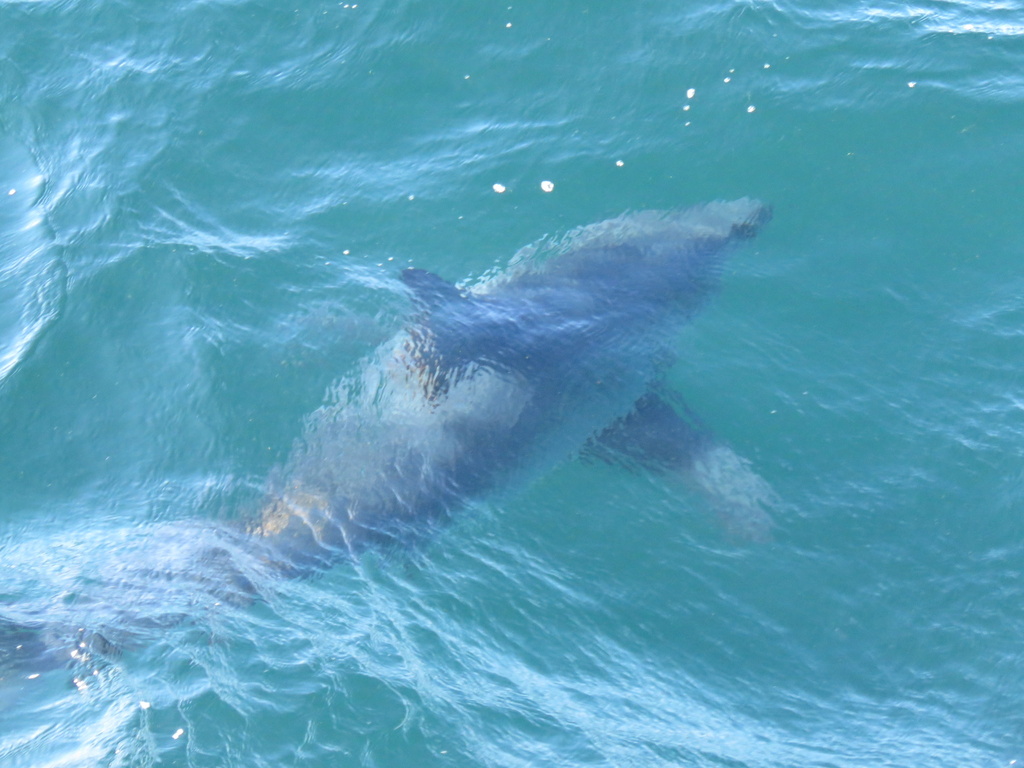
- Kingdom
- Animalia
- Phylum
- Chordata
- Class
- Elasmobranchii
- Order
- Lamniformes
- Family
- Lamnidae
- Genus
- Lamna
- Species
- Lamna nasus
Description
The porbeagle or porbeagle shark (Lamna nasus) is a species of mackerel shark in the family Lamnidae, distributed widely in the cold and temperate marine waters of the North Atlantic and Southern Hemisphere. In the North Pacific, its ecological equivalent is the closely related salmon shark (L. ditropis). It typically reaches 2.5 m (8.2 ft) in length and a weight of 135 kg (298 lb); North Atlantic sharks grow larger than Southern Hemisphere sharks and differ in coloration and aspects of life history. Grey above and white below, the porbeagle has a very stout midsection that tapers towards the long, pointed snout and the narrow base of the tail. It has large pectoral and first dorsal fins, tiny pelvic, second dorsal, and anal fins, and a crescent-shaped caudal fin. The most distinctive features of this species are its three-cusped teeth, the white blotch at the aft base of its first dorsal fin, and the two pairs of lateral keels on its tail. The porbeagle is an opportunistic hunter that preys mainly on bony fishes and cephalopods throughout the water column, including the bottom. Most commonly found over food-rich banks on the outer continental shelf, it makes occasional forays both close to shore and into the open ocean to a depth of 1,360 m (4,460 ft). It also conducts long-distance seasonal migrations, generally shifting between shallower and deeper water. The porbeagle is fast and highly active, with physiological adaptations that enable it to maintain a higher body temperature than the surrounding water. It can be solitary or gregarious, and has been known to perform seemingly playful behavior. This shark is aplacental viviparous with oophagy, developing embryos being retained within the mother's uterus and subsisting on non-viable eggs. Females typically bear four pups every year. Only a few shark attacks of uncertain provenance have been attributed to the porbeagle. It is well regarded as a game fish by recreational anglers. The meat and fins of the porbeagle are highly valued, which has led to a long history of intense human exploitation. However, this species cannot sustain heavy fishing pressure due to its low reproductive capacity. Direct commercial fishing for the porbeagle, principally by Norwegian longliners, led to stock collapses in the eastern North Atlantic in the 1950s, and the western North Atlantic in the 1960s. The porbeagle continues to be caught throughout its range, both intentionally and as bycatch, with varying degrees of monitoring and management. The International Union for Conservation of Nature (IUCN) has assessed the porbeagle as vulnerable worldwide, and as either endangered or critically endangered in different parts of its northern range.
En aquarium
Espèce d'eau de mer évoluant plutôt en pleine eau. Paramètres d'eau relevés dans son milieu : température de -1 à 23 °C. Sur le plan biologique, elle atteint jusqu'à 350 cm, vit jusqu'à 65 ans, son régime est piscivore.
Paramètres relevés dans le milieu naturel de l’espèce (données scientifiques FishBase). À adapter aux besoins précis de l’espèce en captivité.
Ajouter des photos
Partagez vos photos de cette espèce (jusqu'à 20 à la fois) : elles sont vérifiées automatiquement, puis publiées.
Répartition
Occurrences observées (données GBIF). Les zones hors aire d'origine peuvent indiquer une présence introduite ou invasive.
Sources et crédits
Informations provenant de plusieurs sources vérifiées. Dernière mise à jour : .
Crédits photos (1)
- Photo : @keithleonar · CC BY-NC 4.0 · via iNaturalist
Mentions de licence
Texte disponible sous licence CC BY-SA 4.0. Il adapte notamment Wikipedia (CC BY-SA) : Porbeagle (Wikipédia, auteurs dans l’historique de l’article).
- Taxonomie : GBIF Backbone Taxonomy (CC BY 4.0)
- Carte : occurrences GBIF, fond © contributeurs OpenStreetMap (ODbL)
- Statut de conservation : Liste rouge de l'UICN, via Wikidata (CC0)
- Paramètres d'aquarium : FishBase (faits reformulés)
Détail : Sources et licences.
Discussion (0)
Aucun message pour l’instant. Lancez la discussion sur cette fiche (sources, précisions, débats éditoriaux).
Connectez-vous pour participer à la discussion.