
Black Marlin
Istiompax indica
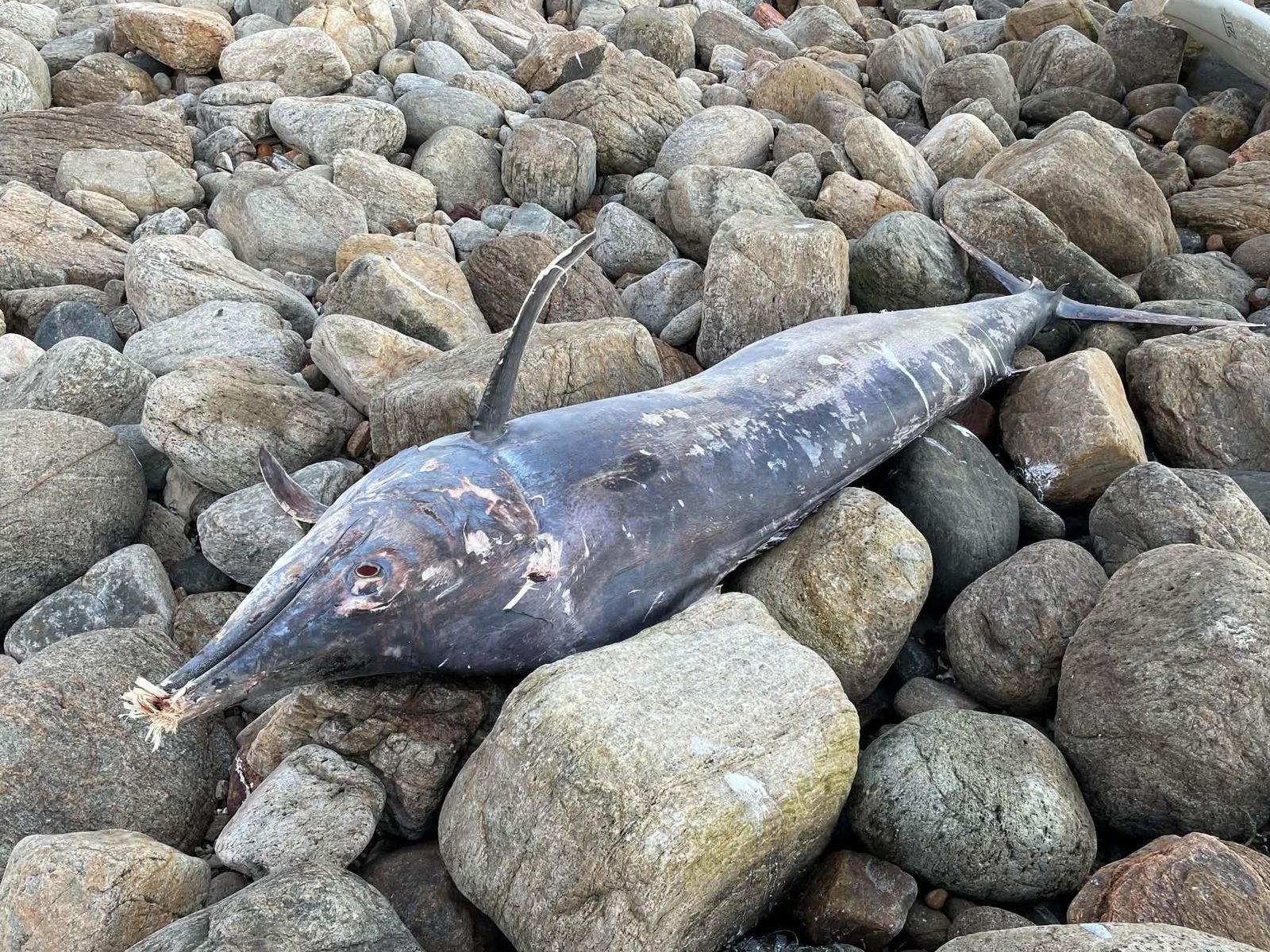
The black marlin (Istiompax indica) is a species of marlin found in tropical and subtropical areas of the Indian and Pacific Oceans approximately between 40 degrees North and 45 degrees South, while in some instances venturing into more…
- Kingdom
- Animalia
- Phylum
- Chordata
- Order
- Perciformes
- Family
- Istiophoridae
- Genus
- Istiompax
- Species
- Istiompax indica
Description
The black marlin (Istiompax indica) is a species of marlin found in tropical and subtropical areas of the Indian and Pacific Oceans approximately between 40 degrees North and 45 degrees South, while in some instances venturing into more temperate waters. Reaching lengths of over 4.5 m (15 ft), it is one of the largest marlins and also one of the largest bony fish. Marlin are among the fastest fish, but speeds may be exaggerated in popular media, such as reports of 129 km/h (80 mph). A 2016 study estimated maximum swimming speeds from muscle contraction times, which in turn limit the tail-beat frequency; the study suggested a theoretical upper limit for the black marlin's burst speed of 36 km/h (22 mph). Black marlin are fished commercially and are also a highly prized game fish. Black marlins were known to drag ancient Maldivian fishing boats for very long distances after being hooked, until the marlins finally tired; it would take many hours for the fishermen to row or sail back home. Due to the common misidentification of large billfish such as the black marlin, as well as its highly migratory habits and the lack of research into the species, much about populations are unknown. The species was first known as Tetrapturus indicus and later was reclassified as Makaira indica before taking on its current scientific name. One of the earliest scientific records of black marlin is its description by French zoologist Georges Cuvier in 1832.
En aquarium
Espèce d'eau de mer évoluant plutôt en pleine eau. Paramètres d'eau relevés dans son milieu : température de 15 à 30 °C. Sur le plan biologique, elle atteint jusqu'à 465 cm, son régime est piscivore.
Paramètres relevés dans le milieu naturel de l’espèce (données scientifiques FishBase). À adapter aux besoins précis de l’espèce en captivité.
Gallery
Ajouter des photos
Partagez vos photos de cette espèce (jusqu'à 20 à la fois) : elles sont vérifiées automatiquement, puis publiées.
Répartition
Occurrences observées (données GBIF). Les zones hors aire d'origine peuvent indiquer une présence introduite ou invasive.
Sources et crédits
Informations provenant de plusieurs sources vérifiées. Dernière mise à jour : .
Crédits photos (10)
- Photo : Kelly Forbes · CC BY-NC 4.0 · via GBIF
- Photo : Mariana Gudiño · CC BY-NC 4.0 · via GBIF
- Photo : avid_dattenborough · CC BY-NC 4.0 · via GBIF
- Photo : Steven Zambrano · CC BY-NC 4.0 · via GBIF
- Photo : rcoliveira84 · CC BY 4.0 · via GBIF
- Photo : rimaraju_ · CC BY-NC 4.0 · via GBIF
- Photo : bensonk · CC BY-NC 4.0 · via GBIF
- Photo : Aiva Noringseth · CC BY 4.0 · via GBIF
- Photo : hristovskis · CC BY-NC 4.0 · via GBIF
- Photo : Kjell Hensen · CC BY-NC 4.0 · via GBIF
Mentions de licence
Texte disponible sous licence CC BY-SA 4.0. Il adapte notamment Wikipedia (CC BY-SA) : Black marlin (Wikipédia, auteurs dans l’historique de l’article).
- Taxonomie : GBIF Backbone Taxonomy (CC BY 4.0)
- Carte : occurrences GBIF, fond © contributeurs OpenStreetMap (ODbL)
- Statut de conservation : Liste rouge de l'UICN, via Wikidata (CC0)
- Paramètres d'aquarium : FishBase (faits reformulés)
Détail : Sources et licences.
Discussion (0)
Aucun message pour l’instant. Lancez la discussion sur cette fiche (sources, précisions, débats éditoriaux).
Connectez-vous pour participer à la discussion.