
Long rough dab
Hippoglossoides platessoides
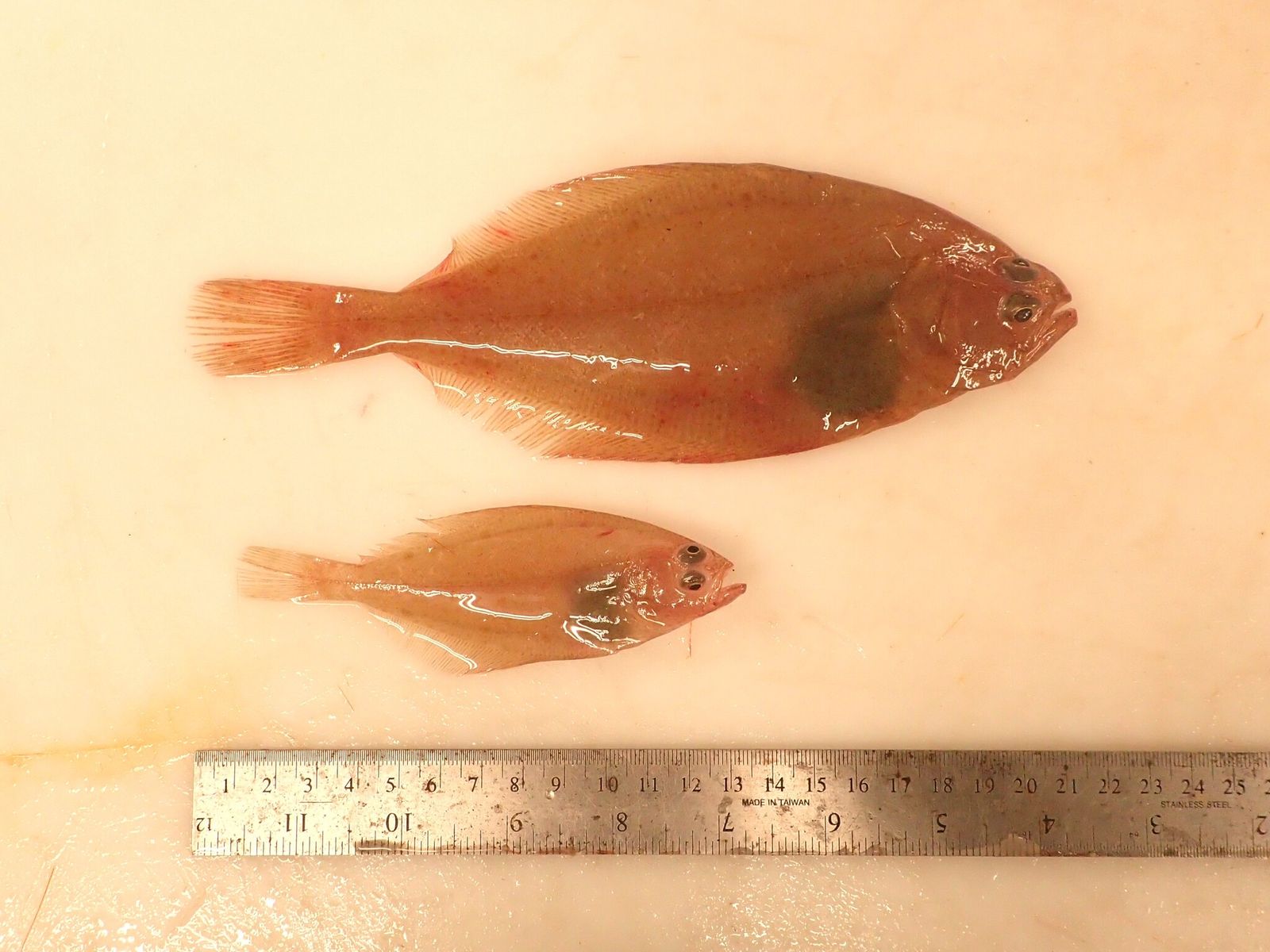
The American plaice, American sole or long rough dab (Hippoglossoides platessoides) is a North Atlantic flatfish that belongs, along with other right-eyed flounders, to the family Pleuronectidae.
- Kingdom
- Animalia
- Phylum
- Chordata
- Order
- Pleuronectiformes
- Family
- Pleuronectidae
- Genus
- Hippoglossoides
- Species
- Hippoglossoides platessoides
Description
The American plaice, American sole or long rough dab (Hippoglossoides platessoides) is a North Atlantic flatfish that belongs, along with other right-eyed flounders, to the family Pleuronectidae. In the northwest Atlantic (H. p. platessoides) it ranges from Greenland and Labrador to Rhode Island, and in the northeast Atlantic (H. p. limandoides) it ranges from Murmansk to the English Channel, Ireland and Iceland, rarely finding itself in the Baltic Sea. They live on soft bottoms at depths of 10 to 3,000 m (33–9,843 ft), but mainly between 90 and 250 m (300–820 ft). In the Gulf of Maine spawning peaks in April and May. They grow to a maximum length of 70 centimetres (28 in). The species is considered by the Northwest Atlantic Fisheries Organization to be overfished, with no signs of recovery. Canadian officials dispute this, claiming the population is under less than 20% risk of extinction in the next 80 years however, it remains under the moratorium established in 1993. A 1997 study reports that plaice are endangered in Canada due to overfishing. In its European range, the species is generally common and not actively sought by fishers, but it is often part of the bycatch. American plaice may be an intermediate host for the nematode parasite Otostrongylus circumlitis, which is a lungworm of seals, primarily affecting animals less than 1 year of age.
En aquarium
Espèce d'eau de mer évoluant plutôt près du fond. Sur le plan biologique, elle atteint jusqu'à 82,6 cm, vit jusqu'à 30 ans, son régime est piscivore.
Paramètres relevés dans le milieu naturel de l’espèce (données scientifiques FishBase). À adapter aux besoins précis de l’espèce en captivité.
Gallery
Ajouter des photos
Partagez vos photos de cette espèce (jusqu'à 20 à la fois) : elles sont vérifiées automatiquement, puis publiées.
Répartition
Occurrences observées (données GBIF). Les zones hors aire d'origine peuvent indiquer une présence introduite ou invasive.
Sources et crédits
Informations provenant de plusieurs sources vérifiées. Dernière mise à jour : .
Crédits photos (10)
- Photo : Jean-François Rousseau · CC BY-NC 4.0 · via GBIF
- Photo : Jean-François Rousseau · CC BY-NC 4.0 · via GBIF
- Photo : Julien Savoie · CC BY 4.0 · via GBIF
- Photo : bradhowelll · CC BY-NC 4.0 · via GBIF
- Photo : Jean-François Rousseau · CC BY-NC 4.0 · via GBIF
- Photo : VikingPolaris_01 · CC BY-NC 4.0 · via GBIF
- Photo : VikingPolaris_01 · CC BY-NC 4.0 · via GBIF
- Photo : VikingPolaris_01 · CC BY-NC 4.0 · via GBIF
- Photo : VikingPolaris_01 · CC BY-NC 4.0 · via GBIF
- Photo : cmsamoila · CC BY-NC 4.0 · via GBIF
Mentions de licence
Texte disponible sous licence CC BY-SA 4.0. Il adapte notamment Wikipedia (CC BY-SA) : American plaice (Wikipédia, auteurs dans l’historique de l’article).
- Taxonomie : GBIF Backbone Taxonomy (CC BY 4.0)
- Carte : occurrences GBIF, fond © contributeurs OpenStreetMap (ODbL)
- Paramètres d'aquarium : FishBase (faits reformulés)
Détail : Sources et licences.
Discussion (0)
Aucun message pour l’instant. Lancez la discussion sur cette fiche (sources, précisions, débats éditoriaux).
Connectez-vous pour participer à la discussion.