
Lined seahorse
Hippocampus erectus
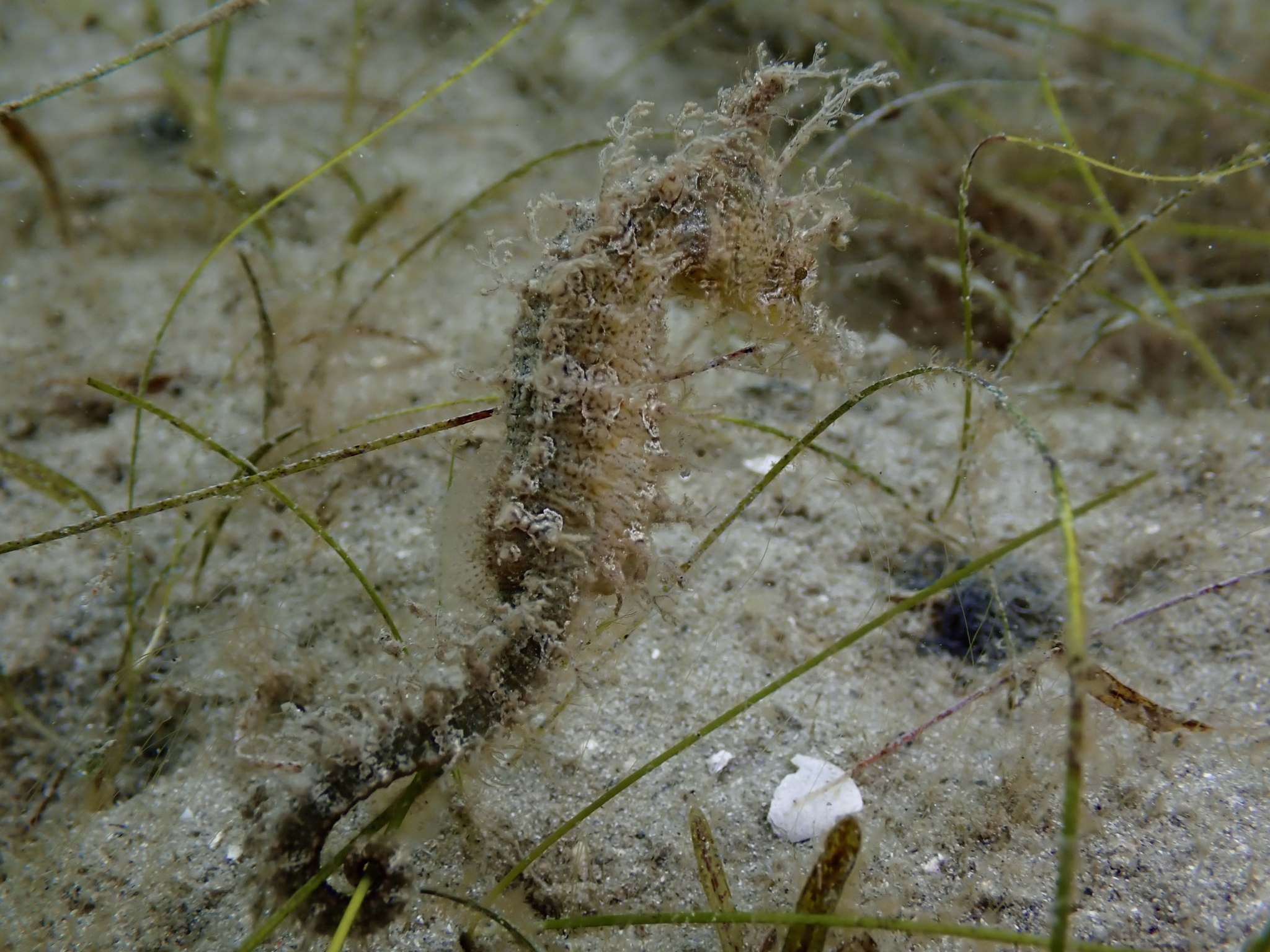
The lined seahorse (Hippocampus erectus), northern seahorse or spotted seahorse, is a species of fish that belongs to the family Syngnathidae.
- Kingdom
- Animalia
- Phylum
- Chordata
- Order
- Syngnathiformes
- Family
- Syngnathidae
- Genus
- Hippocampus
- Species
- Hippocampus erectus
Description
The lined seahorse (Hippocampus erectus), northern seahorse or spotted seahorse, is a species of fish that belongs to the family Syngnathidae. H. erectus is a diurnal species with an approximate length of 15 cm (5.9 inches) and lifespan of one to four years. The H. erectus species can be found in myriad colors, from greys and blacks to reds, greens, and oranges. The lined seahorse lives in the western Atlantic Ocean as far north as Cape Cod and as far south as the Caribbean, Mexico, and Venezuela. It swims in an erect position and uses its dorsal and pectoral fins for guidance while swimming. Lined seahorses feed mainly on minute crustaceans and brine shrimp, which they suck in through their snout. They are able to suck their prey by creating a current of water leading directly into its snout. Since seahorses are weak swimmers, they must ambush their prey by blending into their surroundings, which they do rather easily. The lined seahorse's eyes can move independently of one another, allowing it to effectively scan its surroundings. The species is sexually dimorphic and it is easy to distinguish between a male and female lined seahorse. The males are larger and also have longer tails. The lined seahorse is monogamous and performs ritual dances every morning to reestablish the bond with its mate. In addition, they create clicking sounds while embracing their partner. This action occurs when they initially find their mate. The intensity of their bond is also conveyed in how they handle the death of their partner: If either the male or female should die, the mate does not automatically replace the deceased mate with a new one. Often, it fails to find a new mate in its short lifespan. Like with other seahorses, the male lined seahorse is the caregiver. During intercourse, the female sprays her eggs into the male's brood pouch where the eggs will incubate for 20–21 days. When the juveniles are ready to hatch, the male attaches its tail to a stationary structure and begins to arch its back, back and forth, releasing the juveniles into the water column. The juveniles are approximately 11 mm at birth. They quickly begin to learn and mimic the behavior of its parent. Courtship between the male and female parents begins immediately after birth. The habitat of the lined seahorse is diminishing due to coastal growth and pollution, which ultimately is the cause of the decreasing population. The lined seahorse is also used as Chinese medicine and is common in the aquarium trade, contributing to its "vulnerable" status.
En aquarium
Espèce d'eau de mer évoluant plutôt autour des récifs. Paramètres d'eau relevés dans son milieu : température de 10 à 27 °C. Sur le plan biologique, elle atteint jusqu'à 19 cm, vit jusqu'à 1 ans, son régime est carnivore.
Paramètres relevés dans le milieu naturel de l’espèce (données scientifiques FishBase ; voir aussi la fiche Fishipedia). À adapter aux besoins précis de l’espèce en captivité.
Gallery
Ajouter des photos
Partagez vos photos de cette espèce (jusqu'à 20 à la fois) : elles sont vérifiées automatiquement, puis publiées.
Répartition
Occurrences observées (données GBIF). Les zones hors aire d'origine peuvent indiquer une présence introduite ou invasive.
Sources et crédits
Informations provenant de plusieurs sources vérifiées. Dernière mise à jour : .
Crédits photos (5)
- Photo : Alycia Uyeoka · CC BY-NC 4.0 · via GBIF
- Photo : @dianna912 · CC BY-NC 4.0 · via iNaturalist
- Photo : @paul_dennehy · CC BY-NC 4.0 · via iNaturalist
- Photo : Squidpastry (@squidpastry) · CC BY-NC 4.0 · via iNaturalist
- Photo : Morgan Freese (@as_is_the_sea) · CC BY 4.0 · via iNaturalist
Mentions de licence
Texte disponible sous licence CC BY-SA 4.0. Il adapte notamment Wikipedia (CC BY-SA) : Lined seahorse (Wikipédia, auteurs dans l’historique de l’article).
- Taxonomie : GBIF Backbone Taxonomy (CC BY 4.0)
- Carte : occurrences GBIF, fond © contributeurs OpenStreetMap (ODbL)
- Statut de conservation : Liste rouge de l'UICN, via Wikidata (CC0)
- Paramètres d'aquarium : FishBase (faits reformulés)
Détail : Sources et licences.
Discussion (0)
Aucun message pour l’instant. Lancez la discussion sur cette fiche (sources, précisions, débats éditoriaux).
Connectez-vous pour participer à la discussion.