
Reticulate whipray
Himantura uarnak
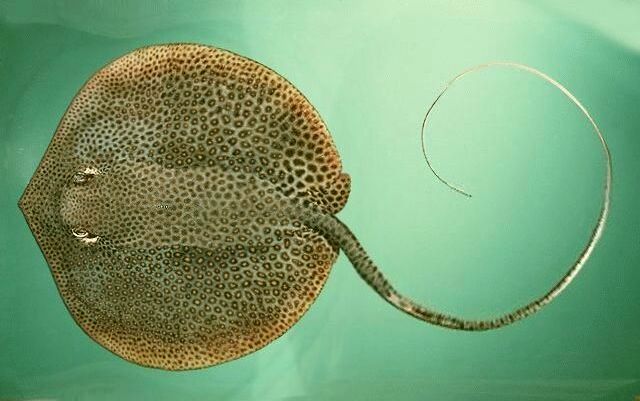
The reticulate whipray or honeycomb stingray (Himantura uarnak) is a species of stingray in the family Dasyatidae.
- Kingdom
- Animalia
- Phylum
- Chordata
- Class
- Elasmobranchii
- Order
- Myliobatiformes
- Family
- Dasyatidae
- Genus
- Himantura
- Species
- Himantura uarnak
Description
The reticulate whipray or honeycomb stingray (Himantura uarnak) is a species of stingray in the family Dasyatidae. It inhabits coastal waters in the western Indian Ocean including the Red Sea, Natal and the Arabian Sea; also a Lessepsian transmigrant in the eastern Mediterranean. A large species reaching 2 m (6.6 ft) in width, the reticulate whipray has a diamond-shaped pectoral fin disc and an extremely long tail without fin folds. Both its common and scientific names refer to its ornate dorsal color pattern of many small, close-set dark spots or reticulations on a lighter background. However, the reticulate whipray is only one of several large spotted stingrays in the Indo-Pacific which, coupled with the variability of its coloration with age and locality, has resulted in a great deal of taxonomic confusion. Often encountered resting on the bottom during daytime, the reticulate whipray is a predator of bottom-dwelling invertebrates and bony fishes. Like other stingrays, it is aplacental viviparous, with the developing embryos nourished at first by yolk and later by histotroph ("uterine milk"). Females bear litters of up to five pups in summer, following a gestation period of a year. The reticulate whipray is fished in parts of the Indian Ocean for meat, skin, cartilage, and other purposes. It is highly susceptible to population depletion because of its large size, inshore habits, and low reproductive rate, and is additionally threatened by extensive habitat degradation. Consequently, the International Union for Conservation of Nature (IUCN) has assessed this species as Endangered.
En aquarium
Espèce d'saumâtre et eau de mer évoluant plutôt près du fond. Paramètres d'eau relevés dans son milieu : température de 23 à 26 °C. Sur le plan biologique, elle atteint jusqu'à 200 cm, son régime est carnivore.
Paramètres relevés dans le milieu naturel de l’espèce (données scientifiques FishBase ; voir aussi la fiche Fishipedia). À adapter aux besoins précis de l’espèce en captivité.
Gallery
Ajouter des photos
Partagez vos photos de cette espèce (jusqu'à 20 à la fois) : elles sont vérifiées automatiquement, puis publiées.
Répartition
Occurrences observées (données GBIF). Les zones hors aire d'origine peuvent indiquer une présence introduite ou invasive.
Sources et crédits
Informations provenant de plusieurs sources vérifiées. Dernière mise à jour : .
Crédits photos (2)
- Photo : Doka54 at Russian Wikipedia · Domaine public · via Wikimedia Commons
- Photo : @weszynski · CC BY-NC 4.0 · via iNaturalist
Mentions de licence
Texte disponible sous licence CC BY-SA 4.0. Il adapte notamment Wikipedia (CC BY-SA) : Reticulate whipray (Wikipédia, auteurs dans l’historique de l’article).
- Taxonomie : GBIF Backbone Taxonomy (CC BY 4.0)
- Carte : occurrences GBIF, fond © contributeurs OpenStreetMap (ODbL)
- Paramètres d'aquarium : FishBase (faits reformulés)
Détail : Sources et licences.
Discussion (0)
Aucun message pour l’instant. Lancez la discussion sur cette fiche (sources, précisions, débats éditoriaux).
Connectez-vous pour participer à la discussion.