
Lusitanian Toadfish
Halobatrachus didactylus
The Lusitanian toadfish (Halobatrachus didactylus) is a species of toadfish found along the Atlantic and Mediterranean Coasts of western Europe and western Africa, from the Bay of Biscay to Ghana, with an isolated and old northern…
- Kingdom
- Animalia
- Phylum
- Chordata
- Order
- Batrachoidiformes
- Family
- Batrachoididae
- Genus
- Halobatrachus
- Species
- Halobatrachus didactylus
Description
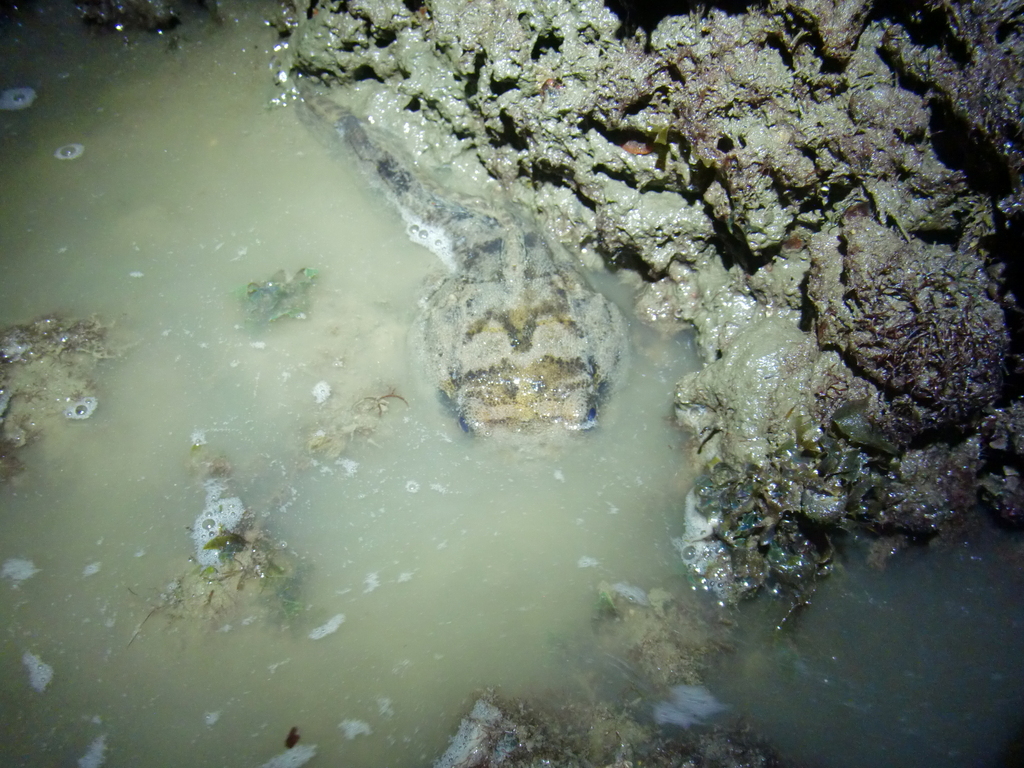
The Lusitanian toadfish (Halobatrachus didactylus) is a species of toadfish found along the Atlantic and Mediterranean Coasts of western Europe and western Africa, from the Bay of Biscay to Ghana, with an isolated and old northern record from the Norwegian side of the Kattegat. This species grows to a length of 50 centimetres (20 in). This species is of minor importance to local commercial fisheries. Locally, it is known as gripau (Catalan), charroco, encharroco, xarroco (Portuguese), and pez sapo (Spanish)). The fish is also known to make a variety of noises, such as whistles, grunts, croaks, and a boatwhistle that is used both to attract females and to deter intruding males. The Lusitanian toadfish is a sedentary fish which is found in substrates consisting of soft sand or mud and which often lies partially buried or conceals itself in rock crevices. They are solitary fish of shallow waters. It is a predator feeding on crustaceans, molluscs and smaller fish. It is an oviparous species and after laying, the female leaves the eggs to be guarded by the male. It is found at depths of less than 60 metres (200 ft). The Lusitanian toadfish is of minor importance to fisheries, it is taken by artisanal fisheries and as bycatch. It is marketed fresh but also used for fishmeal and to make oil.
En aquarium
Espèce d'eau de mer évoluant plutôt près du fond. Sur le plan biologique, elle atteint jusqu'à 50 cm, son régime est piscivore.
Paramètres relevés dans le milieu naturel de l’espèce (données scientifiques FishBase). À adapter aux besoins précis de l’espèce en captivité.
Gallery
Ajouter des photos
Partagez vos photos de cette espèce (jusqu'à 20 à la fois) : elles sont vérifiées automatiquement, puis publiées.
Répartition
Occurrences observées (données GBIF). Les zones hors aire d'origine peuvent indiquer une présence introduite ou invasive.
Sources et crédits
Informations provenant de plusieurs sources vérifiées. Dernière mise à jour : .
Crédits photos (4)
- Photo : Miguel Augusto (@miau_petoncles) · CC BY-NC 4.0 · via iNaturalist
- Photo : Laia Perez Sorribes (@laia8) · CC BY-NC 4.0 · via iNaturalist
- Photo : Ana Santos (@cyberoceans) · CC BY-NC 4.0 · via iNaturalist
- Photo : Tavenner (@tavenner) · CC BY-NC 4.0 · via iNaturalist
Mentions de licence
Texte disponible sous licence CC BY-SA 4.0. Il adapte notamment Wikipedia (CC BY-SA) : Lusitanian toadfish (Wikipédia, auteurs dans l’historique de l’article).
- Taxonomie : GBIF Backbone Taxonomy (CC BY 4.0)
- Carte : occurrences GBIF, fond © contributeurs OpenStreetMap (ODbL)
- Statut de conservation : Liste rouge de l'UICN, via Wikidata (CC0)
- Paramètres d'aquarium : FishBase (faits reformulés)
Détail : Sources et licences.
Discussion (0)
Aucun message pour l’instant. Lancez la discussion sur cette fiche (sources, précisions, débats éditoriaux).
Connectez-vous pour participer à la discussion.