
Atlantic cod
Gadus morhua
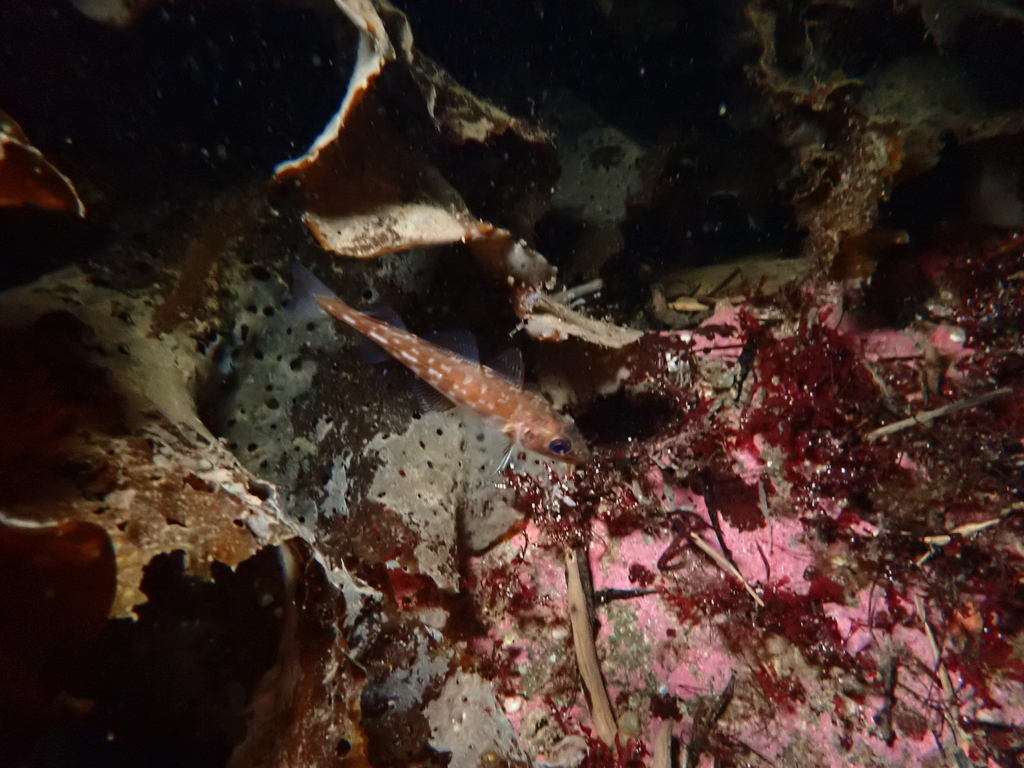
The Atlantic cod (pl.: cod; Gadus morhua) is a fish of the family Gadidae, widely consumed by humans.
- Kingdom
- Animalia
- Phylum
- Chordata
- Order
- Gadiformes
- Family
- Gadidae
- Genus
- Gadus
- Species
- Gadus morhua
Description
The Atlantic cod (pl.: cod; Gadus morhua) is a fish of the family Gadidae, widely consumed by humans. It is also commercially known as cod or codling. In the western Atlantic Ocean, cod has a distribution north of Cape Hatteras, North Carolina, and around both coasts of Greenland and the Labrador Sea; in the eastern Atlantic, it is found from the Bay of Biscay north to the Arctic Ocean, including the Baltic Sea, the North Sea, Sea of the Hebrides, areas around Iceland and the Barents Sea. Atlantic cod can live for up to 25 years and typically grow up to 100–140 cm (40–55 in), but individuals in excess of 180 cm (70 in) and 50 kg (110 lb) have been caught. They will attain sexual maturity between ages 2 and 8, but this varies between populations and has varied over time. Colouring is brown or green, with spots on the dorsal side, shading to silver ventrally. A stripe along its lateral line (used to detect vibrations) is clearly visible. Its habitat ranges from the coastal shoreline down to 300 m (1,000 ft) along the continental shelf. Atlantic cod is one of the most heavily fished species. Atlantic cod was fished for a thousand years by north European fishers who followed it across the North Atlantic Ocean to North America. It supported the US and Canadian fishing economy until 1992, when the Canadian Government implemented a ban on fishing cod. Several cod stocks collapsed in the 1990s (decline of more than 95% of maximum historical biomass) and have failed to fully recover even with the cessation of fishing. This absence of the apex predator has led to a trophic cascade in many areas. Many other cod stocks remain at risk. The Atlantic cod is labelled vulnerable on the IUCN Red List of Threatened Species, per a 1996 assessment that the IUCN notes needs updating. A 2013 assessment covering only Europe shows the Atlantic cod has rebounded in Europe, and it has been relabelled least concern. Dry cod may be prepared as unsalted stockfish, and as cured salt cod or clipfish.
En aquarium
Espèce d'saumâtre et eau de mer évoluant plutôt en pleine eau. Paramètres d'eau relevés dans son milieu : température de 0 à 15 °C. Sur le plan biologique, elle atteint jusqu'à 200 cm, vit jusqu'à 25 ans, son régime est piscivore.
Paramètres relevés dans le milieu naturel de l’espèce (données scientifiques FishBase ; voir aussi la fiche Fishipedia). À adapter aux besoins précis de l’espèce en captivité.
Ajouter des photos
Partagez vos photos de cette espèce (jusqu'à 20 à la fois) : elles sont vérifiées automatiquement, puis publiées.
Répartition
Occurrences observées (données GBIF). Les zones hors aire d'origine peuvent indiquer une présence introduite ou invasive.
Sources et crédits
Informations provenant de plusieurs sources vérifiées. Dernière mise à jour : .
Crédits photos (1)
- Photo : Laurent Fey (@laurent_f) · CC BY-NC 4.0 · via iNaturalist
Mentions de licence
Texte disponible sous licence CC BY-SA 4.0. Il adapte notamment Wikipedia (CC BY-SA) : Atlantic cod (Wikipédia, auteurs dans l’historique de l’article).
- Taxonomie : GBIF Backbone Taxonomy (CC BY 4.0)
- Carte : occurrences GBIF, fond © contributeurs OpenStreetMap (ODbL)
- Statut de conservation : Liste rouge de l'UICN, via Wikidata (CC0)
- Paramètres d'aquarium : FishBase (faits reformulés)
Détail : Sources et licences.
Discussion (0)
Aucun message pour l’instant. Lancez la discussion sur cette fiche (sources, précisions, débats éditoriaux).
Connectez-vous pour participer à la discussion.