
Winghead shark
Eusphyra blochii
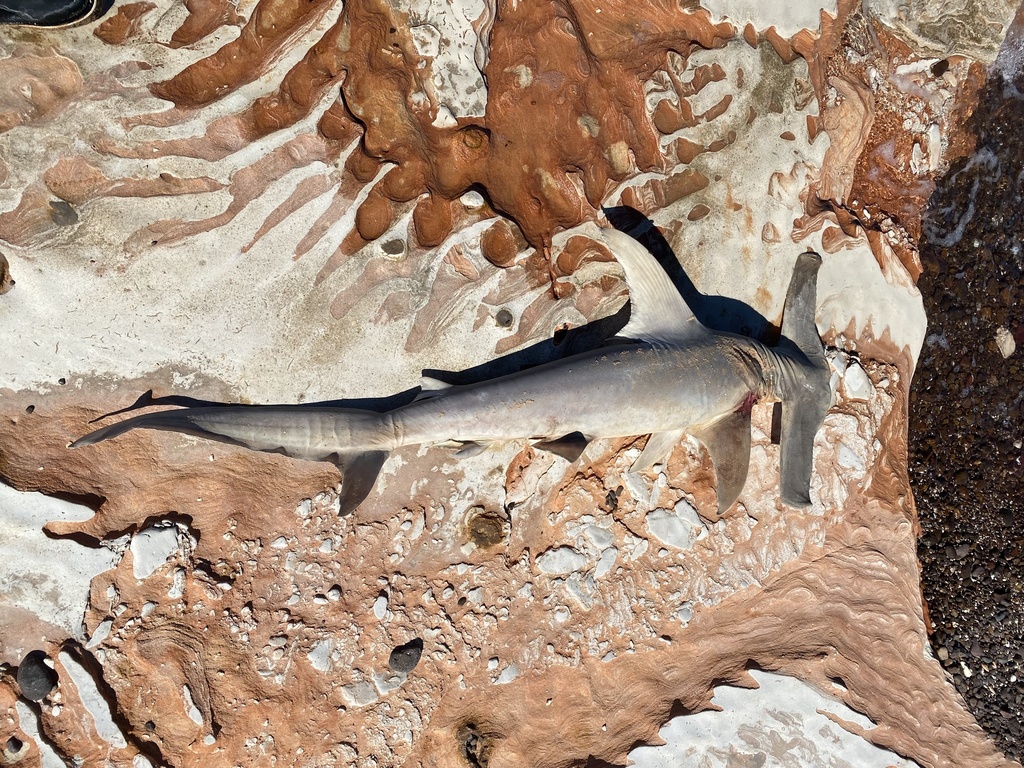
The winghead shark (Eusphyra blochii) is a species of hammerhead shark, and part of the family Sphyrnidae.
- Kingdom
- Animalia
- Phylum
- Chordata
- Class
- Elasmobranchii
- Order
- Carcharhiniformes
- Family
- Sphyrnidae
- Genus
- Eusphyra
- Species
- Eusphyra blochii
Description
The winghead shark (Eusphyra blochii) is a species of hammerhead shark, and part of the family Sphyrnidae. It is the sole member of the genus Eusphyra. Reaching a length of 1.9 m (6.2 ft), this small brown to gray shark has a slender body with a tall, sickle-shaped first dorsal fin. Its name comes from its exceptionally large "hammer", or cephalofoil, which can be as wide as half of the shark's total length. The function of this structure is unclear, but may relate to the shark's senses. The wide spacing of its eyes grants superb binocular vision, while the extremely long nostrils on the leading margin of the cephalofoil may allow for better detection and tracking of odor trails in the water. The cephalofoil also provides a large surface area for its ampullae of Lorenzini and lateral line, with potential benefits for electroreception and mechanoreception, respectively. Inhabiting the shallow coastal waters of the central and western Indo-Pacific, the winghead shark feeds on small bony fishes, crustaceans, and cephalopods. It gives birth to live young, with the developing embryos receiving nourishment through a placental connection. Females produce annual litters of six to 25 pups; depending on region, birth may occur from February to June after a gestation period of 8–11 months. This harmless species is widely fished for meat, fins, liver oil, and fishmeal. The International Union for Conservation of Nature has assessed it as endangered in 2016, as it is thought to have declined in some parts of its range due to overfishing.
En aquarium
Espèce d'saumâtre et eau de mer évoluant plutôt en pleine eau. Sur le plan biologique, elle atteint jusqu'à 186 cm, son régime est piscivore.
Paramètres relevés dans le milieu naturel de l’espèce (données scientifiques FishBase). À adapter aux besoins précis de l’espèce en captivité.
Gallery
Ajouter des photos
Partagez vos photos de cette espèce (jusqu'à 20 à la fois) : elles sont vérifiées automatiquement, puis publiées.
Répartition
Occurrences observées (données GBIF). Les zones hors aire d'origine peuvent indiquer une présence introduite ou invasive.
Sources et crédits
Informations provenant de plusieurs sources vérifiées. Dernière mise à jour : .
Crédits photos (4)
- Photo : Al Harry (@alastairharry) · CC BY-NC 4.0 · via iNaturalist
- Photo : Kelly Forbes (@k72seahorse) · CC BY-NC 4.0 · via iNaturalist
- Photo : Sharking Around (@sharkingaround) · CC BY-NC 4.0 · via iNaturalist
- Photo : Kjell Hensen (@khensen) · CC BY-NC 4.0 · via iNaturalist
Mentions de licence
Texte disponible sous licence CC BY-SA 4.0. Il adapte notamment Wikipedia (CC BY-SA) : Winghead shark (Wikipédia, auteurs dans l’historique de l’article).
- Taxonomie : GBIF Backbone Taxonomy (CC BY 4.0)
- Carte : occurrences GBIF, fond © contributeurs OpenStreetMap (ODbL)
- Statut de conservation : Liste rouge de l'UICN, via Wikidata (CC0)
- Paramètres d'aquarium : FishBase (faits reformulés)
Détail : Sources et licences.
Discussion (0)
Aucun message pour l’instant. Lancez la discussion sur cette fiche (sources, précisions, débats éditoriaux).
Connectez-vous pour participer à la discussion.