
Ocellated electric ray
Diplobatis ommata
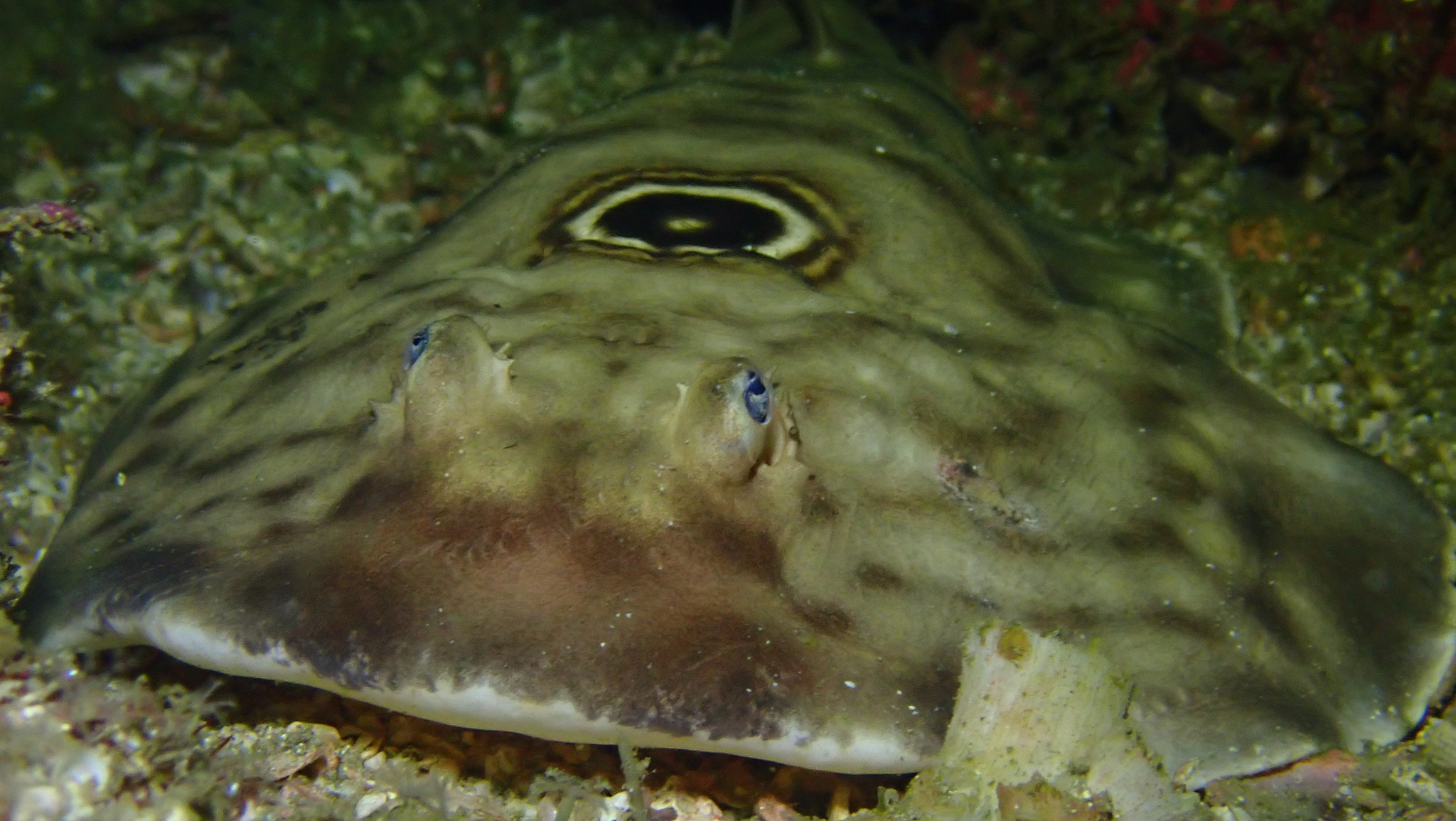
The ocellated electric ray or bullseye electric ray (Diplobatis ommata) is a species of electric ray in the family Narcinidae, native to the shallow inshore waters of the eastern central Pacific from the Gulf of California to Ecuador.
- Kingdom
- Animalia
- Phylum
- Chordata
- Class
- Elasmobranchii
- Order
- Torpediniformes
- Family
- Narcinidae
- Genus
- Diplobatis
- Species
- Diplobatis ommata
Description
The ocellated electric ray or bullseye electric ray (Diplobatis ommata) is a species of electric ray in the family Narcinidae, native to the shallow inshore waters of the eastern central Pacific from the Gulf of California to Ecuador. Reaching 25 cm (9.8 in) in length, this species has a rounded pectoral fin disc and pelvic fins with convex margins. Its short and thick tail bears two dorsal fins and terminates in a triangular caudal fin. The ocellated electric ray is named for the distinctive large eyespot on the middle of its disc, consisting of a black or yellow center surrounded by concentric rings. Its dorsal coloration is otherwise highly variable, ranging from plain to ornately patterned on a light to dark brown background. The front part of its disc is darker brown. Solitary and nocturnal in nature, the ocellated electric ray is a bottom-dweller found in sandy and rocky habitats. It moves along the bottom by "hopping" on its pelvic fins, and feeds on small crustaceans and polychaete worms. For defense, it can generate an electrical discharge from its electric organs. This species probably bears live young that are sustained by yolk and later histotroph ("uterine milk") during gestation. The International Union for Conservation of Nature (IUCN) has listed the ocellated electric ray as least concern. It is susceptible to the heavy trawling activity within its limited range.
En aquarium
Espèce d'eau de mer évoluant plutôt autour des récifs. Sur le plan biologique, elle atteint jusqu'à 25 cm, son régime est carnivore.
Paramètres relevés dans le milieu naturel de l’espèce (données scientifiques FishBase). À adapter aux besoins précis de l’espèce en captivité.
Gallery
Ajouter des photos
Partagez vos photos de cette espèce (jusqu'à 20 à la fois) : elles sont vérifiées automatiquement, puis publiées.
Répartition
Occurrences observées (données GBIF). Les zones hors aire d'origine peuvent indiquer une présence introduite ou invasive.
Sources et crédits
Informations provenant de plusieurs sources vérifiées. Dernière mise à jour : .
Crédits photos (5)
- Photo : Daniel González-Suárez · CC BY-NC 4.0 · via GBIF
- Photo : Cristian M. Galván Villa (@cristianmgv19) · CC BY-NC 4.0 · via iNaturalist
- Photo : Alberto Alcalá (@alboertoalcala) · CC BY 4.0 · via iNaturalist
- Photo : @ecovore · CC BY 4.0 · via iNaturalist
- Photo : tim h (@timhe) · CC BY-NC 4.0 · via iNaturalist
Mentions de licence
Texte disponible sous licence CC BY-SA 4.0. Il adapte notamment Wikipedia (CC BY-SA) : Ocellated electric ray (Wikipédia, auteurs dans l’historique de l’article).
- Taxonomie : GBIF Backbone Taxonomy (CC BY 4.0)
- Carte : occurrences GBIF, fond © contributeurs OpenStreetMap (ODbL)
- Statut de conservation : Liste rouge de l'UICN, via Wikidata (CC0)
- Paramètres d'aquarium : FishBase (faits reformulés)
Détail : Sources et licences.
Discussion (0)
Aucun message pour l’instant. Lancez la discussion sur cette fiche (sources, précisions, débats éditoriaux).
Connectez-vous pour participer à la discussion.