
Atlantic whitefish
Coregonus huntsmani
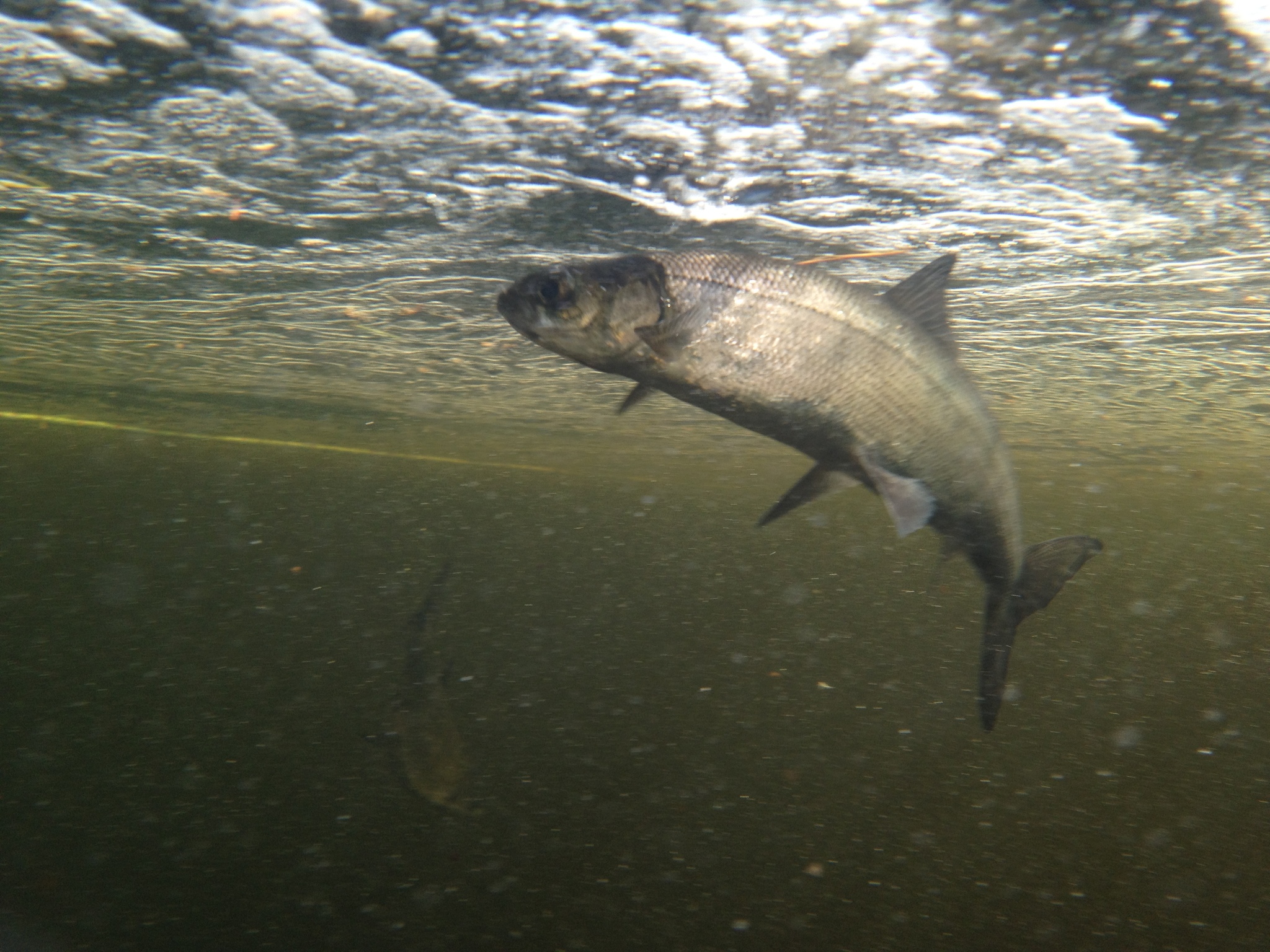
The Atlantic whitefish (Coregonus huntsmani) is a coregonine fish inhabiting some freshwater lakes within Nova Scotia, Canada.
- Kingdom
- Animalia
- Phylum
- Chordata
- Order
- Salmoniformes
- Family
- Salmonidae
- Genus
- Coregonus
- Species
- Coregonus huntsmani
Description
The Atlantic whitefish (Coregonus huntsmani) is a coregonine fish inhabiting some freshwater lakes within Nova Scotia, Canada. It is known to survive only in the Petite Rivière watershed as landlocked populations. Earlier it was also found in the Tusket and Annis rivers of Nova Scotia. Those populations were anadromous, migrating to the estuary to feed while breeding in freshwater. C. huntsmani was originally designated Coregonus canadensis, but the species name was changed in 1987. Other common names that C. huntsmani is known by are Acadian whitefish and sault whitefish. The species was designated as an endangered species by the IUCN in 1986 and vulnerable in 1996. It is now considered critically endangered due to the consequences of dam building and introduced predators such as smallmouth bass and chain pickerel. It has been listed as an endangered species under Schedule 1 of the Species at Risk Act since 2003. Nova Scotia prohibited the taking of Atlantic whitefish under the Canadian Fisheries Act. Other conservation actions for the species include captive breeding and restocking, as well as control of the introduced predators. The Atlantic whitefish has a typical salmonid body shape and is silvery on the sides and underside with a dark blue to dark green back. The landlocked populations feed on insects and small fish. The reproduction of Atlantic whitefish in nature has not been observed. The narrowly endemic Atlantic whitefish is genetically distinct from the lake whitefish (Coregonus clupeaformis) and the cisco (Coregonus artedi), which both are widespread across much of continental North America. Phylogenetic evidence indicates that the species is the sister to all other members of the widespread and speciose genus Coregonus, with its lineage diverging from the rest of the Coregonus species during the mid-Miocene, about 15 million years ago. Its phylogenetic position renders Coregonus paraphyletic with respect to Stenodus. The geneticist Paul Bentzen leads an Atlantic whitefish captive breeding program at the Dalhousie University Aquatron.
En aquarium
Espèce d'eau douce et saumâtre et eau de mer évoluant plutôt en pleine eau. Sur le plan biologique, elle atteint jusqu'à 40 cm, son régime est carnivore.
Paramètres relevés dans le milieu naturel de l’espèce (données scientifiques FishBase). À adapter aux besoins précis de l’espèce en captivité.
Gallery
Ajouter des photos
Partagez vos photos de cette espèce (jusqu'à 20 à la fois) : elles sont vérifiées automatiquement, puis publiées.
Répartition
Occurrences observées (données GBIF). Les zones hors aire d'origine peuvent indiquer une présence introduite ou invasive.
Sources et crédits
Informations provenant de plusieurs sources vérifiées. Dernière mise à jour : .
Crédits photos (2)
Mentions de licence
Texte disponible sous licence CC BY-SA 4.0. Il adapte notamment Wikipedia (CC BY-SA) : Atlantic whitefish (Wikipédia, auteurs dans l’historique de l’article).
- Taxonomie : GBIF Backbone Taxonomy (CC BY 4.0)
- Carte : occurrences GBIF, fond © contributeurs OpenStreetMap (ODbL)
- Statut de conservation : Liste rouge de l'UICN, via Wikidata (CC0)
- Paramètres d'aquarium : FishBase (faits reformulés)
Détail : Sources et licences.
Discussion (0)
Aucun message pour l’instant. Lancez la discussion sur cette fiche (sources, précisions, débats éditoriaux).
Connectez-vous pour participer à la discussion.