
Black Sea sprat
Clupeonella cultriventris
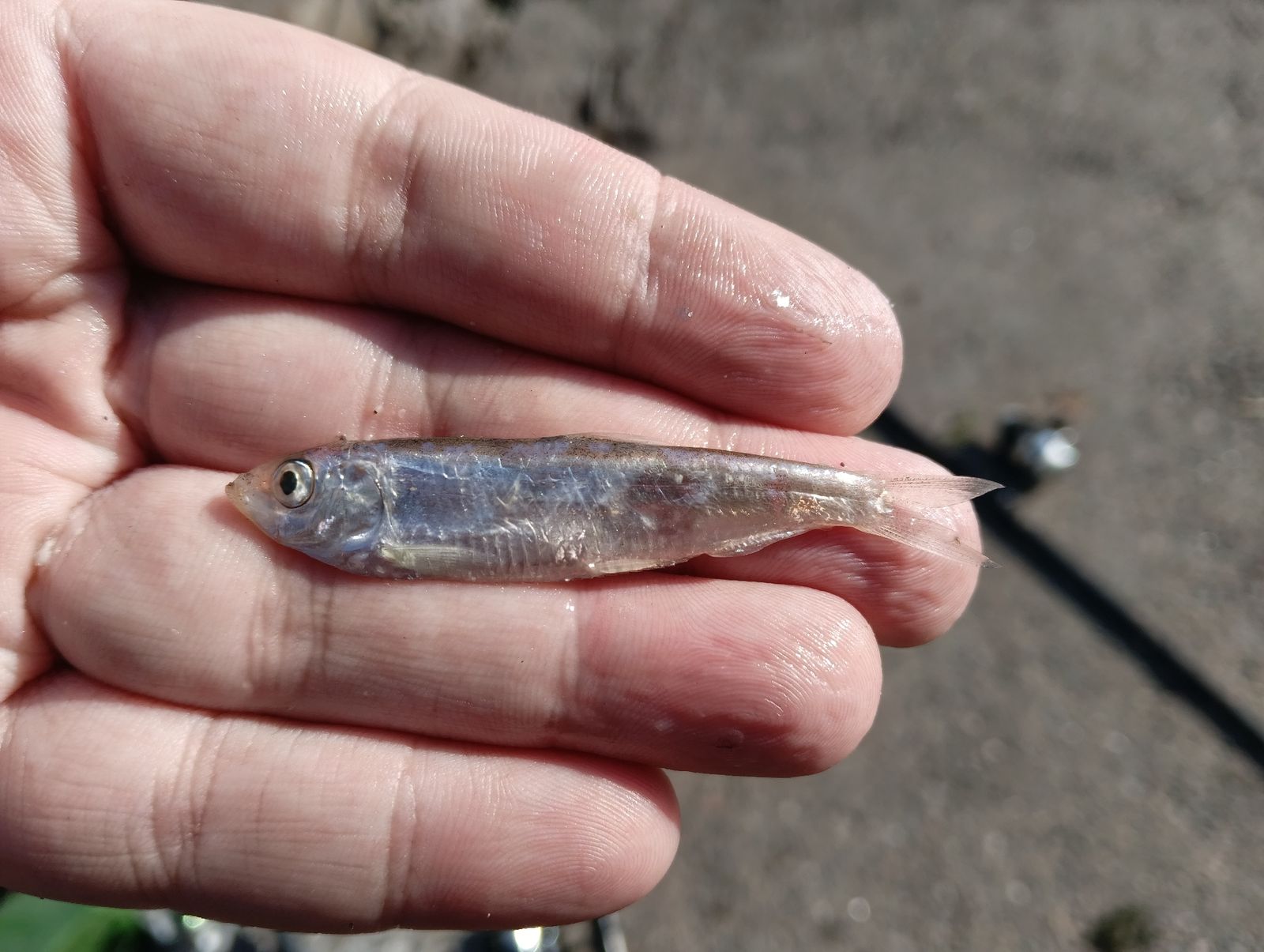
The Black Sea sprat or Pontic sprat, Clupeonella cultriventris, is a small fish of the herring family, Clupeidae.
- Kingdom
- Animalia
- Phylum
- Chordata
- Order
- Clupeiformes
- Family
- Clupeidae
- Genus
- Clupeonella
- Species
- Clupeonella cultriventris
Description
The Black Sea sprat or Pontic sprat, Clupeonella cultriventris, is a small fish of the herring family, Clupeidae. It is found in the Black Sea and Sea of Azov and rivers of its basins: Danube, Dnister, Dnipro (Ukraine), Southern Bug, Don, Kuban. It has white-grey flesh and silver-grey scales. A typical size is 10 cm (3.9 in), maximum 15 cm (5.9 in). The life span is up to 5 years. The peak of its spawning is in April and it can be found in enormous shoals in sea-shores, filled all-round coastal shallows, moving quickly back into the sea at a depth of 6–30 metres (20–98 ft). Used for food; it has around 12% fat in flesh. It is one of the most abundant fishes in the Sea of Azov. It is important prey for other fishes, particularly the pikeperch. The Clupeonella cultiventris has become a naturalized and often dominant species in the pelagic zones of the Volga and Kama River reservoirs. It exhibits long-term (6–8 year) population cycles, particularly in the Upper Volga. The northernmost point of its self-sustaining population in the Volga-Kama region is the Sheksna Reservoir, with single mature individuals occasionally recorded even further north in Lake Beloye. The Caspian tyulka Clupeonella caspia has been long considered a subspecies of C. cultriventris, C. cultriventris caspia, and a common name "Black and Caspian Sea sprat" was then applied to the whole. In Odesa cuisine, the sprats are battered and fried to produce sprat cutlets.
En aquarium
Espèce d'eau douce et saumâtre et eau de mer évoluant plutôt en pleine eau. Sur le plan biologique, elle atteint jusqu'à 14,5 cm, vit jusqu'à 5 ans, son régime est carnivore.
Paramètres relevés dans le milieu naturel de l’espèce (données scientifiques FishBase). À adapter aux besoins précis de l’espèce en captivité.
Gallery
Ajouter des photos
Partagez vos photos de cette espèce (jusqu'à 20 à la fois) : elles sont vérifiées automatiquement, puis publiées.
Répartition
Occurrences observées (données GBIF). Les zones hors aire d'origine peuvent indiquer une présence introduite ou invasive.
Sources et crédits
Informations provenant de plusieurs sources vérifiées. Dernière mise à jour : .
Crédits photos (10)
- Photo : Yurij Ivancea · CC BY-NC 4.0 · via GBIF
- Photo : Kutsokon Yuliya · CC BY-NC 4.0 · via GBIF
- Photo : milvus19 · CC BY-NC 4.0 · via GBIF
- Photo : Евгений Софронов · CC BY-NC 4.0 · via GBIF
- Photo : Вадим Рыбаков · CC BY-NC 4.0 · via GBIF
- Photo : К. Руслан и Ф. Виктория · CC BY-NC 4.0 · via GBIF
- Photo : timur2004 · CC BY-NC 4.0 · via GBIF
- Photo : vladimir_donscoi · CC BY-NC 4.0 · via GBIF
- Photo : К. Руслан и Ф. Виктория · CC BY-NC 4.0 · via GBIF
- Photo : nature protection department on Khortytsia national reserve · CC BY-NC 4.0 · via GBIF
Mentions de licence
Texte disponible sous licence CC BY-SA 4.0. Il adapte notamment Wikipedia (CC BY-SA) : Black Sea sprat (Wikipédia, auteurs dans l’historique de l’article).
- Taxonomie : GBIF Backbone Taxonomy (CC BY 4.0)
- Carte : occurrences GBIF, fond © contributeurs OpenStreetMap (ODbL)
- Statut de conservation : Liste rouge de l'UICN, via Wikidata (CC0)
- Paramètres d'aquarium : FishBase (faits reformulés)
Détail : Sources et licences.
Discussion (0)
Aucun message pour l’instant. Lancez la discussion sur cette fiche (sources, précisions, débats éditoriaux).
Connectez-vous pour participer à la discussion.