
Black Dogfish
Centroscyllium fabricii
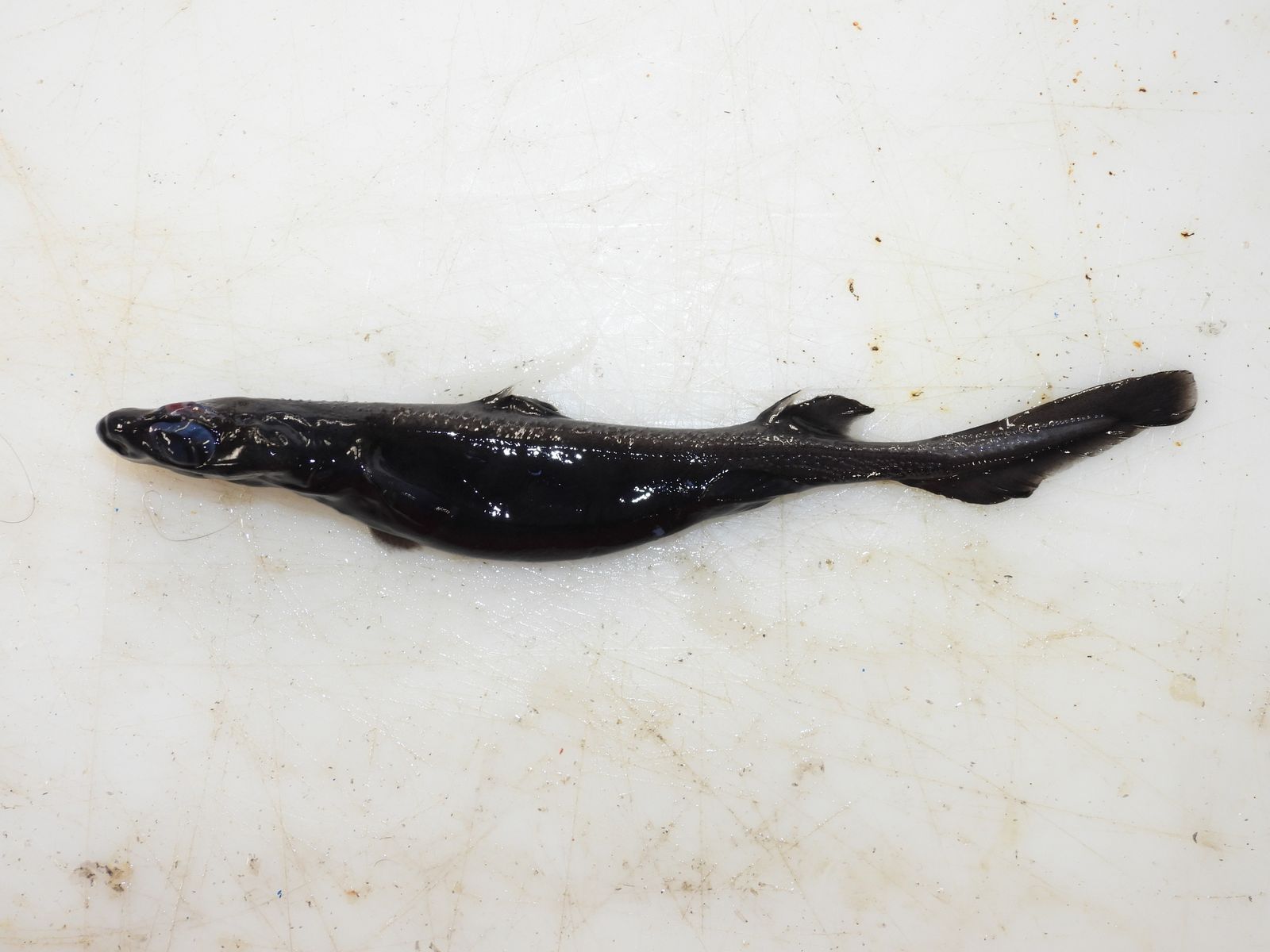
The black dogfish (Centroscyllium fabricii) is a species of dogfish shark in the family Etmopteridae.
- Kingdom
- Animalia
- Phylum
- Chordata
- Class
- Elasmobranchii
- Order
- Squaliformes
- Family
- Etmopteridae
- Genus
- Centroscyllium
- Species
- Centroscyllium fabricii
Description
The black dogfish (Centroscyllium fabricii) is a species of dogfish shark in the family Etmopteridae. It is common over the outer continental shelf and continental slope at depths of 180–2,250 m (590–7,380 ft). Females generally inhabit deeper water than males, and depending on the region, smaller sharks may occur at different depths than larger ones. This species is distributed widely in the Atlantic Ocean, from Greenland and Iceland to Virginia and West Africa in the north, and off southwestern Africa and Argentina in the south. The largest member of its family, the black dogfish, typically measures 60–75 cm (24–30 in) long. It has a stocky, dark brown body that is darker below than above, and bears scattered, minute bioluminescent organs. Its two dorsal fins are preceded by stout spines, and the anal fin is absent. Active and schooling, the black dogfish is an opportunistic predator and scavenger that mainly consumes bony fishes, crustaceans, and cephalopods. It is aplacental viviparous, with females producing litters of four to 40 pups that are sustained to term by a yolk sac. There is no well-defined breeding season, and mating and birthing take place year-round. The black dogfish contributes significantly to the bycatch of deep-sea commercial fisheries operating in the North Atlantic; it is of little commercial value and is usually discarded. As large portions of its range see little deepwater fishing activity and its northwestern Atlantic population seems to be stable, the International Union for Conservation of Nature has listed this species under Least Concern overall. It has been assessed as Near Threatened in the northeastern Atlantic, where its numbers may have declined from heavy fishing pressure.
En aquarium
Espèce d'eau de mer évoluant plutôt en pleine eau. Paramètres d'eau relevés dans son milieu : température de 1 à 4,6 °C. Sur le plan biologique, elle atteint jusqu'à 107 cm, son régime est piscivore.
Paramètres relevés dans le milieu naturel de l’espèce (données scientifiques FishBase). À adapter aux besoins précis de l’espèce en captivité.
Gallery
Ajouter des photos
Partagez vos photos de cette espèce (jusqu'à 20 à la fois) : elles sont vérifiées automatiquement, puis publiées.
Répartition
Occurrences observées (données GBIF). Les zones hors aire d'origine peuvent indiquer une présence introduite ou invasive.
Sources et crédits
Informations provenant de plusieurs sources vérifiées. Dernière mise à jour : .
Crédits photos (10)
- Photo : Julien Savoie · CC BY 4.0 · via GBIF
- Photo : Julien Savoie · CC BY 4.0 · via GBIF
- Photo : Julien Savoie · CC BY 4.0 · via GBIF
- Photo : Julien Savoie · CC BY 4.0 · via GBIF
- Photo : Iván Jesús Fernández Jiménez · CC BY-NC 4.0 · via GBIF
- Photo : ottoshark · CC BY-NC 4.0 · via GBIF
- Photo : wolbaumc · CC BY-NC 4.0 · via GBIF
- Photo : Pingo · CC BY-NC 4.0 · via GBIF
- Photo : Pingo · CC BY-NC 4.0 · via GBIF
- Photo : Pingo · CC BY-NC 4.0 · via GBIF
Mentions de licence
Texte disponible sous licence CC BY-SA 4.0. Il adapte notamment Wikipedia (CC BY-SA) : Black dogfish (Wikipédia, auteurs dans l’historique de l’article).
- Taxonomie : GBIF Backbone Taxonomy (CC BY 4.0)
- Carte : occurrences GBIF, fond © contributeurs OpenStreetMap (ODbL)
- Statut de conservation : Liste rouge de l'UICN, via Wikidata (CC0)
- Paramètres d'aquarium : FishBase (faits reformulés)
Détail : Sources et licences.
Discussion (0)
Aucun message pour l’instant. Lancez la discussion sur cette fiche (sources, précisions, débats éditoriaux).
Connectez-vous pour participer à la discussion.