
Smalltail Shark
Carcharhinus porosus
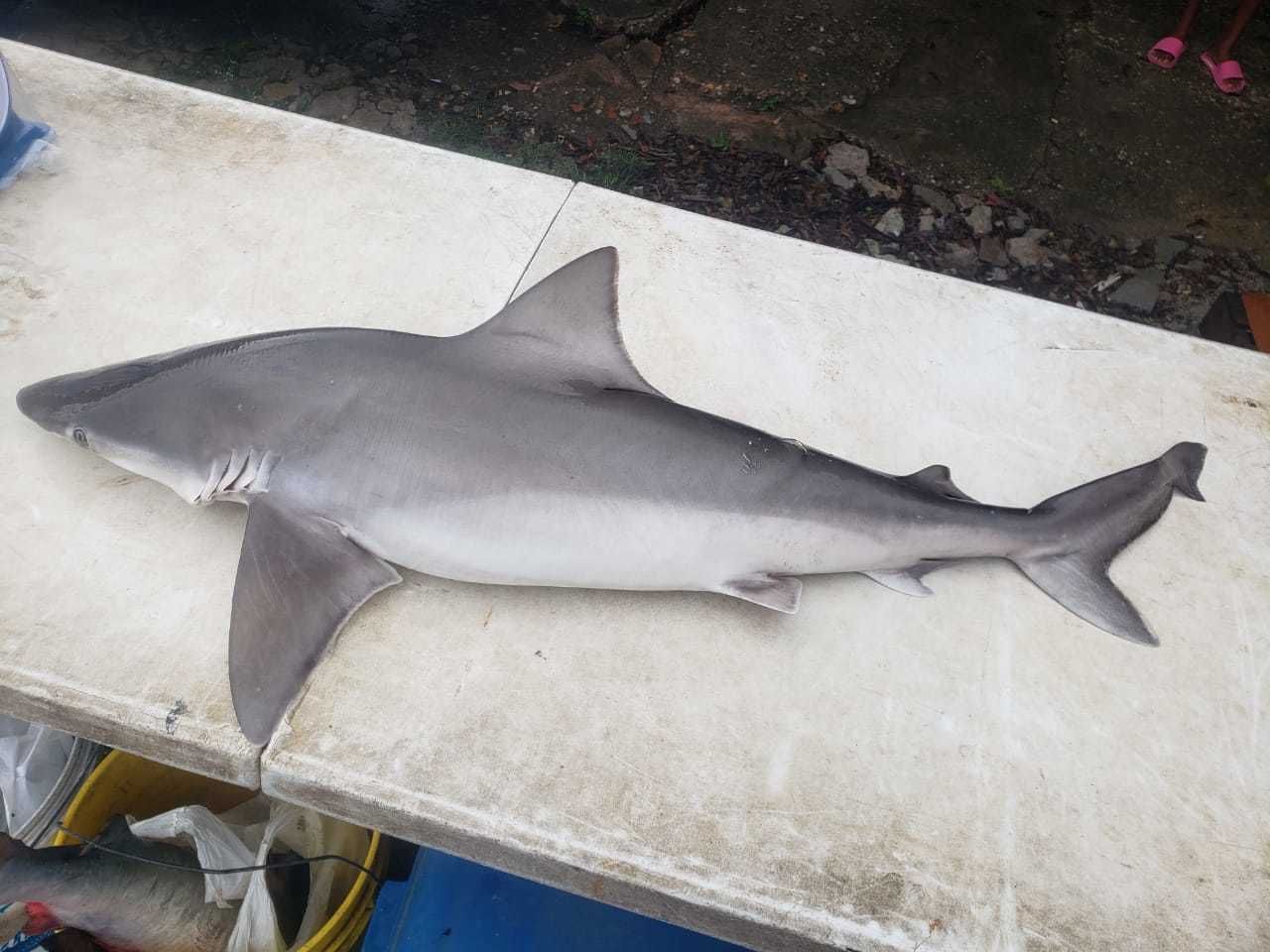
The smalltail shark (Carcharhinus porosus) is a species of requiem shark, and part of the family Carcharhinidae.
- Kingdom
- Animalia
- Phylum
- Chordata
- Class
- Elasmobranchii
- Order
- Carcharhiniformes
- Family
- Carcharhinidae
- Genus
- Carcharhinus
- Species
- Carcharhinus porosus
Description
The smalltail shark (Carcharhinus porosus) is a species of requiem shark, and part of the family Carcharhinidae. It is found in the western Atlantic Ocean, from the northern Gulf of Mexico to southern Brazil. It inhabits shallow waters close to shore, particularly over muddy bottoms around estuaries. It tends to swim low in the water column and forms large aggregations segregated by sex. A slim species generally not exceeding 1.1 m (3.6 ft) in length, the smalltail shark has a rather long, pointed snout, a broad, triangular first dorsal fin, and a second dorsal fin that originates over the midpoint of the anal fin base. It is plain gray in color, without prominent markings on its fins. The diet of the smalltail shark consists mainly of bony fishes such as croakers, while crustaceans, cephalopods, and smaller sharks and rays may also be consumed. It is viviparous, meaning the developing embryos are sustained by a placental connection. Females bear litters of two to 9 young on a biennial cycle, following a roughly 12-month gestation period. The smalltail shark is often caught as bycatch and may be used for meat, fins, liver oil, cartilage, and fishmeal. It seems to have declined significantly since the 1980s. Therefore, the International Union for Conservation of Nature has listed it as critically endangered.
En aquarium
Espèce d'saumâtre et eau de mer évoluant plutôt près du fond. Sur le plan biologique, elle atteint jusqu'à 150 cm, son régime est piscivore.
Paramètres relevés dans le milieu naturel de l’espèce (données scientifiques FishBase). À adapter aux besoins précis de l’espèce en captivité.
Gallery
Ajouter des photos
Partagez vos photos de cette espèce (jusqu'à 20 à la fois) : elles sont vérifiées automatiquement, puis publiées.
Répartition
Occurrences observées (données GBIF). Les zones hors aire d'origine peuvent indiquer une présence introduite ou invasive.
Sources et crédits
Informations provenant de plusieurs sources vérifiées. Dernière mise à jour : .
Crédits photos (10)
- Photo : Farahnaz Nissa Solomon · CC BY-NC 4.0 · via GBIF
- Photo : Nhering Daniel Ortiz Lobo · CC BY-NC 4.0 · via GBIF
- Photo : Isaac Chacón · CC BY 4.0 · via GBIF
- Photo : Division of Fishes · CC0 (domaine public) · via GBIF
- Photo : Division of Fishes · CC0 (domaine public) · via GBIF
- Photo : Division of Fishes · CC0 (domaine public) · via GBIF
- Photo : Division of Fishes · CC0 (domaine public) · via GBIF
- Photo : Division of Fishes · CC0 (domaine public) · via GBIF
- Photo : Division of Fishes · CC0 (domaine public) · via GBIF
- Photo : Division of Fishes · CC0 (domaine public) · via GBIF
Mentions de licence
Texte disponible sous licence CC BY-SA 4.0. Il adapte notamment Wikipedia (CC BY-SA) : Smalltail shark (Wikipédia, auteurs dans l’historique de l’article).
- Taxonomie : GBIF Backbone Taxonomy (CC BY 4.0)
- Carte : occurrences GBIF, fond © contributeurs OpenStreetMap (ODbL)
- Statut de conservation : Liste rouge de l'UICN, via Wikidata (CC0)
- Paramètres d'aquarium : FishBase (faits reformulés)
Détail : Sources et licences.
Discussion (0)
Aucun message pour l’instant. Lancez la discussion sur cette fiche (sources, précisions, débats éditoriaux).
Connectez-vous pour participer à la discussion.