
Copper Shark
Carcharhinus brachyurus
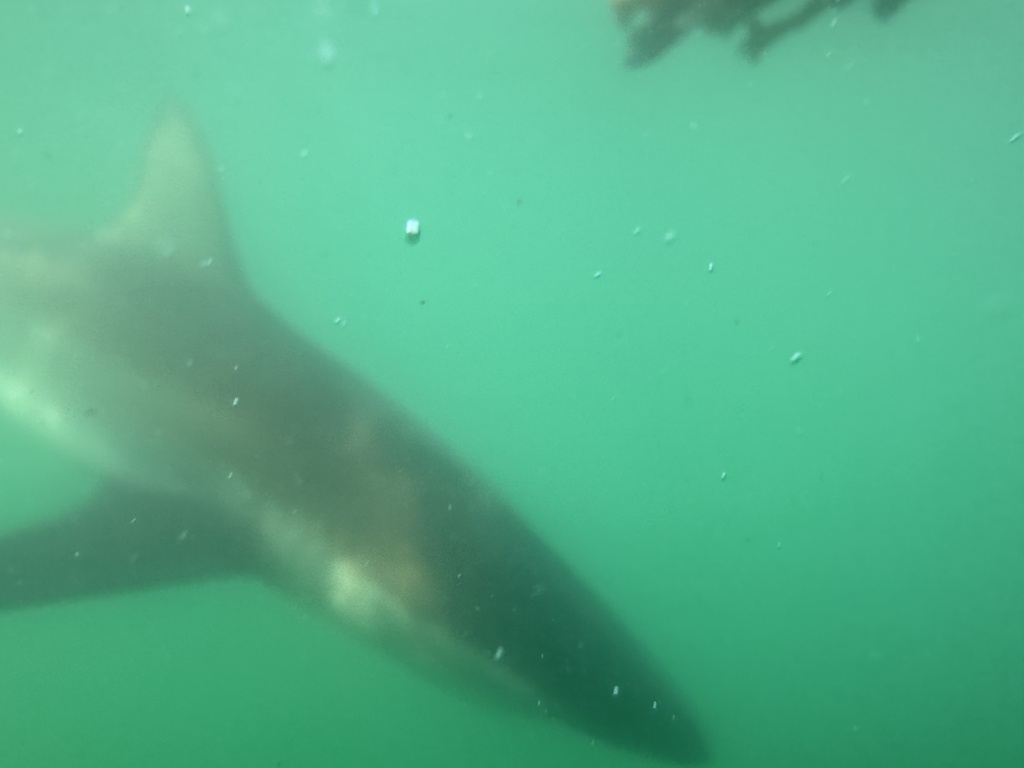
The copper shark (Carcharhinus brachyurus), bronze whaler, or narrowtooth shark is a species of requiem shark found mostly in temperate latitudes.
- Kingdom
- Animalia
- Phylum
- Chordata
- Class
- Elasmobranchii
- Order
- Carcharhiniformes
- Family
- Carcharhinidae
- Genus
- Carcharhinus
- Species
- Carcharhinus brachyurus
Description
The copper shark (Carcharhinus brachyurus), bronze whaler, or narrowtooth shark is a species of requiem shark found mostly in temperate latitudes. It is distributed in a number of separate populations in the northeastern and southwestern Atlantic, off southern Africa, in the northwestern and eastern Pacific, and around Australia and New Zealand, with scattered reports from equatorial regions. The species can be found from brackish rivers and estuaries to shallow bays and harbors, to offshore waters 100 m (330 ft) deep or more. Females are found apart from males for most of the year, and conduct seasonal migrations. A large species reaching 3.3 m (11 ft) long, the copper shark is difficult to distinguish from other large requiem sharks. It is characterized by its narrow, hook-shaped upper teeth, lack of a prominent ridge between the dorsal fins, and plain bronze coloration. Feeding mainly on cephalopods, bony fishes, and other cartilaginous fishes, the copper shark is a fast-swimming predator that has been known to hunt in large groups, using their numbers to their advantage; however, for most of the time they remain solitary. Off South Africa, this species associates closely with the annual sardine run, involving millions of southern African pilchard (Sardinops sagax). Like other requiem sharks, it is viviparous, with the developing embryos mainly nourished through a placental connection formed from the depleted yolk sac. Females bear litters of 7 to 24 pups every other year in coastal nursery areas, after a gestation period of 12 or perhaps as long as 21 months. It is extremely slow-growing, with males and females not reaching maturity until 13–19 and 19–20 years of age respectively. This species is valued by commercial and recreational fisheries throughout its range, and utilized as food. The species population size is unknown, but the IUCN's Red List assesses the species as vulnerable because it is very susceptible to population depletion due to its low growth and reproductive rates and because its numbers are believed to have declined in some areas. Copper sharks attack humans infrequently, but the species places tenth in the number of unprovoked attacks on people. However, the actual number of recorded shark attacks is low – 15 non-fatal, unprovoked attacks and only one fatal unprovoked attack.
En aquarium
Espèce d'saumâtre et eau de mer évoluant plutôt autour des récifs. Sur le plan biologique, elle atteint jusqu'à 325 cm, vit jusqu'à 30 ans, son régime est piscivore.
Paramètres relevés dans le milieu naturel de l’espèce (données scientifiques FishBase). À adapter aux besoins précis de l’espèce en captivité.
Gallery
Ajouter des photos
Partagez vos photos de cette espèce (jusqu'à 20 à la fois) : elles sont vérifiées automatiquement, puis publiées.
Répartition
Occurrences observées (données GBIF). Les zones hors aire d'origine peuvent indiquer une présence introduite ou invasive.
Sources et crédits
Informations provenant de plusieurs sources vérifiées. Dernière mise à jour : .
Crédits photos (2)
- Photo : @geographical · CC BY-NC 4.0 · via iNaturalist
- Photo : Alex Phelps (@alexbellnz) · CC BY-NC 4.0 · via iNaturalist
Mentions de licence
Texte disponible sous licence CC BY-SA 4.0. Il adapte notamment Wikipedia (CC BY-SA) : Copper shark (Wikipédia, auteurs dans l’historique de l’article).
- Taxonomie : GBIF Backbone Taxonomy (CC BY 4.0)
- Carte : occurrences GBIF, fond © contributeurs OpenStreetMap (ODbL)
- Statut de conservation : Liste rouge de l'UICN, via Wikidata (CC0)
- Paramètres d'aquarium : FishBase (faits reformulés)
Détail : Sources et licences.
Discussion (0)
Aucun message pour l’instant. Lancez la discussion sur cette fiche (sources, précisions, débats éditoriaux).
Connectez-vous pour participer à la discussion.