
Pigeye Shark
Carcharhinus amboinensis
The pigeye shark or Java shark (Carcharhinus amboinensis) is an uncommon species of requiem shark, in the family Carcharhinidae, found in the warm coastal waters of the eastern Atlantic and western Indo-Pacific.
- Kingdom
- Animalia
- Phylum
- Chordata
- Class
- Elasmobranchii
- Order
- Carcharhiniformes
- Family
- Carcharhinidae
- Genus
- Carcharhinus
- Species
- Carcharhinus amboinensis
Description
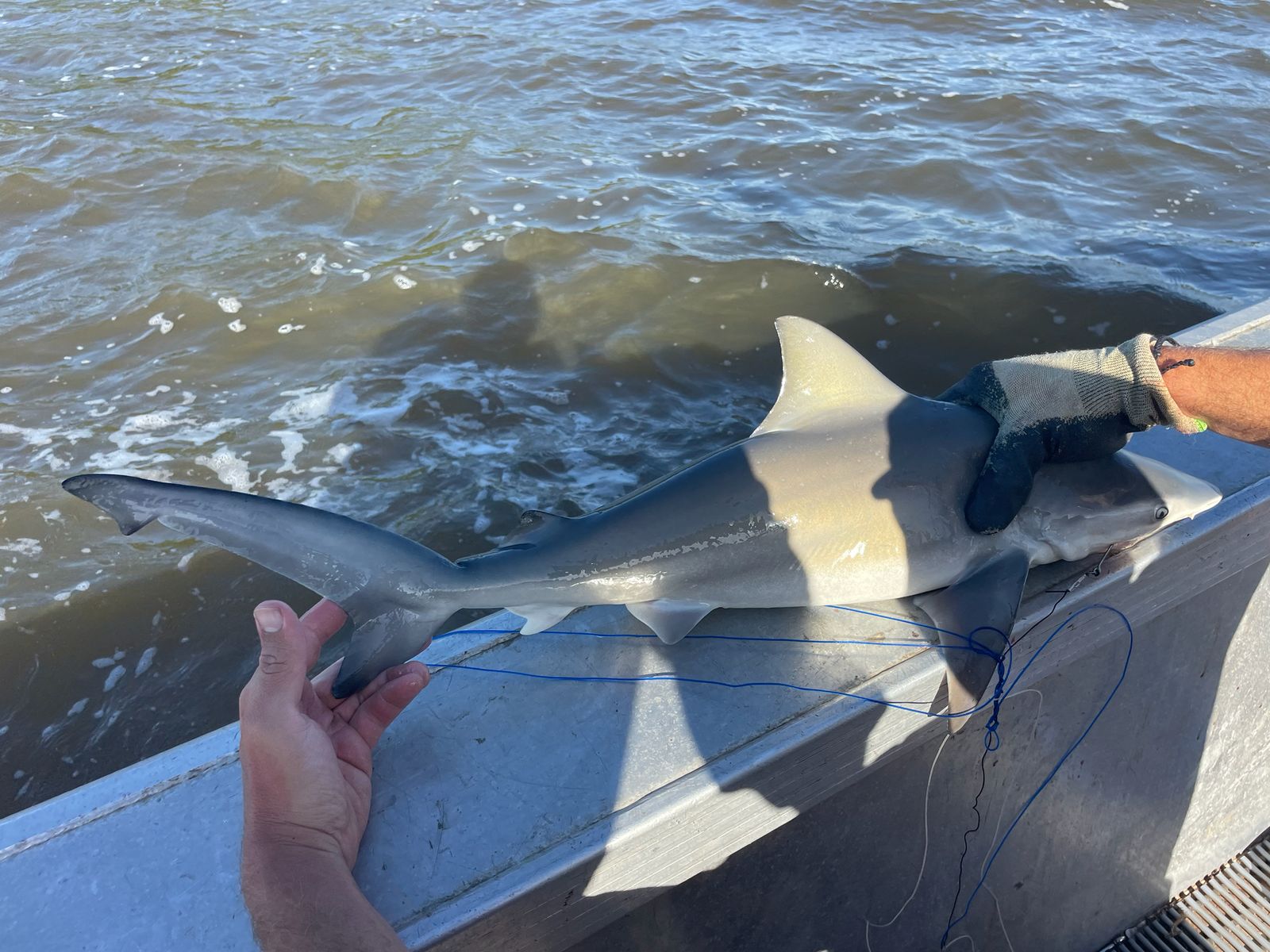
The pigeye shark or Java shark (Carcharhinus amboinensis) is an uncommon species of requiem shark, in the family Carcharhinidae, found in the warm coastal waters of the eastern Atlantic and western Indo-Pacific. It prefers shallow, murky environments with soft bottoms, and tends to roam within a fairly localized area. With its bulky grey body, small eyes, and short, blunt snout, the pigeye shark looks almost identical to (and is often confused with) the better-known bull shark (C. leucas). The two species differ in vertebral count, the relative sizes of the dorsal fins, and other subtle traits. This shark typically reaches lengths of 1.9–2.5 m (6.2–8.2 ft). The pigeye shark is an apex predator that mostly hunts low in the water column. It has a varied diet, consisting mainly of bony and cartilaginous fishes and also including crustaceans, molluscs, sea snakes, and cetaceans. This species gives birth to live young, with the developing embryos sustained to term via a placental connection to their mother. Litters of three to thirteen pups are born after a gestation period of nine or twelve months. Young sharks spend their first few years of life in sheltered inshore habitats such as bays, where their movements follow tidal and seasonal patterns. The pigeye shark's size and dentition make it potentially dangerous, though it has not been known to attack humans. The shark is infrequently caught in shark nets protecting beaches and by fisheries, which use it for meat and fins. The IUCN presently assesses this species as vulnerable.
En aquarium
Espèce d'saumâtre et eau de mer évoluant plutôt autour des récifs. Sur le plan biologique, elle atteint jusqu'à 280 cm, son régime est piscivore.
Paramètres relevés dans le milieu naturel de l’espèce (données scientifiques FishBase). À adapter aux besoins précis de l’espèce en captivité.
Gallery
Ajouter des photos
Partagez vos photos de cette espèce (jusqu'à 20 à la fois) : elles sont vérifiées automatiquement, puis publiées.
Répartition
Occurrences observées (données GBIF). Les zones hors aire d'origine peuvent indiquer une présence introduite ou invasive.
Sources et crédits
Informations provenant de plusieurs sources vérifiées. Dernière mise à jour : .
Crédits photos (10)
- Photo : bridgetnolan · CC BY-NC 4.0 · via GBIF
- Photo : bridgetnolan · CC BY-NC 4.0 · via GBIF
- Photo : bridgetnolan · CC BY-NC 4.0 · via GBIF
- Photo : bridgetnolan · CC BY-NC 4.0 · via GBIF
- Photo : bridgetnolan · CC BY-NC 4.0 · via GBIF
- Photo : Niran Anurakpongsathorn · CC BY-NC 4.0 · via GBIF
- Photo : bridgetnolan · CC BY-NC 4.0 · via GBIF
- Photo : bridgetnolan · CC BY-NC 4.0 · via GBIF
- Photo : bridgetnolan · CC BY-NC 4.0 · via GBIF
- Photo : bridgetnolan · CC BY-NC 4.0 · via GBIF
Mentions de licence
Texte disponible sous licence CC BY-SA 4.0. Il adapte notamment Wikipedia (CC BY-SA) : Pigeye shark (Wikipédia, auteurs dans l’historique de l’article).
- Taxonomie : GBIF Backbone Taxonomy (CC BY 4.0)
- Carte : occurrences GBIF, fond © contributeurs OpenStreetMap (ODbL)
- Statut de conservation : Liste rouge de l'UICN, via Wikidata (CC0)
- Paramètres d'aquarium : FishBase (faits reformulés)
Détail : Sources et licences.
Discussion (0)
Aucun message pour l’instant. Lancez la discussion sur cette fiche (sources, précisions, débats éditoriaux).
Connectez-vous pour participer à la discussion.