
Silvertip shark
Carcharhinus albimarginatus
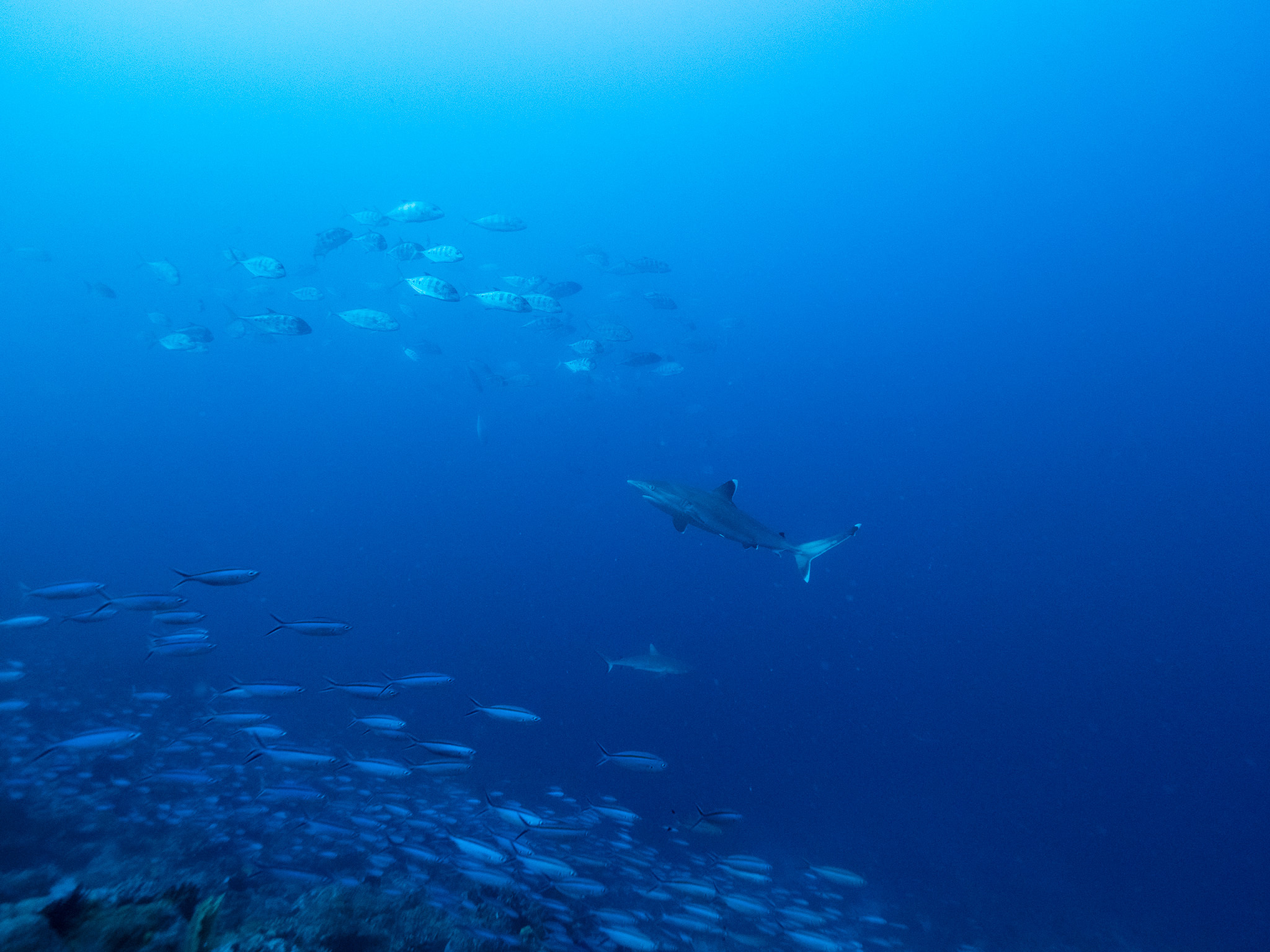
The silvertip shark (Carcharhinus albimarginatus) is a large species of requiem shark in the family carcharhinidae, with a fragmented distribution throughout the tropical Indian and Pacific Oceans.
- Kingdom
- Animalia
- Phylum
- Chordata
- Class
- Elasmobranchii
- Order
- Carcharhiniformes
- Family
- Carcharhinidae
- Genus
- Carcharhinus
- Species
- Carcharhinus albimarginatus
Description
The silvertip shark (Carcharhinus albimarginatus) is a large species of requiem shark in the family carcharhinidae, with a fragmented distribution throughout the tropical Indian and Pacific Oceans. It is often encountered around offshore islands and coral reefs, and has been known to dive to a depth of 800 m (2,600 ft). The silvertip shark resembles a larger and bulkier grey reef shark (C. amblyrhynchos), but can be easily identified by the prominent white margins on its fins. It attains a maximum length of 3 m (10 ft). It feeds on a wide variety of bony fishes, as well as eagle rays, smaller sharks, and cephalopods. This species dominates other requiem sharks of equal size when competing for food, and larger individuals are often heavily scarred from conflicts with others of its species. As with other members of its family, the silvertip shark is viviparous, with females giving birth to one to 11 pups in the summer. Silvertip sharks are regarded as potentially dangerous to humans, as they often approach divers quite closely. This slow-reproducing species is taken by commercial fisheries for its meat, fins, skin, cartilage, and jaws and teeth, which has apparently led to local population declines or extirpations.
En aquarium
Espèce d'eau de mer évoluant plutôt autour des récifs. Sur le plan biologique, elle atteint jusqu'à 300 cm, son régime est piscivore.
Paramètres relevés dans le milieu naturel de l’espèce (données scientifiques FishBase). À adapter aux besoins précis de l’espèce en captivité.
Gallery
Ajouter des photos
Partagez vos photos de cette espèce (jusqu'à 20 à la fois) : elles sont vérifiées automatiquement, puis publiées.
Répartition
Occurrences observées (données GBIF). Les zones hors aire d'origine peuvent indiquer une présence introduite ou invasive.
Sources et crédits
Informations provenant de plusieurs sources vérifiées. Dernière mise à jour : .
Crédits photos (5)
- Photo : boussion_magali · CC BY-NC 4.0 · via GBIF
- Photo : Albert Kang (@albertkang) · CC BY-NC 4.0 · via iNaturalist
- Photo : Billy Bensted-Smith (@billybs) · CC BY-NC 4.0 · via iNaturalist
- Photo : Simon Pierce (@simonjpierce) · CC BY-NC 4.0 · via iNaturalist
- Photo : Johan Bas (@johan98800) · CC BY-NC 4.0 · via iNaturalist
Mentions de licence
Texte disponible sous licence CC BY-SA 4.0. Il adapte notamment Wikipedia (CC BY-SA) : Silvertip shark (Wikipédia, auteurs dans l’historique de l’article).
- Taxonomie : GBIF Backbone Taxonomy (CC BY 4.0)
- Carte : occurrences GBIF, fond © contributeurs OpenStreetMap (ODbL)
- Statut de conservation : Liste rouge de l'UICN, via Wikidata (CC0)
- Paramètres d'aquarium : FishBase (faits reformulés)
Détail : Sources et licences.
Discussion (0)
Aucun message pour l’instant. Lancez la discussion sur cette fiche (sources, précisions, débats éditoriaux).
Connectez-vous pour participer à la discussion.