
Blue Runner
Caranx crysos
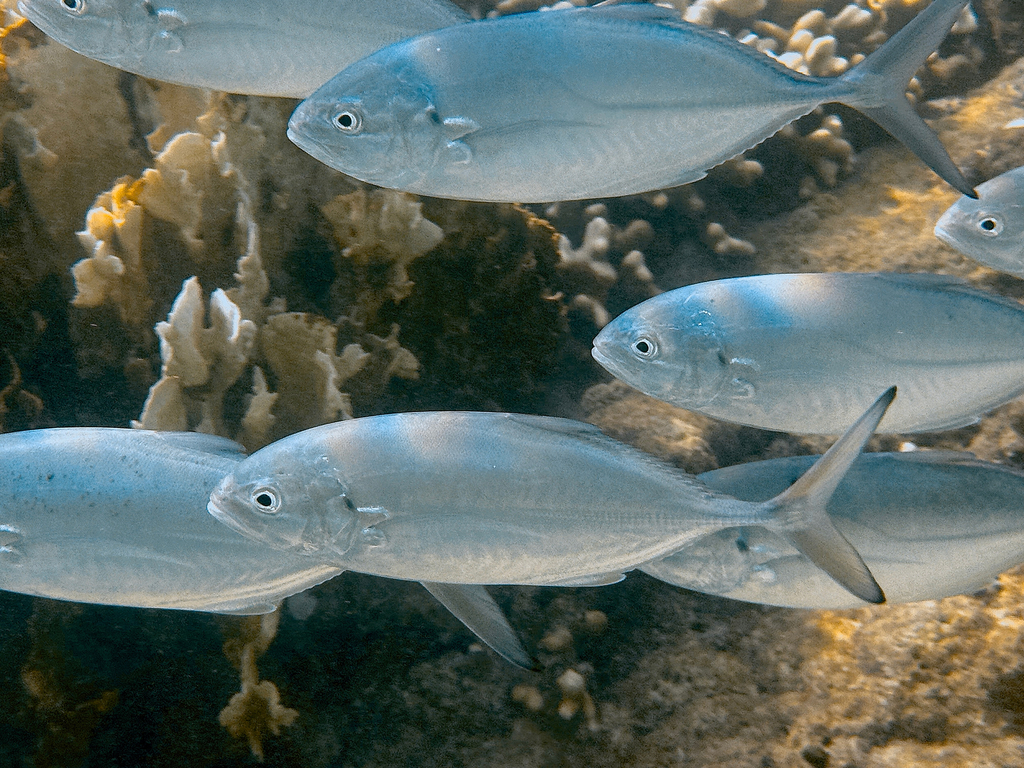
The blue runner (Caranx crysos), also known as the bluestripe jack, Egyptian scad, hardtail jack, or hardnose, is a common species of moderately large marine fish classified in the jack family, Carangidae.
- Kingdom
- Animalia
- Phylum
- Chordata
- Order
- Perciformes
- Family
- Carangidae
- Genus
- Caranx
- Species
- Caranx crysos
Description
The blue runner (Caranx crysos), also known as the bluestripe jack, Egyptian scad, hardtail jack, or hardnose, is a common species of moderately large marine fish classified in the jack family, Carangidae. The blue runner is distributed across the Atlantic Ocean, ranging from Brazil to Canada in the western Atlantic and from Angola to Great Britain including the Mediterranean in the east Atlantic. The blue runner is distinguished from similar species by several morphological features, including the extent of the upper jaw, gill raker count, and lateral line scale counts. The blue runner is known to reach a maximum length of 70 cm and 5.05 kg in weight, but is much more common below 35 cm. The species inhabits both inshore and offshore environments, predominantly over reefs, but it is known to congregate around large, man-made, offshore structures such as oil platforms. Juveniles tend to inhabit shallower reef and lagoon waters, before moving to deeper waters as adults. The blue runner is a schooling, predatory fish, predominantly taking fish in inshore environments, as well as various crustaceans and other invertebrates. Fish living offshore feed nearly exclusively on zooplankton. The species reaches sexual maturity between 225 and 280 mm across its range, with spawning occurring offshore year-round, although this peaks during the warmer months. Larvae and juveniles live pelagically, often under sargassum mats or jellyfish until they move inshore. The blue runner is of high importance to fisheries, with an annual catch between 6000 and 7000 tonnes taken from the Americas in the last five years. The species is also a light-tackle gamefish, taking baits, lures, and flies, but is often used as bait itself, being a mediocre table fish. Some suggest that the eastern Pacific species Caranx caballus, the green jack, may be conspecific with C. crysos, although this currently remains unresolved.
En aquarium
Espèce d'saumâtre et eau de mer évoluant plutôt autour des récifs. Sur le plan biologique, elle atteint jusqu'à 70 cm, vit jusqu'à 11 ans, son régime est piscivore.
Paramètres relevés dans le milieu naturel de l’espèce (données scientifiques FishBase ; voir aussi la fiche Fishipedia). À adapter aux besoins précis de l’espèce en captivité.
Gallery
Ajouter des photos
Partagez vos photos de cette espèce (jusqu'à 20 à la fois) : elles sont vérifiées automatiquement, puis publiées.
Répartition
Occurrences observées (données GBIF). Les zones hors aire d'origine peuvent indiquer une présence introduite ou invasive.
Sources et crédits
Informations provenant de plusieurs sources vérifiées. Dernière mise à jour : .
Crédits photos (4)
- Photo : Julian Gums (@juliangums) · CC BY-NC 4.0 · via iNaturalist
- Photo : Dan Schofield (@djscho) · CC BY 4.0 · via iNaturalist
- Photo : Iberozoa (@iberozoa) · CC BY-NC 4.0 · via iNaturalist
- Photo : Mika Tomta (@mikat78) · CC BY-NC 4.0 · via iNaturalist
Mentions de licence
Texte disponible sous licence CC BY-SA 4.0. Il adapte notamment Wikipedia (CC BY-SA) : Blue runner (Wikipédia, auteurs dans l’historique de l’article).
- Taxonomie : GBIF Backbone Taxonomy (CC BY 4.0)
- Carte : occurrences GBIF, fond © contributeurs OpenStreetMap (ODbL)
- Statut de conservation : Liste rouge de l'UICN, via Wikidata (CC0)
- Paramètres d'aquarium : FishBase (faits reformulés)
Détail : Sources et licences.
Discussion (0)
Aucun message pour l’instant. Lancez la discussion sur cette fiche (sources, précisions, débats éditoriaux).
Connectez-vous pour participer à la discussion.