
Red Sea Catfish
Bagre pinnimaculatus
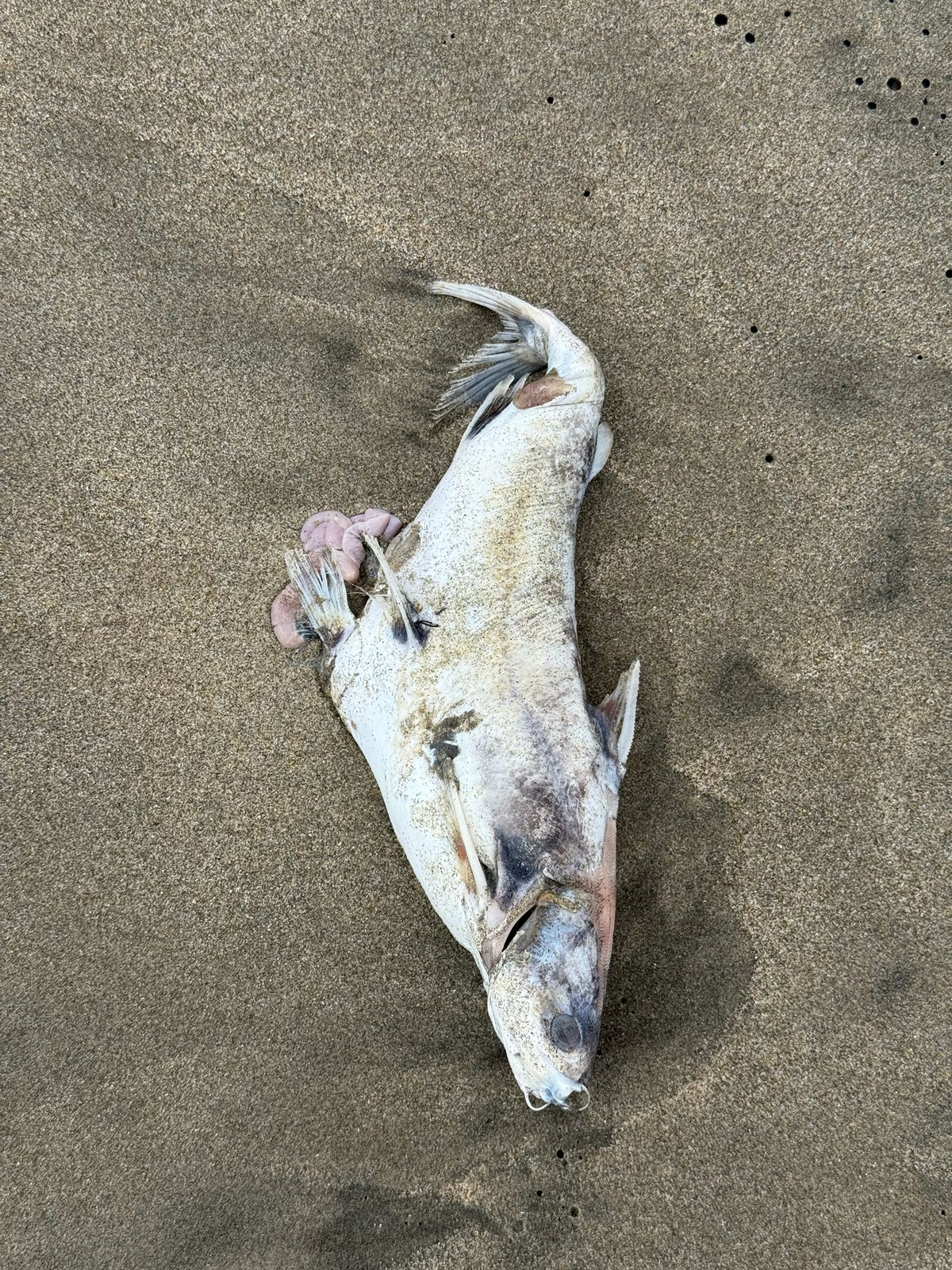
The red sea catfish (Bagre pinnimaculatus), also called the long-barbeled sea catfish, is a species of sea catfish in the family Ariidae.
- Kingdom
- Animalia
- Phylum
- Chordata
- Order
- Siluriformes
- Family
- Ariidae
- Genus
- Bagre
- Species
- Bagre pinnimaculatus
Description
The red sea catfish (Bagre pinnimaculatus), also called the long-barbeled sea catfish, is a species of sea catfish in the family Ariidae. It was described by Franz Steindachner in 1876, originally under the genus Aelurichthys. It inhabits tropical marine, brackish and freshwater in the eastern-central and southeastern Pacific regions, including Mexico, Colombia, Ecuador, Costa Rica, Guatemala, Honduras, El Salvador, Panama, Nicaragua, and Peru. It dwells at a maximum depth of 20 m (66 ft). It reaches a maximum total length of 95 cm (37 in), but more commonly reaches 30 cm (12 in). The diet of the red sea catfish at a recruitment age consists of the scales of bony fish. It is of important commercial value to fisheries, and has been consumed since the pre-Columbian era. It is sold fresh, dried, smoked, and salted, but is often labelled as other species including those in the family Sciaenidae, due to the higher market price. Due to its wide distribution and abundance in many areas in the eastern Pacific, as well as its lack of known threats or observed population decline, the IUCN Red List currently rates the red sea catfish as least concern. It notes that the species' range includes a number of areas under marine protection.
En aquarium
Espèce d'eau douce et saumâtre et eau de mer évoluant plutôt près du fond. Sur le plan biologique, elle atteint jusqu'à 95 cm, son régime est piscivore.
Paramètres relevés dans le milieu naturel de l’espèce (données scientifiques FishBase). À adapter aux besoins précis de l’espèce en captivité.
Gallery
Ajouter des photos
Partagez vos photos de cette espèce (jusqu'à 20 à la fois) : elles sont vérifiées automatiquement, puis publiées.
Répartition
Occurrences observées (données GBIF). Les zones hors aire d'origine peuvent indiquer une présence introduite ou invasive.
Sources et crédits
Informations provenant de plusieurs sources vérifiées. Dernière mise à jour : .
Crédits photos (10)
- Photo : Raúl Ebbinghaus · CC BY-NC 4.0 · via GBIF
- Photo : Jeanina Lisbeth López Loor · CC BY-NC 4.0 · via GBIF
- Photo : Anahí Asar · CC BY-NC 4.0 · via GBIF
- Photo : humbertobonilla · CC BY-NC 4.0 · via GBIF
- Photo : David Torres · CC BY-NC 4.0 · via GBIF
- Photo : Diego Torres Sierra · CC BY-NC 4.0 · via GBIF
- Photo : Daniel · CC BY-NC 4.0 · via GBIF
- Photo : helemiqa · CC BY-NC 4.0 · via GBIF
- Photo : Daniel · CC BY-NC 4.0 · via GBIF
- Photo : Daniel · CC BY-NC 4.0 · via GBIF
Mentions de licence
Texte disponible sous licence CC BY-SA 4.0. Il adapte notamment Wikipedia (CC BY-SA) : Red sea catfish (Wikipédia, auteurs dans l’historique de l’article).
- Taxonomie : GBIF Backbone Taxonomy (CC BY 4.0)
- Carte : occurrences GBIF, fond © contributeurs OpenStreetMap (ODbL)
- Statut de conservation : Liste rouge de l'UICN, via Wikidata (CC0)
- Paramètres d'aquarium : FishBase (faits reformulés)
Détail : Sources et licences.
Discussion (0)
Aucun message pour l’instant. Lancez la discussion sur cette fiche (sources, précisions, débats éditoriaux).
Connectez-vous pour participer à la discussion.