
Clown anemonefish
Amphiprion percula
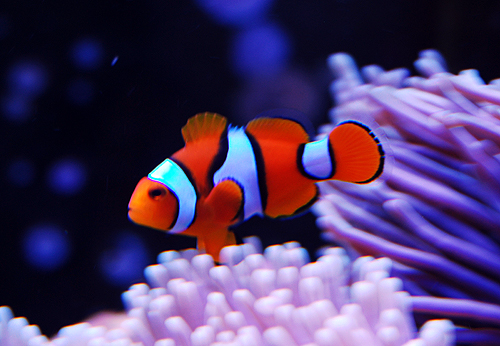
The orange clownfish (Amphiprion percula) also known as percula clownfish and clown anemonefish, is widely known as a popular aquarium fish.
- Kingdom
- Animalia
- Phylum
- Chordata
- Order
- Perciformes
- Family
- Pomacentridae
- Genus
- Amphiprion
- Species
- Amphiprion percula
Description
The orange clownfish (Amphiprion percula) also known as percula clownfish and clown anemonefish, is widely known as a popular aquarium fish. Like other clownfishes (also known as anemonefishes), it often lives in association with sea anemones. A. percula is associated specifically with Heteractis magnifica and Stichodactyla gigantea, and as larvae use chemical cues released from the anemones to identify and locate the appropriate host species to use them for shelter and protection. This causes preferential selection when finding their anemone host species. Although popular, maintaining this species in captivity is rather complex. The Great Barrier Reef Marine Park Authority regulates the number of collection permits issued to aquarium fish dealers who seek this, and other tropical fish within the Great Barrier Reef Marine Park. The symbiosis between anemonefish and anemones depends on the presence of the fish drawing other fish to the anemone, where they are stung by its venomous tentacles. The anemone helps the fish by giving it protection from predators, which include brittle stars, wrasses, and other damselfish, and the fish helps the anemone by feeding it, increasing oxygenation, and removing waste material from the host. Various hypotheses exist about the fish's ability to live within the anemone without being harmed. One study carried out at Marineland of the Pacific by Dr. Demorest Davenport and Dr. Kenneth Noris in 1958 revealed that the mucus secreted by the anemone fish prevented the anemone from discharging its lethal stinging nematocysts. A second hypothesis is that A. percula has acquired immunity towards the sea anemone's toxins, and a combination of the two has been shown to be the case. The fish feed on algae, zooplankton, worms, and small crustaceans.
En aquarium
Espèce d'eau de mer évoluant plutôt autour des récifs. Sur le plan biologique, elle atteint jusqu'à 11 cm, son régime est omnivore.
Paramètres relevés dans le milieu naturel de l’espèce (données scientifiques FishBase ; voir aussi la fiche Fishipedia). À adapter aux besoins précis de l’espèce en captivité.
Gallery
Ajouter des photos
Partagez vos photos de cette espèce (jusqu'à 20 à la fois) : elles sont vérifiées automatiquement, puis publiées.
Répartition
Occurrences observées (données GBIF). Les zones hors aire d'origine peuvent indiquer une présence introduite ou invasive.
Sources et crédits
Informations provenant de plusieurs sources vérifiées. Dernière mise à jour : .
Crédits photos (5)
- Photo : CrisisRose · CC BY-SA 3.0
- Photo : @birdyman · CC BY-NC 4.0 · via iNaturalist
- Photo : kelly ann greenberg (@kelpykelly) · CC BY-NC 4.0 · via iNaturalist
- Photo : Max S (@maxs88) · CC BY-NC 4.0 · via iNaturalist
- Photo : Roxanne Lazarus (@roxylaz) · CC BY-NC 4.0 · via iNaturalist
Mentions de licence
Texte disponible sous licence CC BY-SA 4.0. Il adapte notamment Wikipedia (CC BY-SA) : Orange clownfish (Wikipédia, auteurs dans l’historique de l’article).
- Taxonomie : GBIF Backbone Taxonomy (CC BY 4.0)
- Carte : occurrences GBIF, fond © contributeurs OpenStreetMap (ODbL)
- Statut de conservation : Liste rouge de l'UICN, via Wikidata (CC0)
- Paramètres d'aquarium : FishBase (faits reformulés)
Détail : Sources et licences.
Discussion (0)
Aucun message pour l’instant. Lancez la discussion sur cette fiche (sources, précisions, débats éditoriaux).
Connectez-vous pour participer à la discussion.