
Bigeye thresher shark
Alopias superciliosus
The bigeye thresher (Alopias superciliosus) is a species of thresher shark, family Alopiidae, found in temperate and tropical oceans worldwide.
- Kingdom
- Animalia
- Phylum
- Chordata
- Class
- Elasmobranchii
- Order
- Lamniformes
- Family
- Alopiidae
- Genus
- Alopias
- Species
- Alopias superciliosus
Description
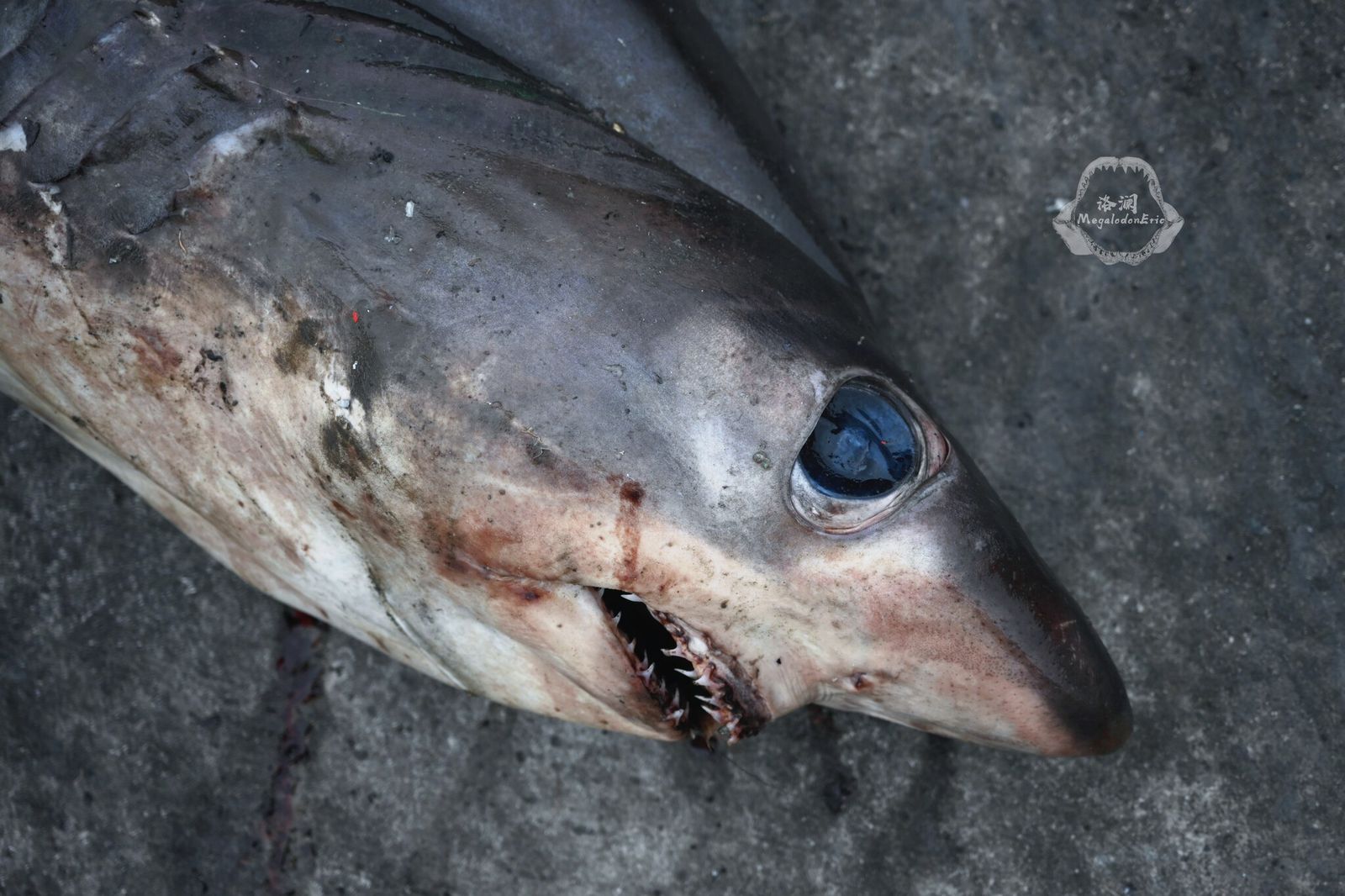
The bigeye thresher (Alopias superciliosus) is a species of thresher shark, family Alopiidae, found in temperate and tropical oceans worldwide. Like the other thresher sharks, nearly half its total length consists of the elongated upper lobe of the tail fin. Its common name comes from its enormous eyes, which are placed in keyhole-shaped sockets that allow them to be rotated upward. This species can also be distinguished by a pair of deep grooves on the top of its head, from which its scientific name is derived. The large eyes of the bigeye thresher are adapted for hunting in low light conditions. It is one of the few sharks that conduct a diel vertical migration, staying in deep water during the day and moving into surface waters at night to feed. To protect its sensitive brain and eyes from the temperature changes accompanying these movements, the bigeye thresher has a vascular exchange system called the rete mirabile around those organs. This species feeds mainly on fish and squid, which are stunned via whip-like strikes of the long tail. Bigeye threshers are ovoviviparous, usually bearing litters of two pups. The embryos are oophagous and feed on ova produced by the mother while inside the uterus. This shark is caught by commercial fisheries across its range; the meat is not highly regarded but the skin, fins, and liver oil are valued. It has been assessed as Vulnerable by the International Union for Conservation of Nature (IUCN).
En aquarium
Espèce d'eau de mer évoluant plutôt en pleine eau. Sur le plan biologique, elle atteint jusqu'à 488 cm, vit jusqu'à 20 ans, son régime est piscivore.
Paramètres relevés dans le milieu naturel de l’espèce (données scientifiques FishBase). À adapter aux besoins précis de l’espèce en captivité.
Gallery
Ajouter des photos
Partagez vos photos de cette espèce (jusqu'à 20 à la fois) : elles sont vérifiées automatiquement, puis publiées.
Répartition
Occurrences observées (données GBIF). Les zones hors aire d'origine peuvent indiquer une présence introduite ou invasive.
Sources et crédits
Informations provenant de plusieurs sources vérifiées. Dernière mise à jour : .
Crédits photos (10)
- Photo : Eric.L.Chen · CC BY-NC 4.0 · via GBIF
- Photo : Kenn Papadopoulo · CC BY-NC 4.0 · via GBIF
- Photo : Kenn Papadopoulo · CC BY-NC 4.0 · via GBIF
- Photo : Marsel Mersinaj · CC BY-NC 4.0 · via GBIF
- Photo : Nitiroj Boonsai · CC BY-NC 4.0 · via GBIF
- Photo : Νίκος Διακάτος · CC BY-NC 4.0 · via GBIF
- Photo : Ignacio Contreras · CC BY-NC 4.0 · via GBIF
- Photo : Diego Almendras · CC BY-NC 4.0 · via GBIF
- Photo : Eric.L.Chen · CC BY-NC 4.0 · via GBIF
- Photo : jf_26 · CC BY-NC 4.0 · via GBIF
Mentions de licence
Texte disponible sous licence CC BY-SA 4.0. Il adapte notamment Wikipedia (CC BY-SA) : Bigeye thresher (Wikipédia, auteurs dans l’historique de l’article).
- Taxonomie : GBIF Backbone Taxonomy (CC BY 4.0)
- Carte : occurrences GBIF, fond © contributeurs OpenStreetMap (ODbL)
- Statut de conservation : Liste rouge de l'UICN, via Wikidata (CC0)
- Paramètres d'aquarium : FishBase (faits reformulés)
Détail : Sources et licences.
Discussion (0)
Aucun message pour l’instant. Lancez la discussion sur cette fiche (sources, précisions, débats éditoriaux).
Connectez-vous pour participer à la discussion.