
Slender Tuna
Allothunnus fallai
The slender tuna, Allothunnus fallai, is a species of tuna, the only species in the genus Allothunnus, found around the world in the southern oceans between latitudes 20° and 50° South, although there are two records of probable…
- Kingdom
- Animalia
- Phylum
- Chordata
- Order
- Perciformes
- Family
- Scombridae
- Genus
- Allothunnus
- Species
- Allothunnus fallai
Description
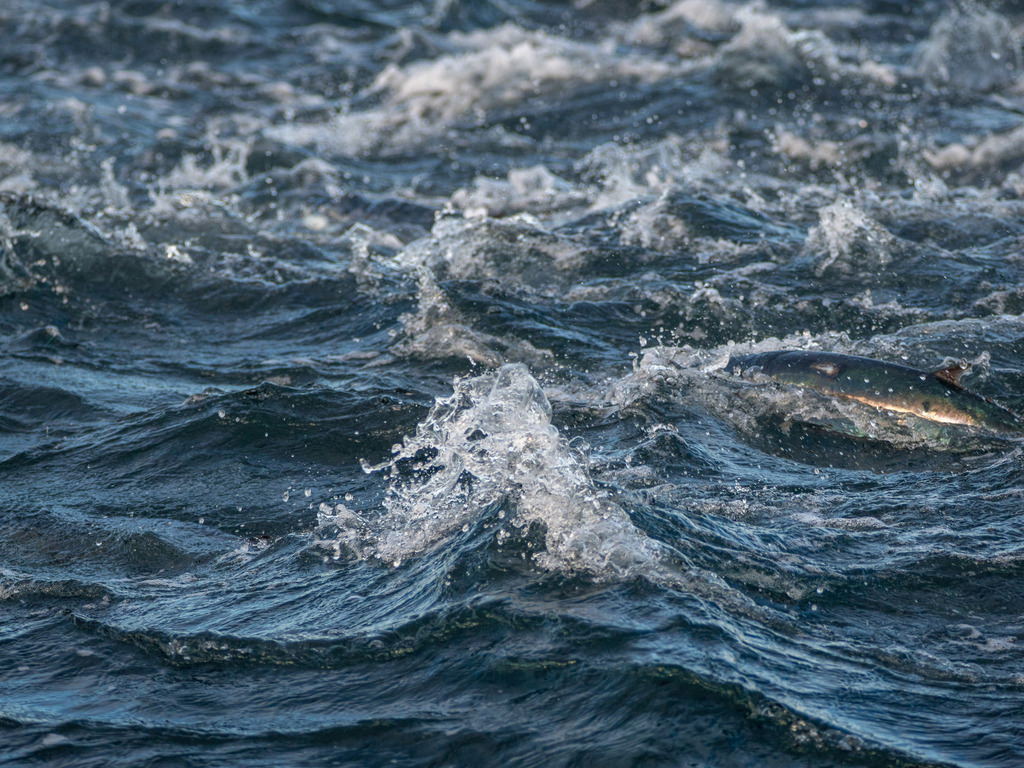
The slender tuna, Allothunnus fallai, is a species of tuna, the only species in the genus Allothunnus, found around the world in the southern oceans between latitudes 20° and 50° South, although there are two records of probable vagrants, one in Los Angeles Harbour and the other from the North Pacific subarctic gyre. It has a more elongated body than other species of tuna with which it is symaptric such as the albacore The colour is blue-black on the back with silvery greyish-white sides, however some individuals have a coppery sheen soon after capture. It has a small second dorsal and anal fins resembling a small albacore, but the slender tuna lacks the long sweeping pectoral fins characteristic of albacores. The pectoral fins and pelvic fins are purple on their distal portions and black near their bases. Its length is up to 1 metre (3.3 ft) and it can weigh up to 12 kilograms (26 lb). It occasionally forms schools and its main prey is krill but it is also known to prey on squid and smaller fishes, such as jack mackerel. It is a species of minor commercial importance, taken mainly as bycatch by fisheries for other tuna species. It has rather oily flesh, paler than that of other tuna, but the flesh is palatable when cooked, although it is suitable for canning. The high oil content of the flesh is caused by the oily nature of its diet and varies over the tuna's life, fish which have just fed are high in oil but specimens caught at the end of their migrations will have relatively low oil content. The high concentration of omega-3 polyunsaturated fatty acids in the flesh of this species caused the CSIRO to declare that the slender tuna was Australia's healthiest seafood dish.
En aquarium
Espèce d'eau de mer évoluant plutôt en pleine eau. Sur le plan biologique, elle atteint jusqu'à 105 cm, son régime est piscivore.
Paramètres relevés dans le milieu naturel de l’espèce (données scientifiques FishBase). À adapter aux besoins précis de l’espèce en captivité.
Ajouter des photos
Partagez vos photos de cette espèce (jusqu'à 20 à la fois) : elles sont vérifiées automatiquement, puis publiées.
Répartition
Occurrences observées (données GBIF). Les zones hors aire d'origine peuvent indiquer une présence introduite ou invasive.
Sources et crédits
Informations provenant de plusieurs sources vérifiées. Dernière mise à jour : .
Crédits photos (1)
- Photo : Karri Horton Hartley (@karrihartley) · CC BY-NC 4.0 · via iNaturalist
Mentions de licence
Texte disponible sous licence CC BY-SA 4.0. Il adapte notamment Wikipedia (CC BY-SA) : Slender tuna (Wikipédia, auteurs dans l’historique de l’article).
- Taxonomie : GBIF Backbone Taxonomy (CC BY 4.0)
- Carte : occurrences GBIF, fond © contributeurs OpenStreetMap (ODbL)
- Statut de conservation : Liste rouge de l'UICN, via Wikidata (CC0)
- Paramètres d'aquarium : FishBase (faits reformulés)
Détail : Sources et licences.
Discussion (0)
Aucun message pour l’instant. Lancez la discussion sur cette fiche (sources, précisions, débats éditoriaux).
Connectez-vous pour participer à la discussion.