
Torpedo Robber
Alestes macrophthalmus
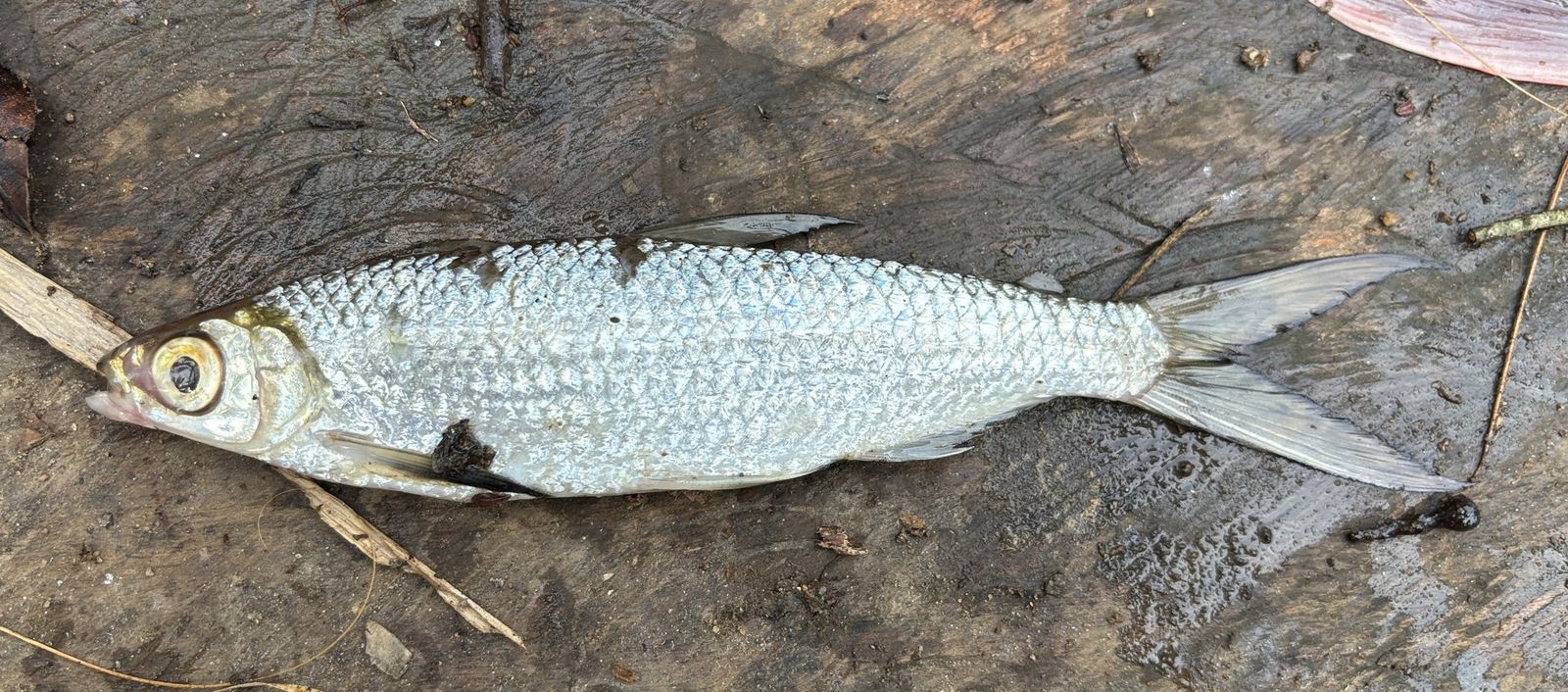
Alestes macrophthalmus, commonly known as the torpedo robber, ablette, or silversides (a name shared with other Alestes), is a species of freshwater fish belonging to the family Alestidae, the African characins or African tetras.
- Kingdom
- Animalia
- Phylum
- Chordata
- Order
- Characiformes
- Family
- Alestidae
- Genus
- Alestes
- Species
- Alestes macrophthalmus
Description
Alestes macrophthalmus, commonly known as the torpedo robber, ablette, or silversides (a name shared with other Alestes), is a species of freshwater fish belonging to the family Alestidae, the African characins or African tetras. It was described in 1867 from a holotype now deposited in the Natural History Museum, London. Alestes macrophthalmus measures up to 60 cm (24 in) standard length, and weigh up to 2 to 2.5 kg (4.4 to 5.5 lb); it is the largest species of Alestes. The body is silvery in general, with a blueish to greenish back and white belly; an example of countershading. The torpedo robber possesses adipose eyelids and a subtle sexual dimorphism visible in the shape of their anal fin, like various other alestids. They lack spines on its fins, though some sources state 3 spines are present on the anal fin. Compared to its relatives, it possesses fewer gill rakers, the dorsal fin origin emerging at the same "level" as the anal fin's, and more branched fin rays in the anal fin compared to Alestes liebrechtsii, which otherwise closely resembles A. macrophthalmus. The species ranges throughout the Congo Basin (though not the Lower Congo), and is also found in Lake Tanganyika, along with the Malagarazi, Rusizi, and Quanza Rivers. Though the Tanganyikan population was considered to be its own subspecies, Alestes macrophthalmus is currently thought to lack subspecies, being monotypic. Alestes macrophthalmus is considered pelagic, inhabiting rivers and lakes often in the vicinity of a river delta. Due to this, it is threatened by habitat degradation from human activity near and around rivers, though part of its range lies within protected areas. The torpedo robber is omnivorous: individuals of all ages feed on aquatic insects, such as chironomid larvae. Other insects such as beetles along with water lily (Nymphaea) are also known food items. Torpedo robbers transition to piscivory as they mature, with Engraulicypris, barbs, cichlids and conspecifics being identifiable. Juveniles mainly subsist on psammon prior to reaching 50 mm (2.0 in) in length. This species is opportunistic, taking advantage of available prey items and periodic abundance. Many populations undergo lateral migration for floodplain spawning, but the robbers inhabiting Lake Bangweulu spawns within the lakes, in areas with sandy or rocky substrates. Spawning season lasts from July to March across the species, though peaks between August and February. The eggs are demersal and rest on the substrate, likely needing wave action or currents to remain viable. The Lake Bangweulu population reaches five years of age and a length of 340 mm (13 in). Various predatory fish species prey on the torpedo robber, being Serranochromis spp., Mormyrops, Clarias mossambicus, and notably the tigerfish Hydrocynus vittatus. This species is fished commercially throughout its range.
En aquarium
Espèce d'eau douce évoluant plutôt en pleine eau. Sur le plan biologique, elle atteint jusqu'à 60 cm, son régime est herbivore.
Paramètres relevés dans le milieu naturel de l’espèce (données scientifiques FishBase). À adapter aux besoins précis de l’espèce en captivité.
Gallery
Ajouter des photos
Partagez vos photos de cette espèce (jusqu'à 20 à la fois) : elles sont vérifiées automatiquement, puis publiées.
Répartition
Occurrences observées (données GBIF). Les zones hors aire d'origine peuvent indiquer une présence introduite ou invasive.
Sources et crédits
Informations provenant de plusieurs sources vérifiées. Dernière mise à jour : .
Crédits photos (10)
- Photo : Gina Walsh · CC BY-NC 4.0 · via GBIF
- Photo : Gina Walsh · CC BY-NC 4.0 · via GBIF
- Photo : joe_cutler · CC BY-NC 4.0 · via GBIF
- Photo : joe_cutler · CC BY-NC 4.0 · via GBIF
- Photo : joe_cutler · CC BY-NC 4.0 · via GBIF
- Photo : Fish and Benthos survey Chinko · CC BY-NC 4.0 · via GBIF
- Photo : Fish and Benthos survey Chinko · CC BY-NC 4.0 · via GBIF
- Photo : Fish and Benthos survey Chinko · CC BY-NC 4.0 · via GBIF
- Photo : Fish and Benthos survey Chinko · CC BY-NC 4.0 · via GBIF
- Photo : Fish and Benthos survey Chinko · CC BY-NC 4.0 · via GBIF
Mentions de licence
Texte disponible sous licence CC BY-SA 4.0. Il adapte notamment Wikipedia (CC BY-SA) : Alestes macrophthalmus (Wikipédia, auteurs dans l’historique de l’article).
- Taxonomie : GBIF Backbone Taxonomy (CC BY 4.0)
- Carte : occurrences GBIF, fond © contributeurs OpenStreetMap (ODbL)
- Statut de conservation : Liste rouge de l'UICN, via Wikidata (CC0)
- Paramètres d'aquarium : FishBase (faits reformulés)
Détail : Sources et licences.
Discussion (0)
Aucun message pour l’instant. Lancez la discussion sur cette fiche (sources, précisions, débats éditoriaux).
Connectez-vous pour participer à la discussion.