
Silver Bream
Acanthopagrus butcheri
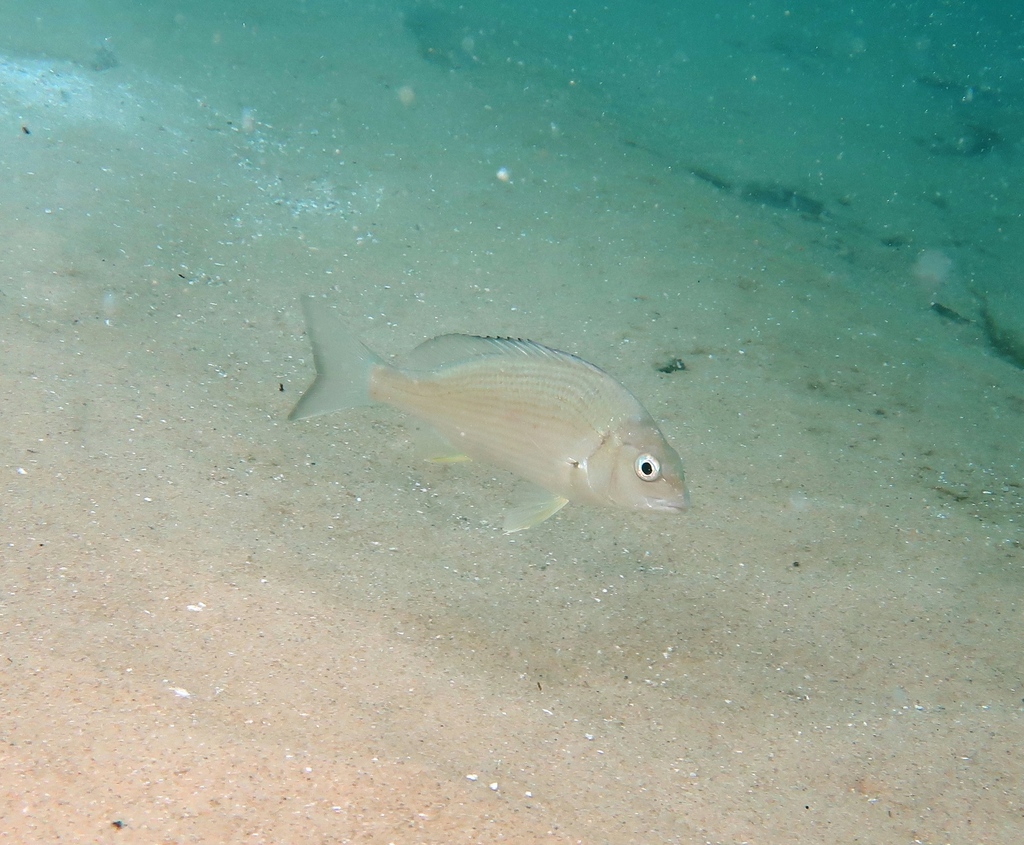
The black bream (Acanthopagrus butcheri), also commonly known as the southern black bream, southern bream and blue-nosed bream, is a species of anadromous ray-finned fish of the porgy family Sparidae.
- Kingdom
- Animalia
- Phylum
- Chordata
- Order
- Perciformes
- Family
- Sparidae
- Genus
- Acanthopagrus
- Species
- Acanthopagrus butcheri
Description
The black bream (Acanthopagrus butcheri), also commonly known as the southern black bream, southern bream and blue-nosed bream, is a species of anadromous ray-finned fish of the porgy family Sparidae. A deep-bodied fish, it is occasionally confused with other similar species that occur within its range, but is generally distinguished from these species by a lack of yellow ventral and anal fins. Southern black bream are endemic to the southern coasts of Australia from Shark Bay in Western Australia to Ulladulla, New South Wales, as well as Tasmania. The black bream is primarily an inhabitant of brackish waters of estuaries and coastal lakes, rarely entering the open ocean, as it cannot complete its life cycle in a fully marine environment. During the breeding season, the species is known to penetrate into the upper reaches of rivers to spawn, causing an influx of juveniles in the estuaries a few months later. It is an opportunistic predator, consuming a wide range of crustaceans, molluscs, polychaetes and forage fish. The southern black bream is a major target for both commercial and recreational fishing due to its high-quality flesh, with over 300 tonnes of yield taken each year by commercial fisheries. Anglers also pursue the fish for its sporting qualities, with the development of lure fishing for bream adding to this attraction. Aquaculture techniques for the species are being developed, but its slow growth rate poses a major hurdle to large scale food production.
En aquarium
Espèce d'eau douce et saumâtre et eau de mer évoluant plutôt près du fond. Sur le plan biologique, elle atteint jusqu'à 60 cm, vit jusqu'à 29 ans, son régime est carnivore.
Paramètres relevés dans le milieu naturel de l’espèce (données scientifiques FishBase). À adapter aux besoins précis de l’espèce en captivité.
Gallery
Ajouter des photos
Partagez vos photos de cette espèce (jusqu'à 20 à la fois) : elles sont vérifiées automatiquement, puis publiées.
Répartition
Occurrences observées (données GBIF). Les zones hors aire d'origine peuvent indiquer une présence introduite ou invasive.
Sources et crédits
Informations provenant de plusieurs sources vérifiées. Dernière mise à jour : .
Crédits photos (3)
- Photo : David Spencer Muirhead (@davemmdave) · CC BY-NC 4.0 · via iNaturalist
- Photo : Ken (@ken_flan) · CC BY-NC 4.0 · via iNaturalist
- Photo : Matt Tank (@mtank) · CC BY-NC 4.0 · via iNaturalist
Mentions de licence
Texte disponible sous licence CC BY-SA 4.0. Il adapte notamment Wikipedia (CC BY-SA) : Acanthopagrus butcheri (Wikipédia, auteurs dans l’historique de l’article).
- Taxonomie : GBIF Backbone Taxonomy (CC BY 4.0)
- Carte : occurrences GBIF, fond © contributeurs OpenStreetMap (ODbL)
- Statut de conservation : Liste rouge de l'UICN, via Wikidata (CC0)
- Paramètres d'aquarium : FishBase (faits reformulés)
Détail : Sources et licences.
Discussion (0)
Aucun message pour l’instant. Lancez la discussion sur cette fiche (sources, précisions, débats éditoriaux).
Connectez-vous pour participer à la discussion.