
Himalayan Thrush
Zoothera salimalii
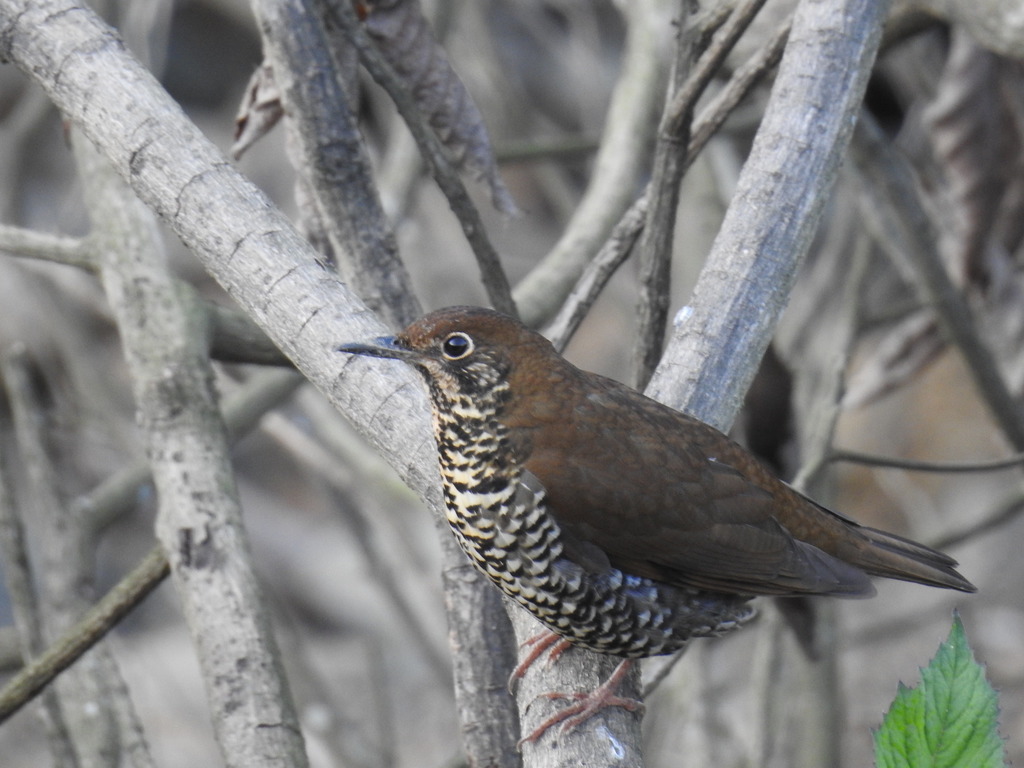
The Himalayan thrush or Himalayan forest thrush (Zoothera salimalii) is a species of bird described in 2016 and separated out from the alpine thrush Zoothera mollissima with which they were formerly lumped.
- Kingdom
- Animalia
- Phylum
- Chordata
- Class
- Aves
- Order
- Passeriformes
- Family
- Turdidae
- Genus
- Zoothera
- Species
- Zoothera salimalii
Description
The Himalayan thrush or Himalayan forest thrush (Zoothera salimalii) is a species of bird described in 2016 and separated out from the alpine thrush Zoothera mollissima with which they were formerly lumped. The species is separated on the basis of phylogenetic studies that suggest that the population diverged from the common ancestor at least 3 million years ago (estimates vary from 3-6 mya). The alpine thrush (Zoothera mollissima in the restricted sense) breeds above the tree line whereas the Himalayan thrush breeds in forested habitats. The species breeds from Sikkim and Darjeeling in India and extends east into Tibet and further east into northwest Yunnan in China. The species differs in its song from that of the alpine thrush. The Himalayan thrush has a more musical call while that of the Alpine thrush is raspy and grating. The species name is given in honour of the Indian ornithologist Sálim Ali. The tree-dwelling species has shorter legs, tail and wings but a longer bill than its alpine counterpart, and uses the shorter legs and tail to help it manoeuvre around in the forest.
Gallery
Ajouter des photos
Partagez vos photos de cette espèce (jusqu'à 20 à la fois) : elles sont vérifiées automatiquement, puis publiées.
Répartition
Occurrences observées (données GBIF). Les zones hors aire d'origine peuvent indiquer une présence introduite ou invasive.
Sources et crédits
Informations provenant de plusieurs sources vérifiées. Dernière mise à jour : .
Crédits photos (8)
- Photo : Aparajita Datta (@aparajita_datta) · CC BY-NC 4.0 · via iNaturalist
- Photo : Pujan Kumar Pradhan (@thepkpradhan) · CC BY-NC 4.0 · via iNaturalist
- Photo : @drozdovekie · CC BY-NC 4.0 · via iNaturalist
- Photo : @itazura · CC BY-NC 4.0 · via iNaturalist
- Photo : Sourav Halder (@souravnaturalist) · CC BY-NC 4.0 · via iNaturalist
- Photo : Rozan Dhungel (@rozandhungel) · CC BY-NC 4.0 · via iNaturalist
- Photo : 이상윤/Sangyoon Lee (@sangyoon) · CC BY-NC 4.0 · via iNaturalist
- Photo : 云鸮 (@littlexiao) · CC BY-NC 4.0 · via iNaturalist
Mentions de licence
Texte disponible sous licence CC BY-SA 4.0. Il adapte notamment Wikipedia (CC BY-SA) : Himalayan thrush (Wikipédia, auteurs dans l’historique de l’article).
- Taxonomie : GBIF Backbone Taxonomy (CC BY 4.0)
- Carte : occurrences GBIF, fond © contributeurs OpenStreetMap (ODbL)
- Statut de conservation : Liste rouge de l'UICN, via Wikidata (CC0)
Détail : Sources et licences.
Discussion (0)
Aucun message pour l’instant. Lancez la discussion sur cette fiche (sources, précisions, débats éditoriaux).
Connectez-vous pour participer à la discussion.