
Cinereous Vulture
Aegypius monachus
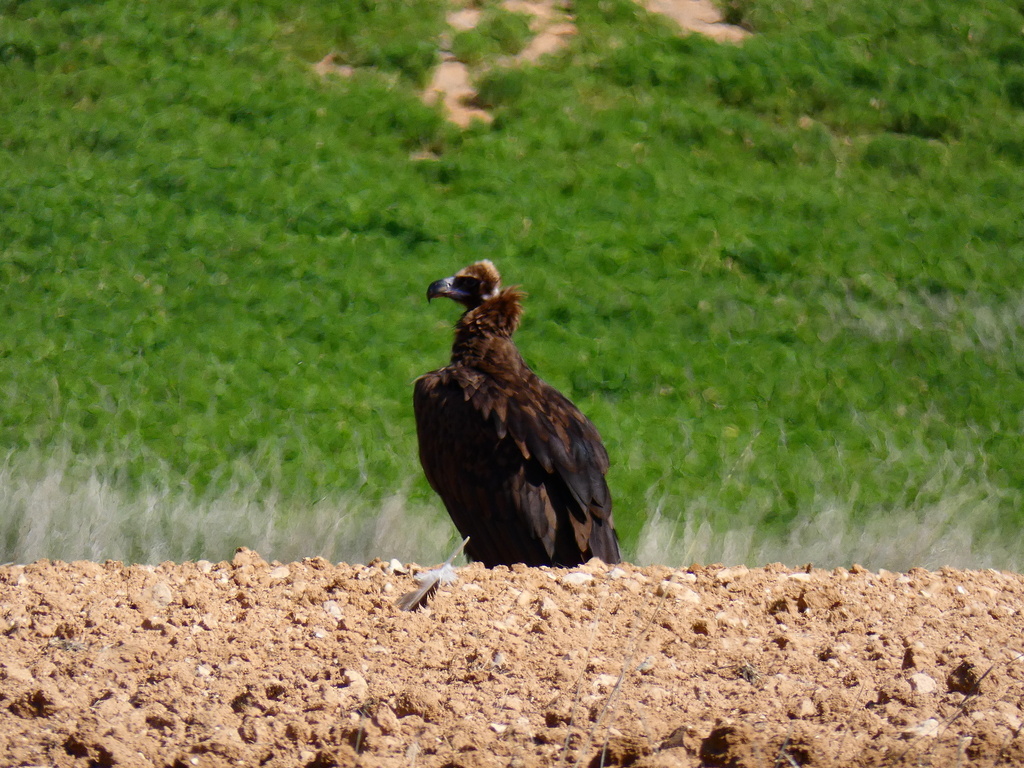
The cinereous vulture (Aegypius monachus), also known as the black vulture, Eurasian black vulture, and monk vulture, is a very large raptor in the family Accipitridae distributed through much of temperate Eurasia.
- Kingdom
- Animalia
- Phylum
- Chordata
- Class
- Aves
- Order
- Accipitriformes
- Family
- Accipitridae
- Genus
- Aegypius
- Species
- Aegypius monachus
Description
The cinereous vulture (Aegypius monachus), also known as the black vulture, Eurasian black vulture, and monk vulture, is a very large raptor in the family Accipitridae distributed through much of temperate Eurasia. With a body length of 1.2 m (3 ft 11 in), 3.1 m (10 ft) across the wings and a maximum weight of 12.5 kg (28 lb), it is the largest Old World vulture and largest member of the family Accipitridae. Aegypius monachus is one of the largest birds of prey and it plays an important role in its various ecosystems by eating carcasses, which in turn reduces the spread of diseases. The vultures are constantly exposed to many pathogens because of their eating carrion. A study of the gastric and immune defense systems conducted in 2015 sequenced the bird's entire genome. The study compared cinereous vultures to bald eagles, finding positively selected genetic variations associated with respiration and the ability of the vulture's immune defense responses and gastric acid secretion to digest carcasses.
Gallery
Ajouter des photos
Partagez vos photos de cette espèce (jusqu'à 20 à la fois) : elles sont vérifiées automatiquement, puis publiées.
Répartition
Occurrences observées (données GBIF). Les zones hors aire d'origine peuvent indiquer une présence introduite ou invasive.
Sources et crédits
Informations provenant de plusieurs sources vérifiées. Dernière mise à jour : .
Crédits photos (7)
- Photo : Dragonfyre (@dragonfyre) · CC BY-NC 4.0 · via iNaturalist
- Photo : Shane Sherwood (@red_fairview) · CC BY-NC 4.0 · via iNaturalist
- Photo : Justin Walker (@birdpackingadventures) · CC BY-NC 4.0 · via iNaturalist
- Photo : Ricardo Rodero Henández (@ricardo-anapri) · CC BY-NC 4.0 · via iNaturalist
- Photo : Eduardo Ramirez Esteban (@eduardoramirez-anapri) · CC BY-NC 4.0 · via iNaturalist
- Photo : Luiser-anapri (@luiser_lop) · CC BY-NC 4.0 · via iNaturalist
- Photo : Angel (@amhernando-anapri) · CC BY-NC 4.0 · via iNaturalist
Mentions de licence
Texte disponible sous licence CC BY-SA 4.0. Il adapte notamment Wikipedia (CC BY-SA) : Cinereous vulture (Wikipédia, auteurs dans l’historique de l’article).
- Taxonomie : GBIF Backbone Taxonomy (CC BY 4.0)
- Carte : occurrences GBIF, fond © contributeurs OpenStreetMap (ODbL)
- Statut de conservation : Liste rouge de l'UICN, via Wikidata (CC0)
Détail : Sources et licences.
Discussion (0)
Aucun message pour l’instant. Lancez la discussion sur cette fiche (sources, précisions, débats éditoriaux).
Connectez-vous pour participer à la discussion.