
Indian Vulture
Gyps indicus
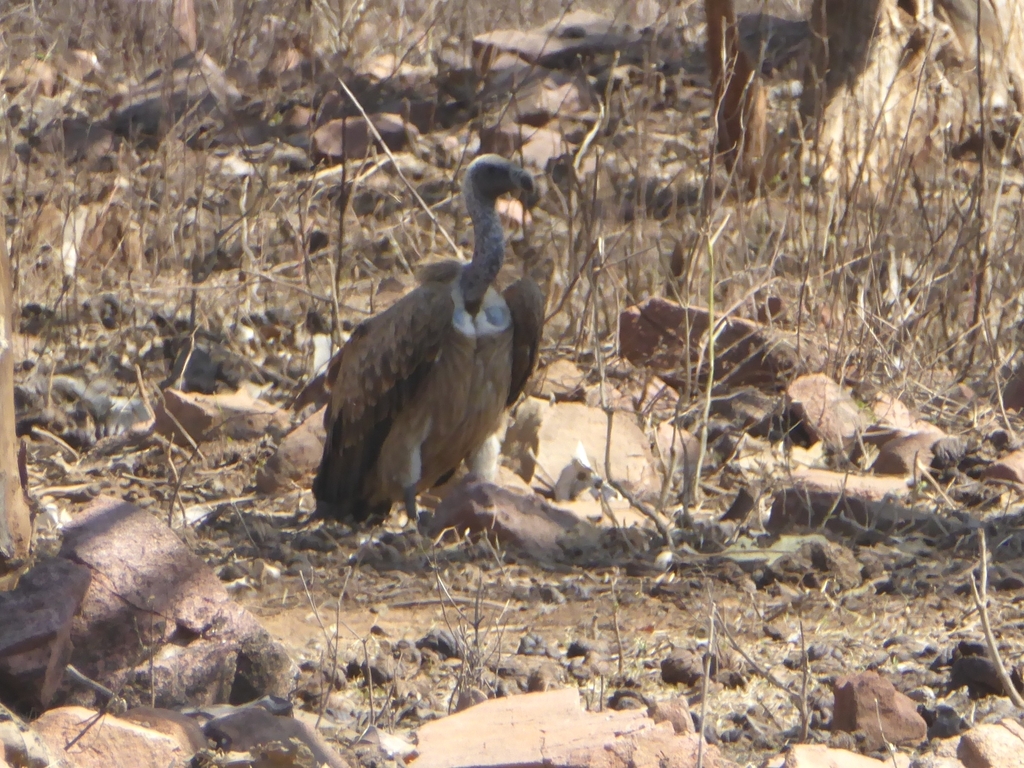
The Indian vulture or long-billed vulture (Gyps indicus) is a bird of prey native to the Indian subcontinent.
- Kingdom
- Animalia
- Phylum
- Chordata
- Class
- Aves
- Order
- Accipitriformes
- Family
- Accipitridae
- Genus
- Gyps
- Species
- Gyps indicus
Description
The Indian vulture or long-billed vulture (Gyps indicus) is a bird of prey native to the Indian subcontinent. It is an Old World vulture belonging to the family of Accipitridae. It is a medium-sized vulture with a small, semi-bald head with little feathers, long beak, and wide dark colored wings. It breeds mainly on small cliffs and hilly crags in central India and south India. The Indian vulture is a keystone species that has been listed as Critically Endangered on the IUCN Red List since 2002, as the population has severely declined during the Indian vulture crisis. It is estimated that there are 5,000-15,000 mature individuals in the wild. The main cause of the decline was identified as kidney failure caused by the drug diclofenac, which was commonly given to cattle to reduce joint pain. It is thought that diclofenac poisoned vultures that ate the flesh of dead cattle. Diclofenac bans were enacted in India, Pakistan and Nepal in 2006. The bird shares its habitat with other vulture species in the same genus (particularly the slender-billed vulture (Gyps tenuirostris) and white-rumped vulture (Gyps bengalensis)) in some parts of its range.
Gallery
Ajouter des photos
Partagez vos photos de cette espèce (jusqu'à 20 à la fois) : elles sont vérifiées automatiquement, puis publiées.
Répartition
Occurrences observées (données GBIF). Les zones hors aire d'origine peuvent indiquer une présence introduite ou invasive.
Sources et crédits
Informations provenant de plusieurs sources vérifiées. Dernière mise à jour : .
Crédits photos (8)
- Photo : Ben Costamagna (@bencostamagna) · CC BY 4.0 · via iNaturalist
- Photo : Ryan Braganza (@ryan76589) · CC BY-NC 4.0 · via iNaturalist
- Photo : Nick Bédard (@nickbedard) · CC BY-NC 4.0 · via iNaturalist
- Photo : Prashanth (@prashanthmb) · CC BY-NC 4.0 · via iNaturalist
- Photo : SONU KUMAR (@sonukumar055) · CC BY-NC 4.0 · via iNaturalist
- Photo : Avinash Bhagat (@avinashbhagat2) · CC BY-NC 4.0 · via iNaturalist
- Photo : Donna Pomeroy (@dpom) · CC BY-NC 4.0 · via iNaturalist
- Photo : Miguel A. Casado (@macasado) · CC BY-NC 4.0 · via iNaturalist
Mentions de licence
Texte disponible sous licence CC BY-SA 4.0. Il adapte notamment Wikipedia (CC BY-SA) : Indian vulture (Wikipédia, auteurs dans l’historique de l’article).
- Taxonomie : GBIF Backbone Taxonomy (CC BY 4.0)
- Carte : occurrences GBIF, fond © contributeurs OpenStreetMap (ODbL)
- Statut de conservation : Liste rouge de l'UICN, via Wikidata (CC0)
Détail : Sources et licences.
Discussion (0)
Aucun message pour l’instant. Lancez la discussion sur cette fiche (sources, précisions, débats éditoriaux).
Connectez-vous pour participer à la discussion.