
Western Plantain-eater
Crinifer piscator
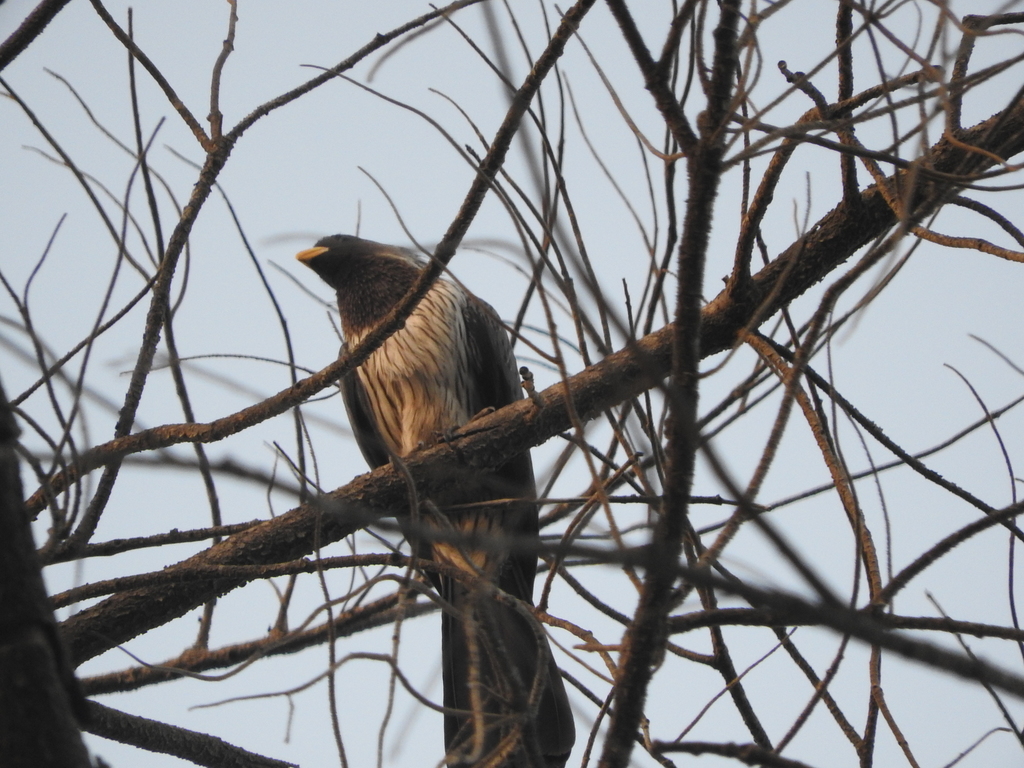
The western plantain-eater (Crinifer piscator), also known as the grey plantain-eater or western grey plantain-eater, is a large member of the turaco family, a group of large arboreal passerine-like birds restricted to Africa.
- Kingdom
- Animalia
- Phylum
- Chordata
- Class
- Aves
- Order
- Musophagiformes
- Family
- Musophagidae
- Genus
- Crinifer
- Species
- Crinifer piscator
Description
The western plantain-eater (Crinifer piscator), also known as the grey plantain-eater or western grey plantain-eater, is a large member of the turaco family, a group of large arboreal passerine-like birds restricted to Africa. This species is a resident breeder in open woodland habitats in tropical west Africa. It lays two or three eggs in a tree platform nest. These are common, noisy and conspicuous birds, despite lacking the brilliant colours of relatives such as the violet turaco. They are 50 cm long, including a long tail. Their plumage is mainly grey above spotted with brown. The head, erectile crest, neck and breast are brown streaked with silver. The underparts are whitish, heavily streaked with brown. The western plantain-eater has a thick bright yellow bill and shows a white wing bar in flight. The sexes are identical, but juveniles have a black woolly head without silver streaking. This bird is similar to the closely related eastern plantain-eater. The latter species has white tail bars, and lacks the chest bars and dark wing feather shafts of its western relative. This species feeds on fruit, especially figs, seeds and other vegetable matter. The Western plantain-eater has a loud cow-cow-cow call, which is very familiar in west Africa.
Gallery
Ajouter des photos
Partagez vos photos de cette espèce (jusqu'à 20 à la fois) : elles sont vérifiées automatiquement, puis publiées.
Répartition
Occurrences observées (données GBIF). Les zones hors aire d'origine peuvent indiquer une présence introduite ou invasive.
Sources et crédits
Informations provenant de plusieurs sources vérifiées. Dernière mise à jour : .
Crédits photos (8)
- Photo : Francesco Cecere (@francescocecere) · CC0 (domaine public) · via iNaturalist
- Photo : Mohamed SAOUPKAI (@mohamed-saoukpai) · CC BY-NC 4.0 · via iNaturalist
- Photo : Michiel de Groot (@michieldg) · CC BY 4.0 · via iNaturalist
- Photo : ONG OeBenin (@oebenin) · CC BY-NC 4.0 · via iNaturalist
- Photo : Eric Gren (@greneric59) · CC BY-NC 4.0 · via iNaturalist
- Photo : @feliciatevoedjre · CC BY-NC 4.0 · via iNaturalist
- Photo : @thierry_aebischer_chinko · CC BY-NC 4.0 · via iNaturalist
- Photo : moise (@kaamoise) · CC BY-NC 4.0 · via iNaturalist
Mentions de licence
Texte disponible sous licence CC BY-SA 4.0. Il adapte notamment Touraco gris, Wikipedia (CC BY-SA) : Western plantain-eater (Wikipédia, auteurs dans l’historique de l’article).
- Taxonomie : GBIF Backbone Taxonomy (CC BY 4.0)
- Carte : occurrences GBIF, fond © contributeurs OpenStreetMap (ODbL)
- Statut de conservation : Liste rouge de l'UICN, via Wikidata (CC0)
Détail : Sources et licences.
Discussion (0)
Aucun message pour l’instant. Lancez la discussion sur cette fiche (sources, précisions, débats éditoriaux).
Connectez-vous pour participer à la discussion.