
Red-throated Wryneck
Jynx ruficollis
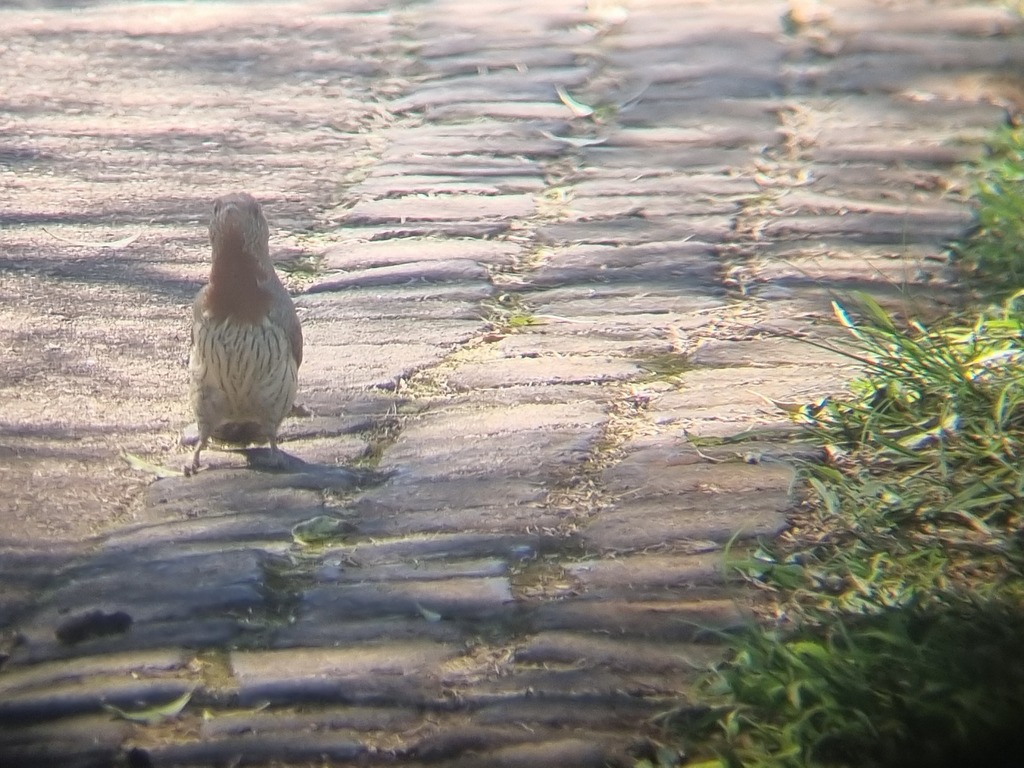
The red-throated wryneck (Jynx ruficollis), also known as the rufous-necked wryneck or red-breasted wryneck, is a species of wryneck in the woodpecker family closely related to the Eurasian wryneck.
- Kingdom
- Animalia
- Phylum
- Chordata
- Class
- Aves
- Order
- Piciformes
- Family
- Picidae
- Genus
- Jynx
- Species
- Jynx ruficollis
Description
The red-throated wryneck (Jynx ruficollis), also known as the rufous-necked wryneck or red-breasted wryneck, is a species of wryneck in the woodpecker family closely related to the Eurasian wryneck. Its three subspecies are resident in much of sub-Saharan Africa in open habitats with some trees. It is a slim, elongated bird about 19 cm (7.5 in) in length, with a small head, fine bill, long fan-shaped tail and cryptic plumage intricately patterned in greys and browns. The sexes look similar, although males are slightly larger. The diet of the adults and young is almost entirely ants at all stages of their life cycles. The call of the red-throated wryneck is a series of repeated harsh, shrill notes. When threatened, a bird will twist its neck and head in a snake-like manner while making a hissing sound, presumably to deter predators. The red-throated wryneck nests in pre-existing holes, usually in trees, preferring old barbet or woodpecker nests. The unlined nest cavity is usually 3–4 m (10–13 ft) above the ground, and the clutch is typically three or four white eggs, laid at one-day intervals. Both sexes incubate the eggs for 12–15 days until the blind, naked chicks hatch. The chicks are fed by both adults for 25–26 days until they fledge. There are usually two broods. The red-throated wryneck has a very extensive range, and its population is large and increasing. For this reason, it is evaluated as a species of least concern by the International Union for Conservation of Nature (IUCN).
Gallery
Ajouter des photos
Partagez vos photos de cette espèce (jusqu'à 20 à la fois) : elles sont vérifiées automatiquement, puis publiées.
Répartition
Occurrences observées (données GBIF). Les zones hors aire d'origine peuvent indiquer une présence introduite ou invasive.
Sources et crédits
Informations provenant de plusieurs sources vérifiées. Dernière mise à jour : .
Crédits photos (8)
- Photo : Richard McKibbin (@richardmckibbin) · CC BY-NC 4.0 · via iNaturalist
- Photo : @jsdrew2 · CC BY-NC 4.0 · via iNaturalist
- Photo : Phillip Nieuwoudt (@ecowild) · CC BY-NC 4.0 · via iNaturalist
- Photo : Andrew Cauldwell (@littlechippie) · CC BY-NC 4.0 · via iNaturalist
- Photo : c (@sylvc) · CC BY-NC 4.0 · via iNaturalist
- Photo : Justin Ponder (@justin_p) · CC BY 4.0 · via iNaturalist
- Photo : Fred Berrington (@readyfreddy123) · CC BY-NC 4.0 · via iNaturalist
- Photo : Forest Botial-Jarvis (@tiluchi) · CC BY 4.0 · via iNaturalist
Mentions de licence
Texte disponible sous licence CC BY-SA 4.0. Il adapte notamment Wikipedia (CC BY-SA) : Red-throated wryneck (Wikipédia, auteurs dans l’historique de l’article).
- Taxonomie : GBIF Backbone Taxonomy (CC BY 4.0)
- Carte : occurrences GBIF, fond © contributeurs OpenStreetMap (ODbL)
- Statut de conservation : Liste rouge de l'UICN, via Wikidata (CC0)
Détail : Sources et licences.
Discussion (0)
Aucun message pour l’instant. Lancez la discussion sur cette fiche (sources, précisions, débats éditoriaux).
Connectez-vous pour participer à la discussion.