
Blue Nuthatch
Sitta azurea
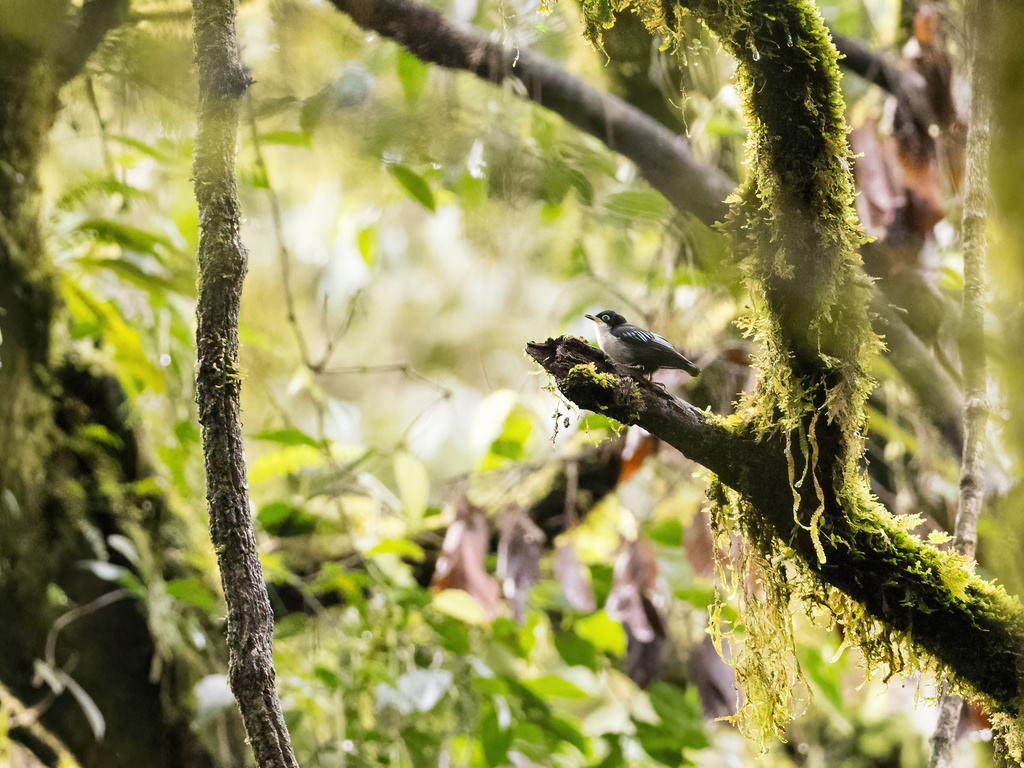
The blue nuthatch (Sitta azurea) is a bird species in the nuthatch family Sittidae.
- Kingdom
- Animalia
- Phylum
- Chordata
- Class
- Aves
- Order
- Passeriformes
- Family
- Sittidae
- Genus
- Sitta
- Species
- Sitta azurea
Description
The blue nuthatch (Sitta azurea) is a bird species in the nuthatch family Sittidae. It is a medium-sized nuthatch, measuring 13.5 cm (5.3 in) in length. The species, which shows slight sexual dimorphism, has dramatic plumage pattern unlike any other member of its genus. Its head is black or blackish-blue dark blue upperparts close to purple with azure feathers. The wings are edged with black. The throat and chest are white or a washed buff, contrasting with the upperparts and the belly of a very dark blue; the covert feathers are generally clear, blue-grey or purplish. The blue nuthatch's ecology is poorly known, but it feeds on small invertebrates found on trees; reproduction takes place from April to June or July. It also forages in mixed-species flocks in larger groups. They can be found in the Malay Peninsula and on the islands of Sumatra and Java in Indonesia, where it inhabits subtropical or tropical moist lowland forest and subtropical or tropical moist montane forest above 900 m (3,000 ft) in altitude. Three subspecies are accepted: S. a. expectata, S. a. nigriventer and S. a. azurea, which differ chiefly in the colour of their mantles, chests and bellies. The species' closest relatives are the velvet-fronted nuthatch (S. frontalis), the yellow-billed nuthatch (S. solangiae) and the sulphur-billed nuthatch (S. oenochlamys). The population of the species has not been determined but the species appears to be at low risk of extinction because of the extent of its distribution. It has been classified as of least concern by the International Union for Conservation of Nature.
Gallery
Ajouter des photos
Partagez vos photos de cette espèce (jusqu'à 20 à la fois) : elles sont vérifiées automatiquement, puis publiées.
Répartition
Occurrences observées (données GBIF). Les zones hors aire d'origine peuvent indiquer une présence introduite ou invasive.
Sources et crédits
Informations provenant de plusieurs sources vérifiées. Dernière mise à jour : .
Crédits photos (8)
- Photo : Kaitlyn (@curiouscoucal) · CC BY-NC 4.0 · via iNaturalist
- Photo : Timmy (@timmy612) · CC BY-NC 4.0 · via iNaturalist
- Photo : Alfian surya Fathoni (@mas_bod) · CC BY-NC 4.0 · via iNaturalist
- Photo : Cheongweei Gan (@gancw1) · CC BY 4.0 · via iNaturalist
- Photo : Patricia (@patricialorenz) · CC BY-NC 4.0 · via iNaturalist
- Photo : Jason Alexander (@jasonalexander) · CC BY 4.0 · via iNaturalist
- Photo : Tero Linjama (@terolinjama) · CC0 (domaine public) · via iNaturalist
- Photo : Don Wellmann (@don54) · CC0 (domaine public) · via iNaturalist
Mentions de licence
Texte disponible sous licence CC BY-SA 4.0. Il adapte notamment Wikipedia (CC BY-SA) : Blue nuthatch (Wikipédia, auteurs dans l’historique de l’article).
- Taxonomie : GBIF Backbone Taxonomy (CC BY 4.0)
- Carte : occurrences GBIF, fond © contributeurs OpenStreetMap (ODbL)
- Statut de conservation : Liste rouge de l'UICN, via Wikidata (CC0)
Détail : Sources et licences.
Discussion (0)
Aucun message pour l’instant. Lancez la discussion sur cette fiche (sources, précisions, débats éditoriaux).
Connectez-vous pour participer à la discussion.