
Paddyfield Warbler
Acrocephalus agricola
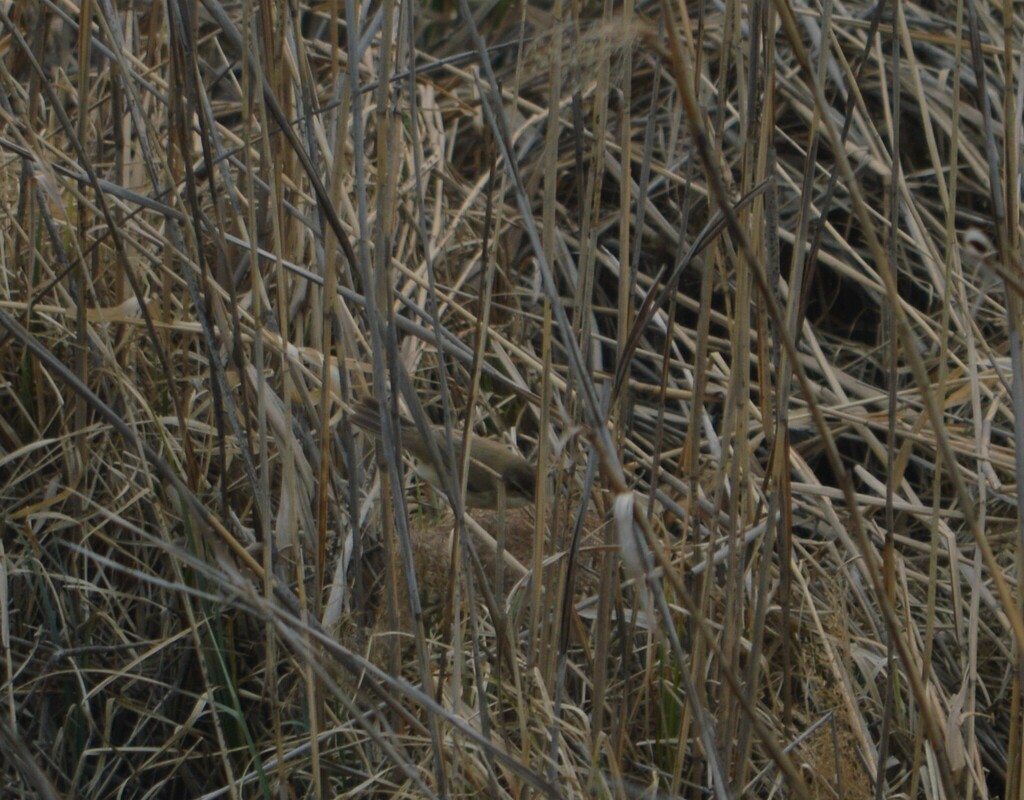
The paddyfield warbler (Acrocephalus agricola) is a species of marsh warbler (family Acrocephalidae).
- Kingdom
- Animalia
- Phylum
- Chordata
- Class
- Aves
- Order
- Passeriformes
- Family
- Acrocephalidae
- Genus
- Acrocephalus
- Species
- Acrocephalus agricola
Description
The paddyfield warbler (Acrocephalus agricola) is a species of marsh warbler (family Acrocephalidae). It was formerly included in the "Old World warbler" assemblage. The Manchurian reed warbler (A. tangorum) was (and sometimes still is) included in A. agricola as a subspecies. The genus name Acrocephalus is from Ancient Greek akros, "highest", and kephale, "head". It is possible that Naumann and Naumann thought akros meant "sharp-pointed". The specific agricola is from Latin and means "farmer". It breeds in the temperate central Palearctic. It is migratory, wintering in Bangladesh, India and Pakistan. It is a rare vagrant to western Europe although there are small breeding populations along the western shores of the Black Sea around the border between Bulgaria and Romania. This passerine bird is a species found in low vegetation such as long grass, reeds and rice. 4–5 eggs are laid in a nest in grass. At 13 cm (5.1 in) long with a wingspan of 15–17.5 cm (5.9–6.9 in), the paddyfield warbler is close in size to the Eurasian reed warbler but with shorter bill and wingspan. The adult has an unstreaked pale brown back and buff underparts, with a warm brown rump. There is a clearer whitish supercilium and the bill is short and pointed. The sexes are identical, as with most warblers, but young birds are richer buff below. Like most warblers, it is insectivorous. The song is fast and similar to marsh warbler, with much mimicry and typically acrocephaline whistles added. Its song is weaker and more rhythmic than that of its relative.
Gallery
Ajouter des photos
Partagez vos photos de cette espèce (jusqu'à 20 à la fois) : elles sont vérifiées automatiquement, puis publiées.
Répartition
Occurrences observées (données GBIF). Les zones hors aire d'origine peuvent indiquer une présence introduite ou invasive.
Sources et crédits
Informations provenant de plusieurs sources vérifiées. Dernière mise à jour : .
Crédits photos (8)
- Photo : Денис Попов (@naturalist70353) · CC BY-NC 4.0 · via iNaturalist
- Photo : Denzil Britto (@denzil_b) · CC BY-NC 4.0 · via iNaturalist
- Photo : Afsar Nayakkan (@afsarnayakkan) · CC BY 4.0 · via iNaturalist
- Photo : Татьяна (@tatyana_ko) · CC BY-NC 4.0 · via iNaturalist
- Photo : Какошкина Татьяна Васильевна (@kakoshkina56) · CC BY-NC 4.0 · via iNaturalist
- Photo : Isakov Gennady (@sopr21) · CC BY-NC 4.0 · via iNaturalist
- Photo : Dmitrii Knyazev (@mistiz) · CC BY-NC 4.0 · via iNaturalist
- Photo : Alexander Popov (@alexander_popov) · CC BY-NC 4.0 · via iNaturalist
Mentions de licence
Texte disponible sous licence CC BY-SA 4.0. Il adapte notamment Rousserolle isabelle, Wikipedia (CC BY-SA) : Paddyfield warbler (Wikipédia, auteurs dans l’historique de l’article).
- Taxonomie : GBIF Backbone Taxonomy (CC BY 4.0)
- Carte : occurrences GBIF, fond © contributeurs OpenStreetMap (ODbL)
- Statut de conservation : Liste rouge de l'UICN, via Wikidata (CC0)
Détail : Sources et licences.
Discussion (0)
Aucun message pour l’instant. Lancez la discussion sur cette fiche (sources, précisions, débats éditoriaux).
Connectez-vous pour participer à la discussion.