
Thick-billed Warbler
Iduna aedon
The thick-billed warbler (Arundinax aedon) breeds in the temperate east Palearctic, from south Siberia to west Mongolia.
- Kingdom
- Animalia
- Phylum
- Chordata
- Class
- Aves
- Order
- Passeriformes
- Family
- Acrocephalidae
- Genus
- Iduna
- Species
- Iduna aedon
Description
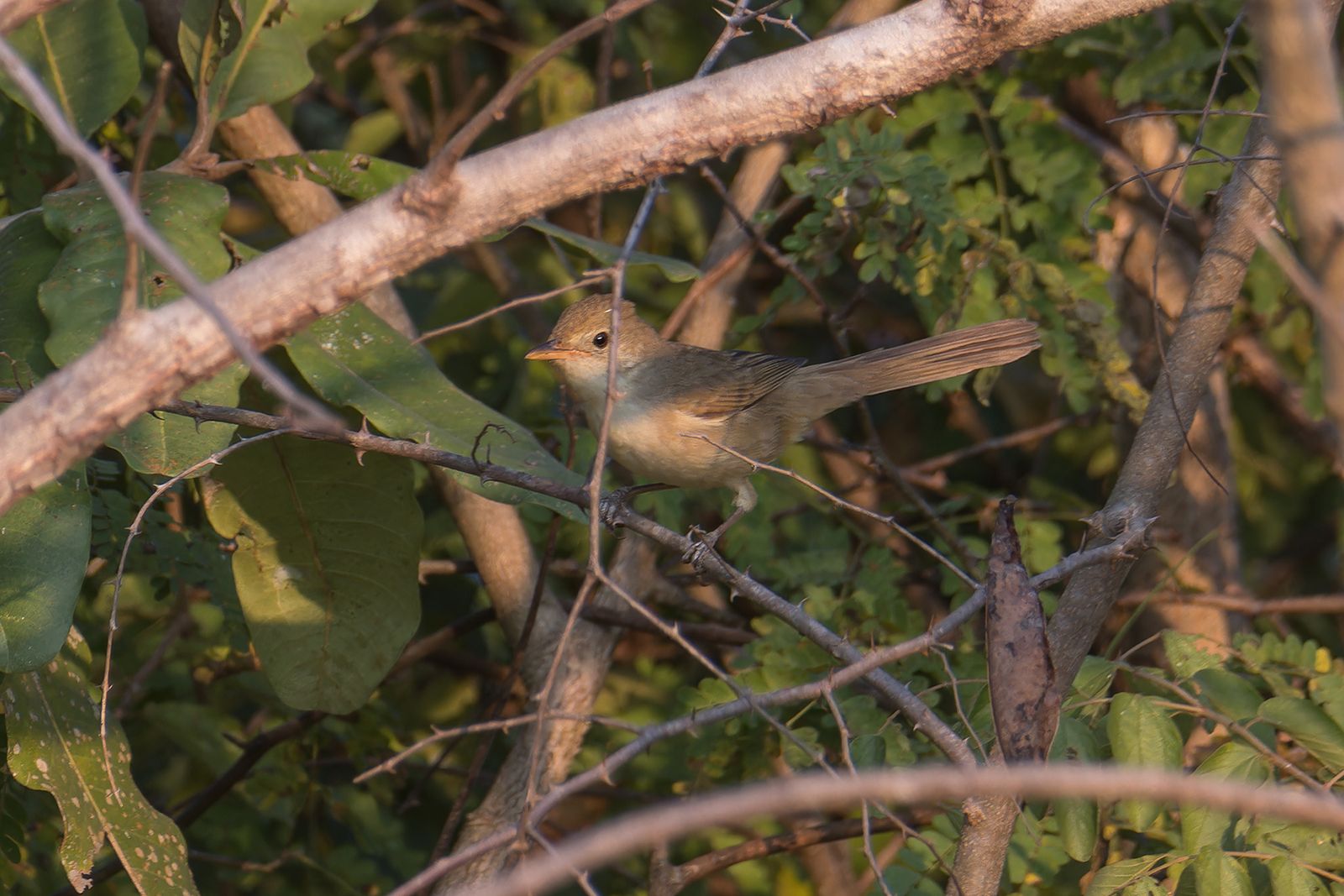
The thick-billed warbler (Arundinax aedon) breeds in the temperate east Palearctic, from south Siberia to west Mongolia. It is migratory, wintering in tropical South Asia and South-east Asia. It is a very rare vagrant to western Europe. This passerine bird is a species found in dense vegetation such as reeds, bushes and thick undergrowth. Five or six eggs are laid in a nest in a low tree. This is a large warbler, at 16–17.5 cm (6.3–6.9 in) long, which is nearly as big as the great reed warbler. The adult has an unstreaked brown back and buff underparts, with few obvious distinctive plumage features. The forehead is rounded, and the bill is short and pointed. The sexes are identical, as with most warblers, but young birds are richer buff below. Like most warblers, it is insectivorous, but will take other small prey items. The song is fast and loud, and similar to the marsh warbler, with much mimicry and typically acrocephaline whistles added. It was sometimes placed in the monotypic genus Phragmaticola (or Phragamaticola) and for a long time as Acrocephalus and in 2009 suggested as being within the Iduna clade. However, a 2014 phylogeny study based on more loci indicated that it did not fit into the Iduna clade, and therefore suggested a resurrection of the genus Phragamaticola or Arundinax; the latter, being the older available genus name, has priority. The genus Arundinax is from Latin arundo, arundinis meaning "reed" and Ancient Greek anax which means "master". The specific aedon is from Ancient Greek aedon and means nightingale. In Greek mythology, Queen Aëdon was changed into a nightingale after killing her own son Itylus while attempting to murder one of the sons of her sister-in-law Niobe.
Gallery
Ajouter des photos
Partagez vos photos de cette espèce (jusqu'à 20 à la fois) : elles sont vérifiées automatiquement, puis publiées.
Répartition
Occurrences observées (données GBIF). Les zones hors aire d'origine peuvent indiquer une présence introduite ou invasive.
Sources et crédits
Informations provenant de plusieurs sources vérifiées. Dernière mise à jour : .
Crédits photos (10)
- Photo : Wich’yanan (Jay) Limparungpatthanakij · CC BY-NC 4.0 · via GBIF
- Photo : Sebastian K · CC BY-NC 4.0 · via GBIF
- Photo : Vinay Herle G · CC BY-NC 4.0 · via GBIF
- Photo : Vinay Herle G · CC BY-NC 4.0 · via GBIF
- Photo : Zac Peterson · CC BY 4.0 · via GBIF
- Photo : Vinay Herle G · CC BY-NC 4.0 · via GBIF
- Photo : shivaprakash · CC BY-NC 4.0 · via GBIF
- Photo : jukree · CC BY-NC 4.0 · via GBIF
- Photo : supapond13 · CC BY-NC 4.0 · via GBIF
- Photo : svetagor · CC BY-NC 4.0 · via GBIF
Mentions de licence
Texte disponible sous licence CC BY-SA 4.0. Il adapte notamment Wikipédia (EN) : Thick-billed warbler, Rousserolle à gros bec, Wikipedia (CC BY-SA) : Iduna aedon (Wikipédia, auteurs dans l’historique de l’article).
- Taxonomie : GBIF Backbone Taxonomy (CC BY 4.0)
- Carte : occurrences GBIF, fond © contributeurs OpenStreetMap (ODbL)
- Statut de conservation : Liste rouge de l'UICN, via Wikidata (CC0)
Détail : Sources et licences.
Discussion (0)
Aucun message pour l’instant. Lancez la discussion sur cette fiche (sources, précisions, débats éditoriaux).
Connectez-vous pour participer à la discussion.