
Dusky warbler
Phylloscopus fuscatus
The dusky warbler (Phylloscopus fuscatus) is a leaf warbler which breeds in the east Palearctic.
- Kingdom
- Animalia
- Phylum
- Chordata
- Class
- Aves
- Order
- Passeriformes
- Family
- Phylloscopidae
- Genus
- Phylloscopus
- Species
- Phylloscopus fuscatus
Description
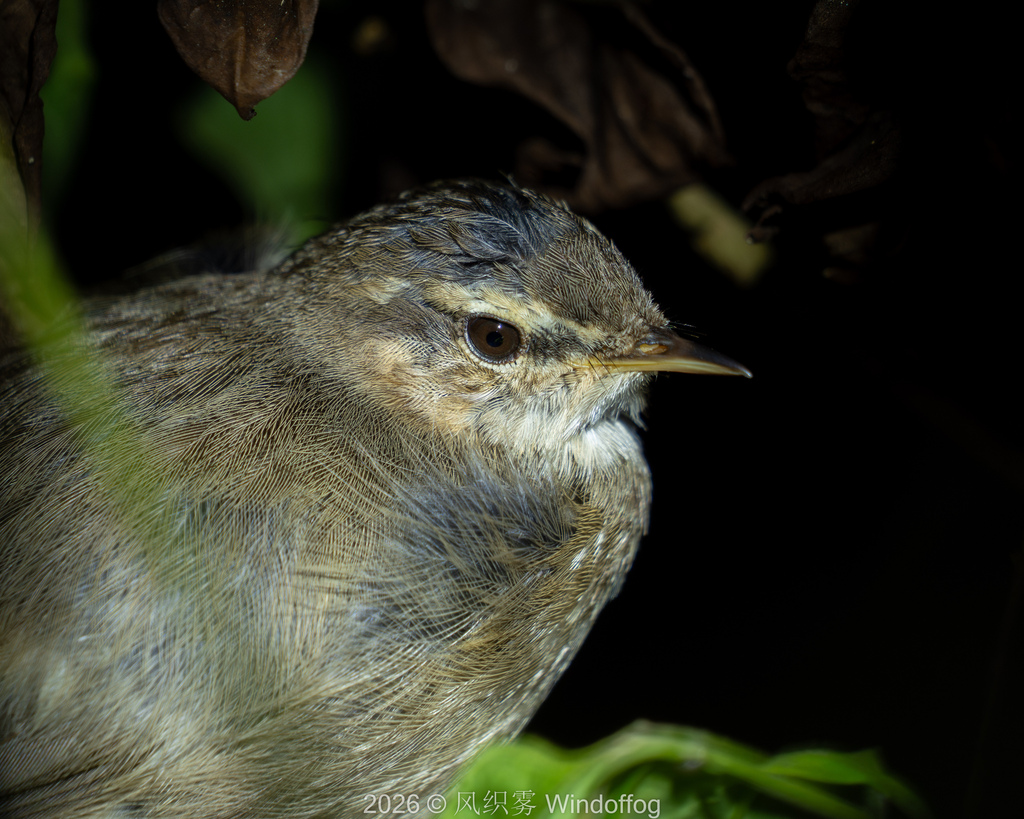
The dusky warbler (Phylloscopus fuscatus) is a leaf warbler which breeds in the east Palearctic. The genus name Phylloscopus is from Ancient Greek phullon, "leaf", and skopos, "seeker" (from skopeo, "to watch"). The specific fuscatus is from Latin fuscus "dark". This warbler is strongly migratory and winters in South Asia and South-east Asia. It sometimes occurs in North America in Alaska, and has also occurred in California. This is an abundant bird of taiga bogs and wet meadows. The nest is built low in a bush, and 5–6 eggs are laid. Like most Old World warblers, this small passerine is insectivorous. The dusky warbler is prone to vagrancy as far as western Europe in October, despite a 3000 km distance from its breeding grounds. It has wintered in Great Britain. This is a warbler similar in size and shape to a chiffchaff. The adult has an unstreaked brown back and buff underparts. There is a prominent whitish supercilium, and the bill is fine and pointed. The sexes are identical, as with most warblers, but young birds are more olive-tinged above. Like most warblers, it is insectivorous, but will take other small food items, including berries. The song is a monotonous whistle, and the call is a harsh check. The call is often the first clue that this typically skulking species is present, away from the breeding grounds. An individual of this locally rare species was detected in an urban park and later ringed in December 2025 in Porto, Portugal
Gallery
Ajouter des photos
Partagez vos photos de cette espèce (jusqu'à 20 à la fois) : elles sont vérifiées automatiquement, puis publiées.
Répartition
Occurrences observées (données GBIF). Les zones hors aire d'origine peuvent indiquer une présence introduite ou invasive.
Sources et crédits
Informations provenant de plusieurs sources vérifiées. Dernière mise à jour : .
Crédits photos (8)
- Photo : 风织雾 (@windoffog) · CC BY-NC 4.0 · via iNaturalist
- Photo : 小铖/Smalltown (@smalltown_huang) · CC BY-NC 4.0 · via iNaturalist
- Photo : Leslie Hurteau (@lhurteau) · CC BY-NC 4.0 · via iNaturalist
- Photo : Marco YUEN (@marcolibrary) · CC BY-NC 4.0 · via iNaturalist
- Photo : @albertkwok20 · CC BY-NC 4.0 · via iNaturalist
- Photo : Илья Сухов (@aquacielo) · CC BY-NC 4.0 · via iNaturalist
- Photo : Christoph Moning (@christoph_moning) · CC BY 4.0 · via iNaturalist
- Photo : Raymond Khoo (@raymondkhoo) · CC BY-NC 4.0 · via iNaturalist
Mentions de licence
Texte disponible sous licence CC BY-SA 4.0. Il adapte notamment Pouillot brun, Wikipedia (CC BY-SA) : Dusky warbler (Wikipédia, auteurs dans l’historique de l’article).
- Taxonomie : GBIF Backbone Taxonomy (CC BY 4.0)
- Carte : occurrences GBIF, fond © contributeurs OpenStreetMap (ODbL)
- Statut de conservation : Liste rouge de l'UICN, via Wikidata (CC0)
Détail : Sources et licences.
Discussion (0)
Aucun message pour l’instant. Lancez la discussion sur cette fiche (sources, précisions, débats éditoriaux).
Connectez-vous pour participer à la discussion.