
Red-faced Woodland Warbler
Phylloscopus laetus
The red-faced woodland warbler (Phylloscopus laetus) is a species of leaf warbler in the family Phylloscopidae.
- Kingdom
- Animalia
- Phylum
- Chordata
- Class
- Aves
- Order
- Passeriformes
- Family
- Phylloscopidae
- Genus
- Phylloscopus
- Species
- Phylloscopus laetus
Description
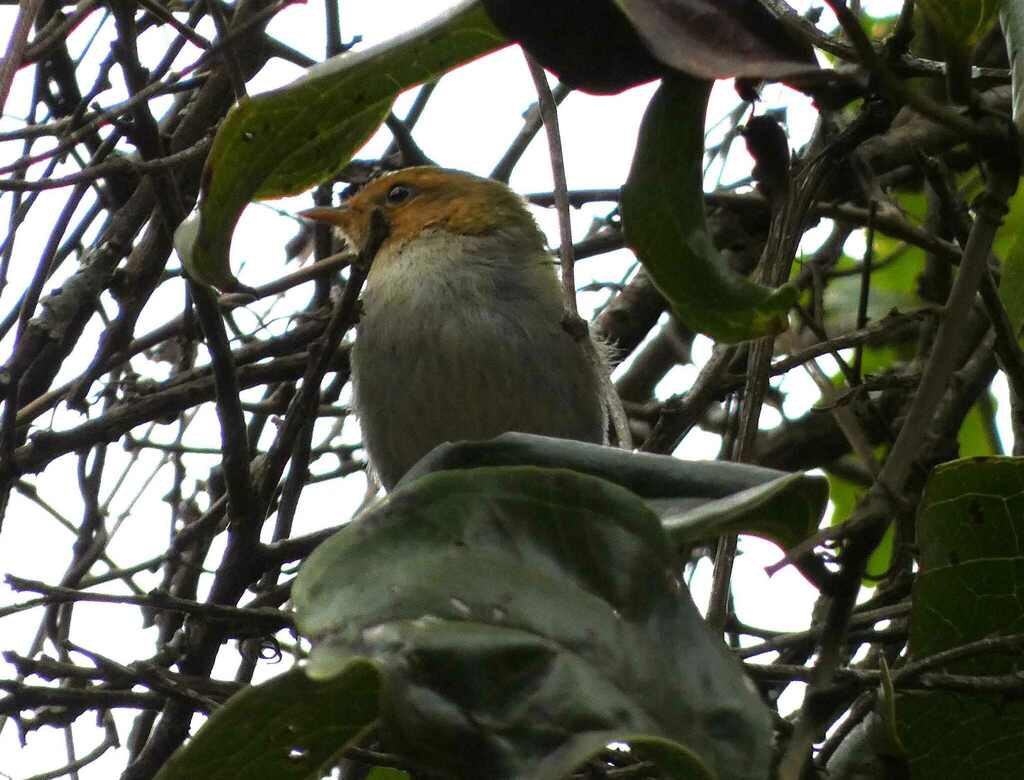
The red-faced woodland warbler (Phylloscopus laetus) is a species of leaf warbler in the family Phylloscopidae. It forms a superspecies with the closely related yellow-throated woodland warbler and the Laura's woodland warbler. It is endemic to the Albertine Rift montane forests. Two subspecies are recognised, the nominate P. l. laetus ranges from Western Uganda and eastern Democratic Republic of the Congo (the Ruwenzori Mountains), south through SW Uganda, western Rwanda and western Burundi. The second subspecies, P. l. schoutedeni, has a more restricted range, being confined to Mt. Kabobo in eastern DRC. It is one of several species known as Albertine Rift Valley endemics. Overall the species has a total range of 77,000 square kilometres (29000 sq mi). Its natural habitat is highland forest between 1200–3100 m, especially in bamboo; it also occurs in areas of secondary forest. The red-faced woodland warbler is a medium-sized (11 cm) warbler with a distinctive reddish face, which is richer on P. l. schoutedeni. Overall the rest of the plumage is greenish above with a paler off-white belly and rump. Little is known about the breeding biology of this species. Two or three eggs are laid in a ball nest suspended in a tangle of vines in shrubs and trees (up to 10 m above the ground). Both parents care for the young. Red-faced woodland warblers feed on insects and other invertebrates, particularly bugs, beetles and spiders. They hunt in pairs and will sometimes join small feeding flocks. The red-faced woodland warbler is not considered threatened by human activities. It has a small worldwide range but is relatively common where it occurs. It is classified as least concern by the IUCN.
Gallery
Ajouter des photos
Partagez vos photos de cette espèce (jusqu'à 20 à la fois) : elles sont vérifiées automatiquement, puis publiées.
Répartition
Occurrences observées (données GBIF). Les zones hors aire d'origine peuvent indiquer une présence introduite ou invasive.
Sources et crédits
Informations provenant de plusieurs sources vérifiées. Dernière mise à jour : .
Crédits photos (8)
- Photo : Jeff Harding (@jeffharding) · CC BY-NC 4.0 · via iNaturalist
- Photo : Lois Posey (@loisposey) · CC BY-NC 4.0 · via iNaturalist
- Photo : @biancazoletto · CC BY-NC 4.0 · via iNaturalist
- Photo : Rafael Würtemberger (@rafaelw) · CC BY 4.0 · via iNaturalist
- Photo : Stephen John Davies (@stephen220) · CC BY-NC 4.0 · via iNaturalist
- Photo : Andrew Holle (@andrewholle) · CC0 (domaine public) · via iNaturalist
- Photo : Bart Wursten (@bartwursten) · CC BY-NC 4.0 · via iNaturalist
- Photo : Nik Borrow (@nikborrow) · CC BY-NC 4.0 · via iNaturalist
Mentions de licence
Texte disponible sous licence CC BY-SA 4.0. Il adapte notamment Pouillot à face rousse, Wikipedia (CC BY-SA) : Red-faced woodland warbler (Wikipédia, auteurs dans l’historique de l’article).
- Taxonomie : GBIF Backbone Taxonomy (CC BY 4.0)
- Carte : occurrences GBIF, fond © contributeurs OpenStreetMap (ODbL)
- Statut de conservation : Liste rouge de l'UICN, via Wikidata (CC0)
Détail : Sources et licences.
Discussion (0)
Aucun message pour l’instant. Lancez la discussion sur cette fiche (sources, précisions, débats éditoriaux).
Connectez-vous pour participer à la discussion.