
Kentish Plover
Charadrius alexandrinus
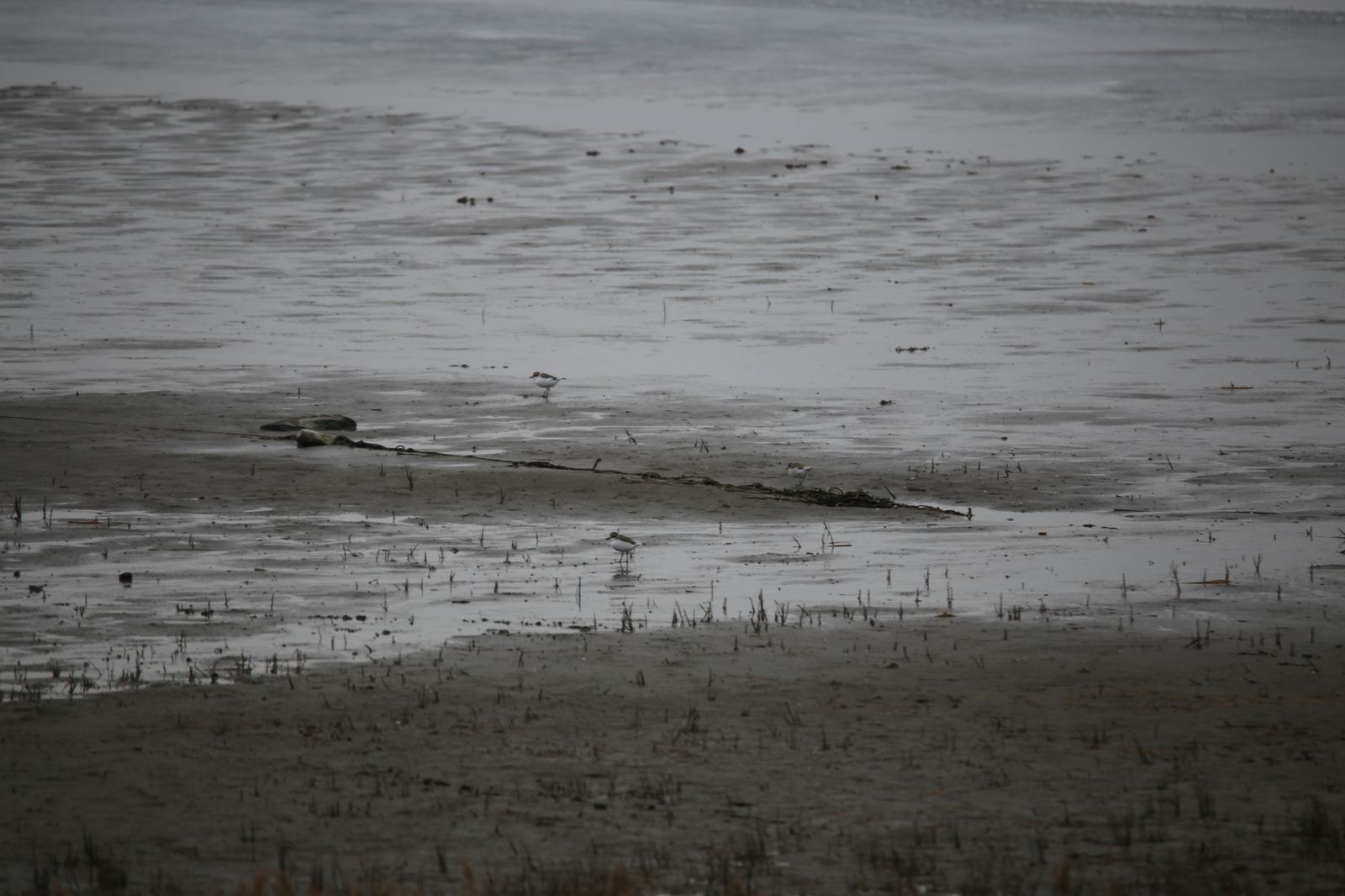
The Kentish plover (Anarhynchus alexandrinus) is a small wader (40–44 g (1.4–1.6 oz)) of the family Charadriidae that breeds on the shores of saline lakes, lagoons, and coasts, populating sand dunes, marshes, semi-arid desert, and tundra.
- Kingdom
- Animalia
- Phylum
- Chordata
- Class
- Aves
- Order
- Charadriiformes
- Family
- Charadriidae
- Genus
- Charadrius
- Species
- Charadrius alexandrinus
Description
The Kentish plover (Anarhynchus alexandrinus) is a small wader (40–44 g (1.4–1.6 oz)) of the family Charadriidae that breeds on the shores of saline lakes, lagoons, and coasts, populating sand dunes, marshes, semi-arid desert, and tundra. Both male and female birds have pale plumages with a white underside, grey/brown back, dark legs and a dark bill; however, additionally the male birds also exhibit very dark incomplete breast bands, and dark markings either side of their head, therefore the Kentish plover is regarded as sexually dimorphic. The Kentish plover has a large geographical distribution, ranging from latitudes of 10º to 55º, occupying North Africa, both mainland, such as Senegal, and island, such as the Cape Verde archipelago, Central Asia, for example alkaline lakes in China, and Europe, including small populations in Spain and Austria. Some populations are migratory and often winter in Africa, whereas other populations, such as various island populations, do not migrate. Its common English name comes from the county of Kent, where it was once found, but it has not bred in Britain since 1979. Kentish plovers are ground-nesting birds, often with a preference for low, open, moist nesting sites away from thick vegetation and human activity. They use a number of materials to build their nests, mainly consisting of shells, pebbles, grass and leaves in a small scrape in the ground. Like most plovers, the Kentish plovers are predominantly insectivores, feeding on a large range of arthropods and invertebrates depending on the environment, by using a run and stop method.
Gallery
Ajouter des photos
Partagez vos photos de cette espèce (jusqu'à 20 à la fois) : elles sont vérifiées automatiquement, puis publiées.
Répartition
Occurrences observées (données GBIF). Les zones hors aire d'origine peuvent indiquer une présence introduite ou invasive.
Sources et crédits
Informations provenant de plusieurs sources vérifiées. Dernière mise à jour : .
Crédits photos (10)
- Photo : jung yong pak · CC BY-NC 4.0 · via GBIF
- Photo : lava_chen · CC BY-NC 4.0 · via GBIF
- Photo : bal_krishna_jha · CC BY-NC 4.0 · via GBIF
- Photo : Marco Mussita · CC BY 4.0 · via GBIF
- Photo : estelle_garrouste · CC BY-NC 4.0 · via GBIF
- Photo : estelle_garrouste · CC BY-NC 4.0 · via GBIF
- Photo : chien0830 · CC BY-NC 4.0 · via GBIF
- Photo : javi · CC BY-NC 4.0 · via GBIF
- Photo : Amaël Borzée · CC BY-NC 4.0 · via GBIF
- Photo : lava_chen · CC BY-NC 4.0 · via GBIF
Mentions de licence
Texte disponible sous licence CC BY-SA 4.0. Il adapte notamment Wikipedia (CC BY-SA) : Kentish plover (Wikipédia, auteurs dans l’historique de l’article).
- Taxonomie : GBIF Backbone Taxonomy (CC BY 4.0)
- Carte : occurrences GBIF, fond © contributeurs OpenStreetMap (ODbL)
- Statut de conservation : Liste rouge de l'UICN, via Wikidata (CC0)
Détail : Sources et licences.
Discussion (0)
Aucun message pour l’instant. Lancez la discussion sur cette fiche (sources, précisions, débats éditoriaux).
Connectez-vous pour participer à la discussion.