
Black-throated loon
Gavia arctica
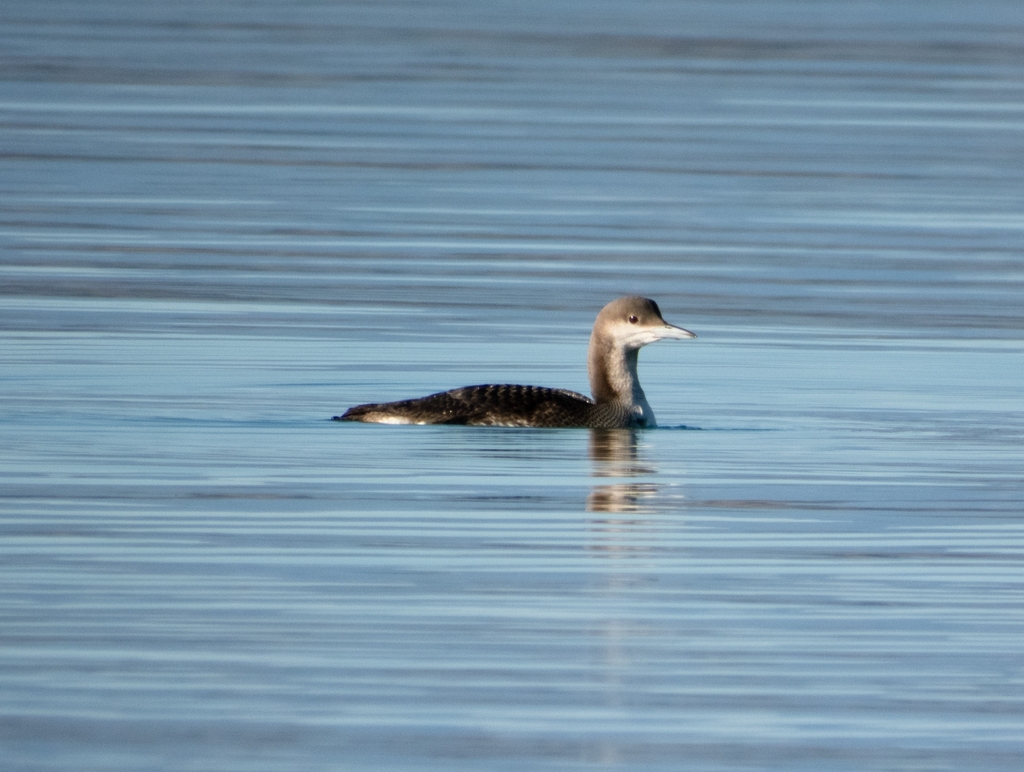
The black-throated loon (Gavia arctica), also known as the Arctic loon and the black-throated diver, is a migratory aquatic bird found in the Northern Hemisphere, primarily breeding in freshwater lakes in northern Europe and Asia.
- Kingdom
- Animalia
- Phylum
- Chordata
- Class
- Aves
- Order
- Gaviiformes
- Family
- Gaviidae
- Genus
- Gavia
- Species
- Gavia arctica
Description
The black-throated loon (Gavia arctica), also known as the Arctic loon and the black-throated diver, is a migratory aquatic bird found in the Northern Hemisphere, primarily breeding in freshwater lakes in northern Europe and Asia. It winters along sheltered, ice-free coasts of the north-east Atlantic Ocean and the eastern and western Pacific Ocean. This loon was first described by Carl Linnaeus in 1758 and has two subspecies. It was previously considered to be the same species as the Pacific loon, of which it is traditionally considered to be a sister species, although this is debated. In a study that used mitochondrial and nuclear intron DNA, the black-throated loon was found to be sister to a clade consisting of the Pacific loon and two sister species, the common loon and the yellow-billed loon. The black-throated loon measures about 70 cm (28 in) in length and can weigh anywhere from 1.3 to 3.4 kilograms (2.9 to 7.5 lb). In breeding plumage, the adult of the nominate subspecies has mostly black upperparts, with the exception of some of the mantle and scapulars, which have white squares. The head and hindneck are grey, and the sides white and striped black. Most of the throat is also black, giving this bird the name "black-throated loon". The colour of the throat patch can be used to distinguish the two subspecies; the throat patch of the other subspecies, G. a. viridigularis, is green. The underparts are mostly white, including the bottom of the throat. The flanks are also white, a feature that can be used to separate this bird from the Pacific loon. When the bird is not breeding, the black patch on the throat is absent, replaced with white; most of the black lines on the throat are also missing, except those on the bottom sides, and the upperparts are unpatterned except for a few white spots on the upperwing. The juvenile is similar to the non-breeding adult, except that it is overall browner. The timing of the breeding season is variable; in the southern part of its range, this loon starts breeding in April, whereas in the northern portion, it waits until after the spring thaw. It builds an oval nest about 23 centimetres (9.1 in) across, either near the breeding lake or on vegetation emerging from it. The black-throated loon usually lays a clutch of two, rarely one or three, brown-green eggs with dark splotches. After an incubation period of 27 to 29 days, the chick hatches and is fed a diet of small fish and invertebrates. The adult mostly eats fish. To catch this food, it forages by itself or in pairs, very rarely foraging in groups. It dives from the water, going no deeper than 5 metres (16 ft). Most dives are successful. Whether or not at least one chick will hatch from a nest is variable, ranging from 30% to 90%. Predators and flooding cause most failures. Overall, the population of this loon is declining; however, the International Union for Conservation of Nature (IUCN) still rates it as least concern because the population decline is not rapid enough. The black-throated loon is protected under both the Migratory Bird Treaty Act of 1918 and the Agreement on the Conservation of African-Eurasian Migratory Waterbirds.
Gallery
Ajouter des photos
Partagez vos photos de cette espèce (jusqu'à 20 à la fois) : elles sont vérifiées automatiquement, puis publiées.
Répartition
Occurrences observées (données GBIF). Les zones hors aire d'origine peuvent indiquer une présence introduite ou invasive.
Sources et crédits
Informations provenant de plusieurs sources vérifiées. Dernière mise à jour : .
Crédits photos (8)
- Photo : Petra Štrbenac (@pstrbenac) · CC BY-NC 4.0 · via iNaturalist
- Photo : @rguinness · CC BY-NC 4.0 · via iNaturalist
- Photo : @andrey19780619 · CC BY-NC 4.0 · via iNaturalist
- Photo : Tomislav Mandir (@tommand) · CC BY-NC 4.0 · via iNaturalist
- Photo : Олександр Гриб (@olexandr_ghryb) · CC BY-NC 4.0 · via iNaturalist
- Photo : Егор Пылёв (@egorpylev) · CC BY-NC 4.0 · via iNaturalist
- Photo : SIA (@igor_sikorskiy) · CC BY 4.0 · via iNaturalist
- Photo : Данилова Валерия (@valeriya_xoma) · CC BY-NC 4.0 · via iNaturalist
Mentions de licence
Texte disponible sous licence CC BY-SA 4.0. Il adapte notamment Wikipedia (CC BY-SA) : Black-throated loon (Wikipédia, auteurs dans l’historique de l’article).
- Taxonomie : GBIF Backbone Taxonomy (CC BY 4.0)
- Carte : occurrences GBIF, fond © contributeurs OpenStreetMap (ODbL)
- Statut de conservation : Liste rouge de l'UICN, via Wikidata (CC0)
Détail : Sources et licences.
Discussion (0)
Aucun message pour l’instant. Lancez la discussion sur cette fiche (sources, précisions, débats éditoriaux).
Connectez-vous pour participer à la discussion.