
Hooded Pitohui
Pitohui dichrous
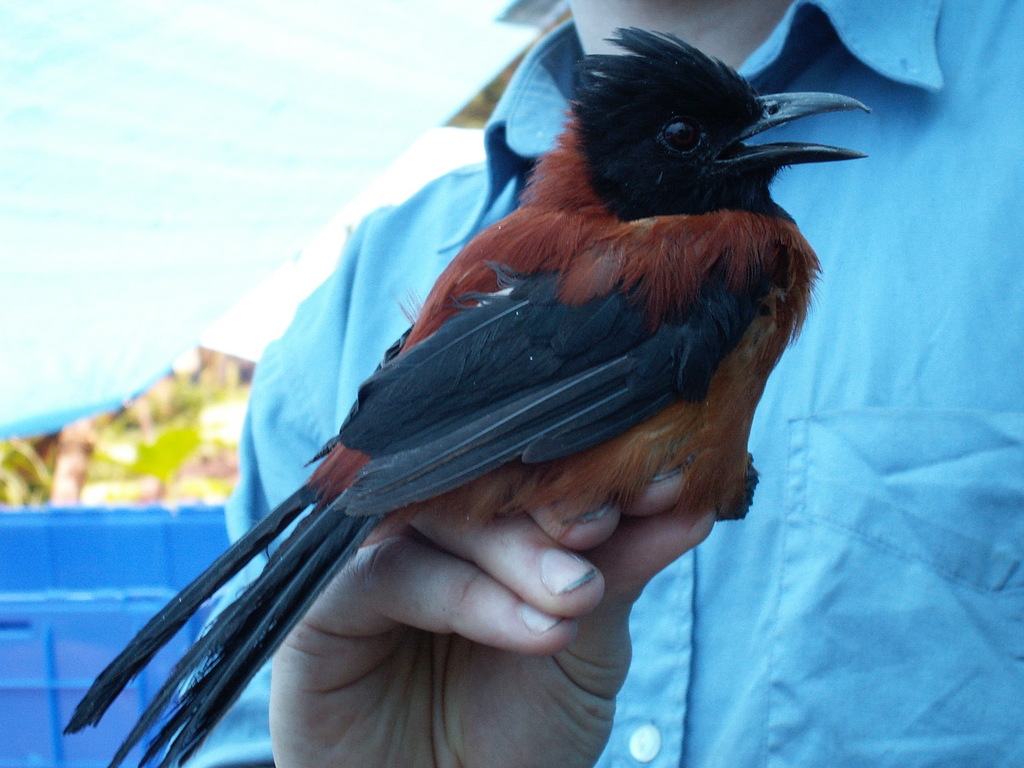
The hooded pitohui (Pitohui dichrous) is a species of bird in the genus Pitohui found in New Guinea.
- Kingdom
- Animalia
- Phylum
- Chordata
- Class
- Aves
- Order
- Passeriformes
- Family
- Oriolidae
- Genus
- Pitohui
- Species
- Pitohui dichrous
Description
The hooded pitohui (Pitohui dichrous) is a species of bird in the genus Pitohui found in New Guinea. It was long thought to be a whistler (Pachycephalidae) but is now known to be in the Old World oriole family (Oriolidae). Within the oriole family, this species is most closely related to the variable pitohuis in the genus Pitohui, and then the figbirds. A medium-sized songbird with reddish-brown and black plumage, this species is one of the few known poisonous birds, containing a range of batrachotoxin compounds in its skin, feathers and other tissues. These toxins are thought to be derived from their diet and may function both to deter predators and to protect the bird from parasites. The close resemblance of this species to other unrelated birds also known as pitohuis which are also poisonous is an example of convergent evolution and Müllerian mimicry. Their appearance is also mimicked by unrelated non-poisonous species, a phenomenon known as Batesian mimicry. The toxic nature of this bird is well known to local hunters, who avoid it. It is one of the most poisonous species of pitohui, but the toxicity of individual birds can vary geographically. The hooded pitohui is found in forests from sea level up to 2,000 m (6,600 ft) but is most common in hills and low mountains. A social bird, it lives in family groups and frequently joins and even leads mixed-species foraging flocks. Its diet is made up of fruits, seeds and invertebrates. This species is apparently a cooperative breeder, with family groups helping to protect the nest and feed the young. The hooded pitohui is common and is currently not at risk of extinction, with its numbers being stable.
Gallery
Ajouter des photos
Partagez vos photos de cette espèce (jusqu'à 20 à la fois) : elles sont vérifiées automatiquement, puis publiées.
Répartition
Occurrences observées (données GBIF). Les zones hors aire d'origine peuvent indiquer une présence introduite ou invasive.
Sources et crédits
Informations provenant de plusieurs sources vérifiées. Dernière mise à jour : .
Crédits photos (8)
- Photo : Daniel Levitis (@dlevitis) · CC BY 4.0 · via iNaturalist
- Photo : @gee912 · CC BY-NC 4.0 · via iNaturalist
- Photo : @avocat · CC BY 4.0 · via iNaturalist
- Photo : Cheongweei Gan (@gancw1) · CC BY 4.0 · via iNaturalist
- Photo : @andrew2285 · CC0 (domaine public) · via iNaturalist
- Photo : Светлана Царахова (@svetlanarussia) · CC0 (domaine public) · via iNaturalist
- Photo : Hammam As (@goldpecker) · CC BY-NC 4.0 · via iNaturalist
- Photo : Pankaj Nirale (@pankajnirale) · CC BY-NC 4.0 · via iNaturalist
Mentions de licence
Texte disponible sous licence CC BY-SA 4.0. Il adapte notamment Wikipedia (CC BY-SA) : Hooded pitohui (Wikipédia, auteurs dans l’historique de l’article).
- Taxonomie : GBIF Backbone Taxonomy (CC BY 4.0)
- Carte : occurrences GBIF, fond © contributeurs OpenStreetMap (ODbL)
- Statut de conservation : Liste rouge de l'UICN, via Wikidata (CC0)
Détail : Sources et licences.
Discussion (0)
Aucun message pour l’instant. Lancez la discussion sur cette fiche (sources, précisions, débats éditoriaux).
Connectez-vous pour participer à la discussion.