
Philippine Eagle
Pithecophaga jefferyi
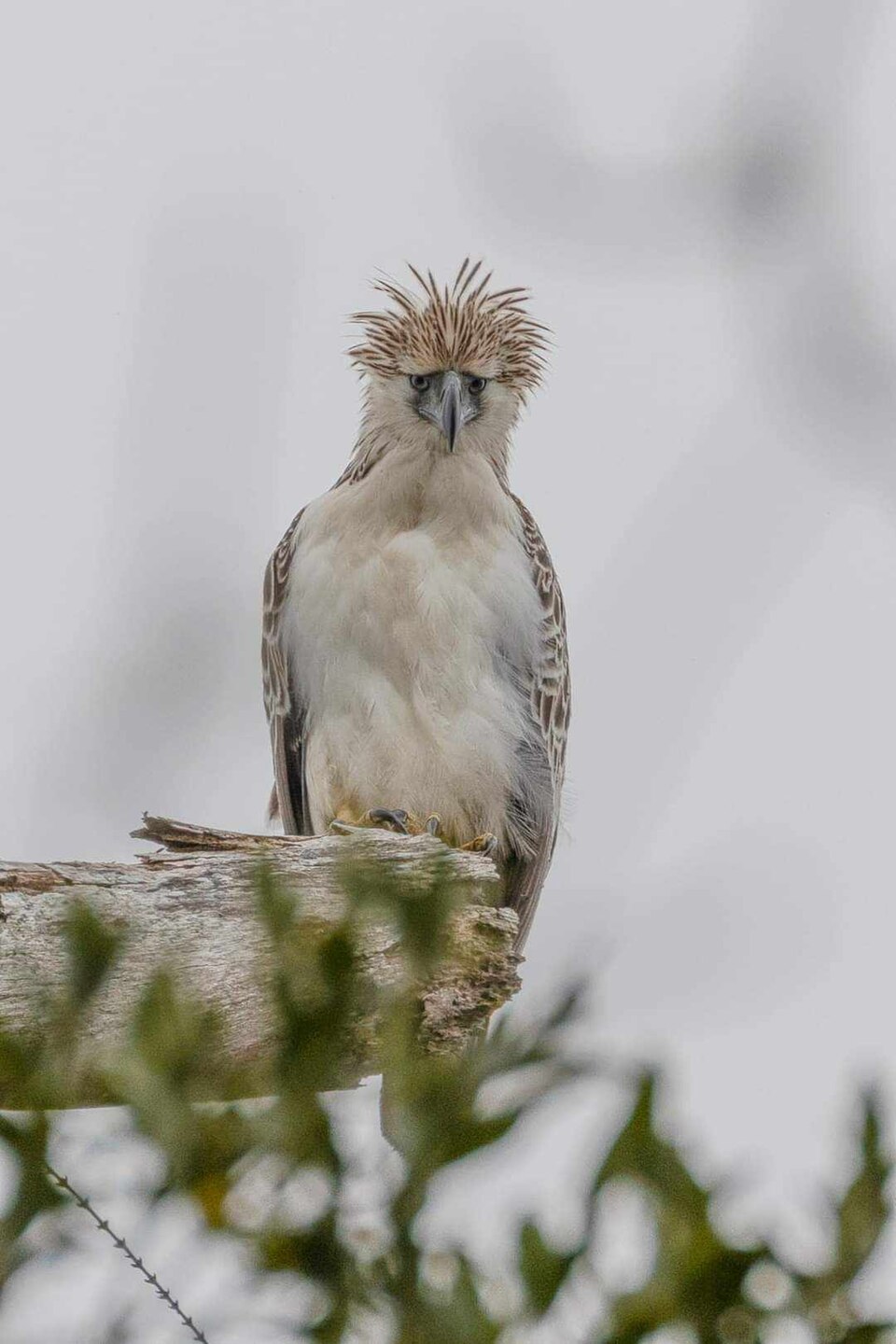
The Philippine eagle (Pithecophaga jefferyi), also known as the monkey-eating eagle or great Philippine eagle, is a critically endangered species of eagle of the family Accipitridae which is endemic to forests in the Philippines.
- Kingdom
- Animalia
- Phylum
- Chordata
- Class
- Aves
- Order
- Accipitriformes
- Family
- Accipitridae
- Genus
- Pithecophaga
- Species
- Pithecophaga jefferyi
Description
The Philippine eagle (Pithecophaga jefferyi), also known as the monkey-eating eagle or great Philippine eagle, is a critically endangered species of eagle of the family Accipitridae which is endemic to forests in the Philippines. It has brown and white-coloured plumage, a shaggy crest, and generally measures 86 to 102 cm (2.82 to 3.35 ft) in length and weighs 4.04 to 8.0 kg (8.9 to 17.6 lb). The Philippine eagle is considered the largest of the extant eagles in the world in terms of length and wing surface area, with only Steller's sea eagle and the Harpy eagle being larger in terms of weight and bulk. It has been declared the national bird of the Philippines. It is also depicted in the Philippine one thousand-peso note. The species had been classified by the IUCN Red List as critically endangered with a declining population and is one of the most endangered raptors in the world. The most significant threat to the species is loss of habitat, a result of high levels of deforestation throughout most of its range. Since 2019, more than 20 eagles have been rescued mostly due to injuries from gunshot wounds. Killing a Philippine eagle is a criminal offence, punishable by law with up to 12 years' imprisonment and heavy fines.
Gallery
Ajouter des photos
Partagez vos photos de cette espèce (jusqu'à 20 à la fois) : elles sont vérifiées automatiquement, puis publiées.
Répartition
Occurrences observées (données GBIF). Les zones hors aire d'origine peuvent indiquer une présence introduite ou invasive.
Sources et crédits
Informations provenant de plusieurs sources vérifiées. Dernière mise à jour : .
Crédits photos (6)
- Photo : Aimee Valencia · CC BY 4.0
- Photo : Wouter Beukema (@wouterbeukema) · CC BY 4.0 · via iNaturalist
- Photo : @dmalerta · CC BY-NC 4.0 · via iNaturalist
- Photo : Japheth Richa (@japhhpaj) · CC BY-NC 4.0 · via iNaturalist
- Photo : Jonathan M (@isidoreajar) · CC BY-NC 4.0 · via iNaturalist
- Photo : Japheth Richa (@japhhpaj) · CC BY-NC 4.0 · via iNaturalist
Mentions de licence
Texte disponible sous licence CC BY-SA 4.0. Il adapte notamment Wikipedia (CC BY-SA) : Philippine eagle (Wikipédia, auteurs dans l’historique de l’article).
- Taxonomie : GBIF Backbone Taxonomy (CC BY 4.0)
- Carte : occurrences GBIF, fond © contributeurs OpenStreetMap (ODbL)
- Statut de conservation : Liste rouge de l'UICN, via Wikidata (CC0)
Détail : Sources et licences.
Discussion (0)
Aucun message pour l’instant. Lancez la discussion sur cette fiche (sources, précisions, débats éditoriaux).
Connectez-vous pour participer à la discussion.