
Island Bronze-naped Pigeon
Columba malherbii
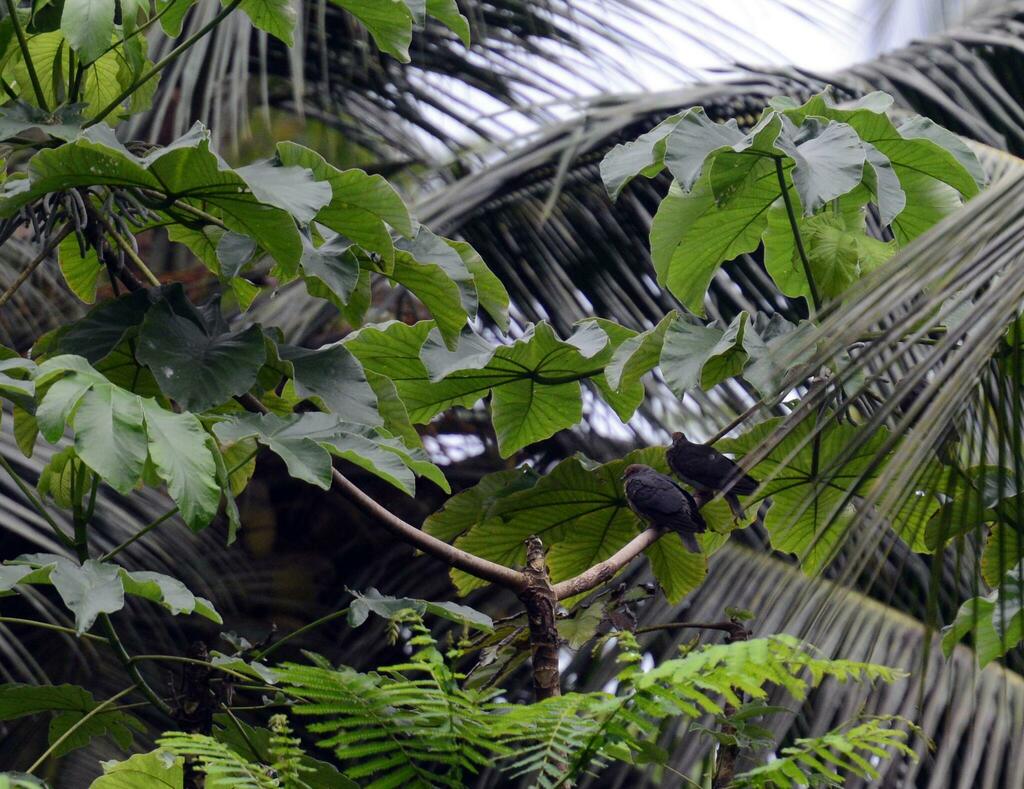
The island bronze-naped pigeon (Columba malherbii), also known as the São Tomé bronze-naped pigeon or São Tomé pigeon, is a species of bird in the pigeon family, Columbidae.
- Kingdom
- Animalia
- Phylum
- Chordata
- Class
- Aves
- Order
- Columbiformes
- Family
- Columbidae
- Genus
- Columba
- Species
- Columba malherbii
Description
The island bronze-naped pigeon (Columba malherbii), also known as the São Tomé bronze-naped pigeon or São Tomé pigeon, is a species of bird in the pigeon family, Columbidae. It is endemic to the Gulf of Guinea, where it is found on the islands of São Tomé, Príncipe, and Annobón. It inhabits rainforest, secondary forests, and plantations at elevations of up to 1,668 m (5,472 ft), although it is more common at lower elevations. A small, darkish pigeon, it has a total length of 28 cm (11 in). Adult males have slate-grey heads and upper backs, blackish-grey wings, backs, and tails, buffy-white throats, ashy-grey breasts and bellies, and rufous vents. The back of the neck and upper back are glossy pink or green, while the wings have a green tinge to them. Females are similar, but have browner undersides, duller and less glossy upperparts, and more rusty-orange outer tail feathers. The species is frugivorous and feeds on a variety of fruits and berries. Breeding takes place from November to January on Príncipe and February onwards on São Tomé. It builds sturdy platform nests 5–12 m (16–39 ft) up in trees and lays one or two dirty-white eggs. Island bronze-naped pigeons are usually seen singly or in small flocks of up to seven birds. It is listed as being near threatened by the International Union for Conservation of Nature (IUCN) on the IUCN Red List due to an ongoing "moderately quick" decline in its population caused by hunting.
Gallery
Ajouter des photos
Partagez vos photos de cette espèce (jusqu'à 20 à la fois) : elles sont vérifiées automatiquement, puis publiées.
Répartition
Occurrences observées (données GBIF). Les zones hors aire d'origine peuvent indiquer une présence introduite ou invasive.
Sources et crédits
Informations provenant de plusieurs sources vérifiées. Dernière mise à jour : .
Crédits photos (8)
- Photo : Thomas Menut (@tmenut) · CC BY-NC 4.0 · via iNaturalist
- Photo : Tomáš Hovorka (@tomashovorka) · CC BY-NC 4.0 · via iNaturalist
- Photo : Francesco Cecere (@francescocecere) · CC0 (domaine public) · via iNaturalist
- Photo : Thomas Ebner (@mondseeirrsee) · CC BY 4.0 · via iNaturalist
- Photo : Pedro Beja (@pbeja65) · CC BY-NC 4.0 · via iNaturalist
- Photo : João Farminhão (@joaofarminhao) · CC BY-NC 4.0 · via iNaturalist
- Photo : Olivier De Clerck (@odclerck) · CC BY-NC 4.0 · via iNaturalist
- Photo : Vasco Valadares (@vvaladares) · CC BY-NC 4.0 · via iNaturalist
Mentions de licence
Texte disponible sous licence CC BY-SA 4.0. Il adapte notamment Wikipedia (CC BY-SA) : Island bronze-naped pigeon (Wikipédia, auteurs dans l’historique de l’article).
- Taxonomie : GBIF Backbone Taxonomy (CC BY 4.0)
- Carte : occurrences GBIF, fond © contributeurs OpenStreetMap (ODbL)
- Statut de conservation : Liste rouge de l'UICN, via Wikidata (CC0)
Détail : Sources et licences.
Discussion (0)
Aucun message pour l’instant. Lancez la discussion sur cette fiche (sources, précisions, débats éditoriaux).
Connectez-vous pour participer à la discussion.