
Asir Magpie
Pica asirensis
The Asir magpie (Pica asirensis), also known as the Arabian magpie, is a highly endangered species of magpie endemic to Saudi Arabia.
- Kingdom
- Animalia
- Phylum
- Chordata
- Class
- Aves
- Order
- Passeriformes
- Family
- Corvidae
- Genus
- Pica
- Species
- Pica asirensis
Description
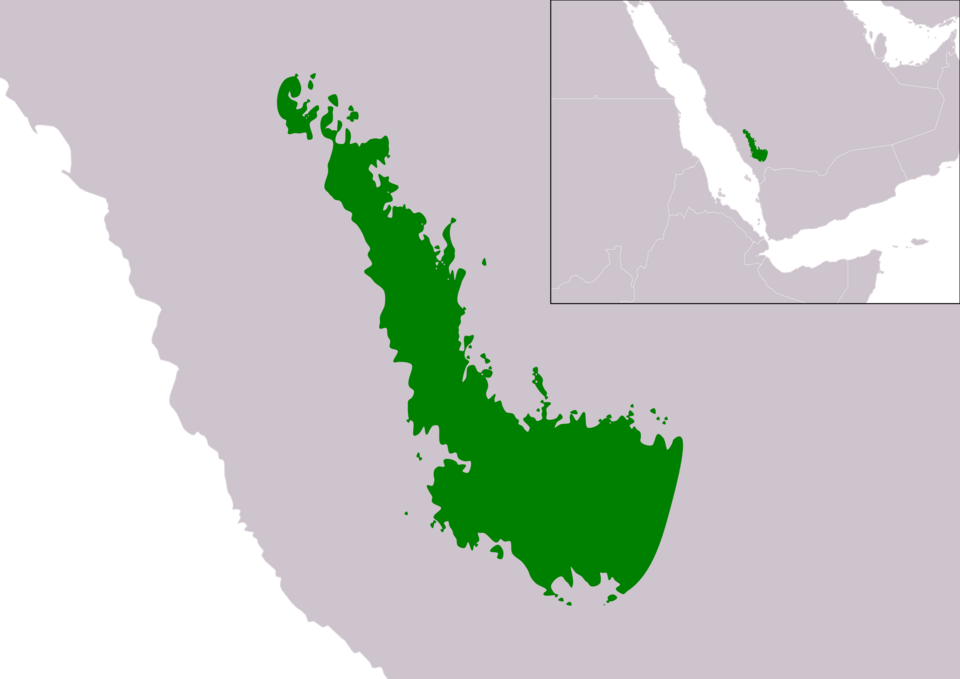
The Asir magpie (Pica asirensis), also known as the Arabian magpie, is a highly endangered species of magpie endemic to Saudi Arabia. It is only found in the country's southwestern highlands, in the Asir Mountains. It occurs only in African juniper forest in well-vegetated wadis and valleys. It was originally described as a subspecies of the Eurasian magpie as Pica pica asirensis, and still is by some authorities. This species is highly threatened by habitat destruction, as its native forests are not regenerating. Tourism development and climate change are also posing a threat. Only 135 pairs (270 mature individuals) are known to survive in the wild, and this number is declining. A molecular phylogenetic study published in 2018 found that the Asir magpie was a sister taxon to the black-rumped magpie of the Tibetan Plateau, with which it also shares a black rump, unlike the other Pica magpies.
Gallery
Ajouter des photos
Partagez vos photos de cette espèce (jusqu'à 20 à la fois) : elles sont vérifiées automatiquement, puis publiées.
Répartition
Occurrences observées (données GBIF). Les zones hors aire d'origine peuvent indiquer une présence introduite ou invasive.
Sources et crédits
Informations provenant de plusieurs sources vérifiées. Dernière mise à jour : .
Crédits photos (2)
- Photo : Own work using: *Natural Earth. Free vector and raster map data @ naturalearthdata.com or OpenStreetMap *Range map from BirdLife International. 2022. Pica asirensis. The IUCN Red List of Threatened Species 2022: e.T103727136A216936460. https://dx.doi.org/10.2305/IUCN.UK.2022-2.RLTS.T103727136A216936460.en. Accessed on 05 February 2024 as visual indicator of distribution. · CC BY-SA 3.0
- Photo : @mimsa · CC BY-NC 4.0 · via iNaturalist
Mentions de licence
Texte disponible sous licence CC BY-SA 4.0. Il adapte notamment Pie d'Arabie, Wikipedia (CC BY-SA) : Asir magpie (Wikipédia, auteurs dans l’historique de l’article).
- Taxonomie : GBIF Backbone Taxonomy (CC BY 4.0)
- Carte : occurrences GBIF, fond © contributeurs OpenStreetMap (ODbL)
Détail : Sources et licences.
Discussion (0)
Aucun message pour l’instant. Lancez la discussion sur cette fiche (sources, précisions, débats éditoriaux).
Connectez-vous pour participer à la discussion.