
Ivory-billed Woodpecker
Campephilus principalis
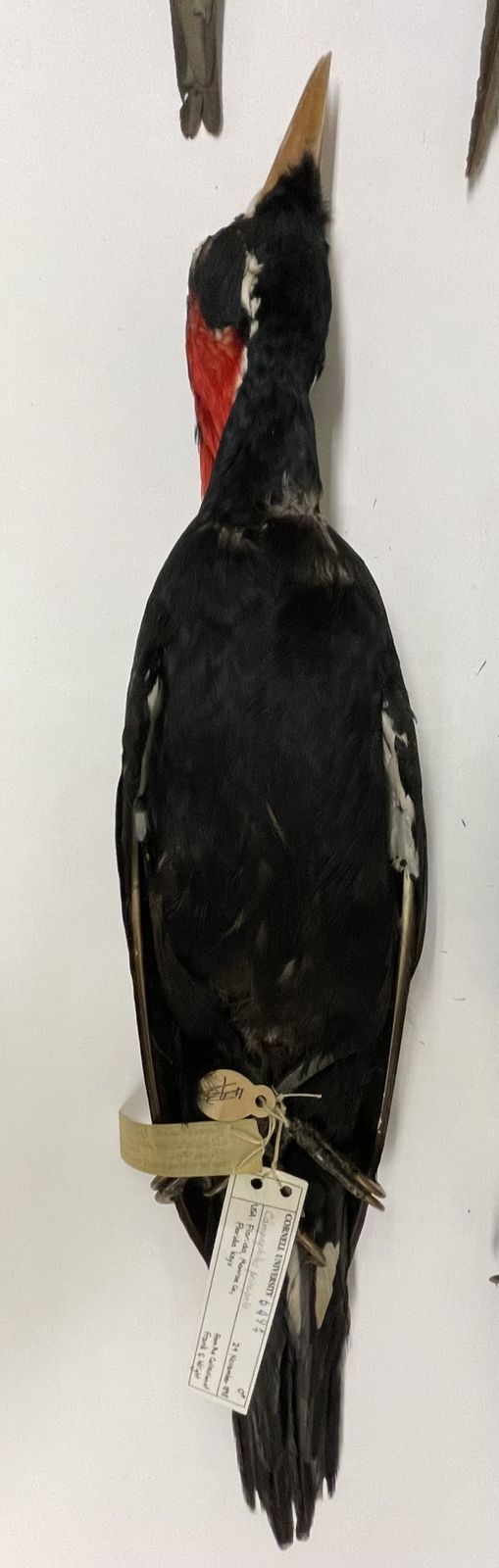
The ivory-billed woodpecker (Campephilus principalis) is a woodpecker native to the Southern United States and Cuba.
- Kingdom
- Animalia
- Phylum
- Chordata
- Class
- Aves
- Order
- Piciformes
- Family
- Picidae
- Genus
- Campephilus
- Species
- Campephilus principalis
Description
The ivory-billed woodpecker (Campephilus principalis) is a woodpecker native to the Southern United States and Cuba. Habitat destruction and hunting have reduced populations so severely that the last universally accepted sighting in the United States was in 1944, and the last universally accepted sighting in Cuba was in 1987. The ivory-bill was the largest woodpecker in the United States, and one of the largest in the world. Naturalist John James Audubon described it as the "Great chieftain of the woodpecker tribe". In adults, the bill is ivory in color, hence the species' common name, and the plumage is deep black and white, with a red crest in males. The bird was commonly found in bottomland hardwood forests, including dense swampland, and in temperate coniferous forests. Its diet consists of large beetle larvae, particularly wood-boring Cerambycidae beetles, supplemented by vegetable matter, including southern magnolia, pecans, acorns, hickory nuts, wild grapes, and persimmons. To hunt beetle larvae, the bird wedges bark from dead trees using its bill, exposing the larvae tunnels; within its range, the ivory-bill faces no real competitor in hunting these larvae. In the 21st century, reported sightings and other evidence that the species persists in Arkansas, Louisiana, and Florida have been published, but the validity of these reports is disputed, with many sources arguing that it is likely extinct. Habitat protection and restoration efforts have been initiated in areas where the species might persist. In September 2021, the U.S. Fish and Wildlife Service (USFWS) proposed that the species be declared extinct. However, following public comment periods, the USFWS issued a news release stating it would continue to analyze and review information before making a final judgment. The status of the species has not been changed as of September 2026.
Gallery
Ajouter des photos
Partagez vos photos de cette espèce (jusqu'à 20 à la fois) : elles sont vérifiées automatiquement, puis publiées.
Répartition
Occurrences observées (données GBIF). Les zones hors aire d'origine peuvent indiquer une présence introduite ou invasive.
Sources et crédits
Informations provenant de plusieurs sources vérifiées. Dernière mise à jour : .
Crédits photos (3)
- Photo : thepigeongirl · CC BY-NC 4.0 · via GBIF
- Photo : thepigeongirl · CC BY-NC 4.0 · via GBIF
- Photo : thepigeongirl · CC BY-NC 4.0 · via GBIF
Mentions de licence
Texte disponible sous licence CC BY-SA 4.0. Il adapte notamment Wikipedia (CC BY-SA) : Ivory-billed woodpecker (Wikipédia, auteurs dans l’historique de l’article).
- Taxonomie : GBIF Backbone Taxonomy (CC BY 4.0)
- Carte : occurrences GBIF, fond © contributeurs OpenStreetMap (ODbL)
- Statut de conservation : Liste rouge de l'UICN, via Wikidata (CC0)
Détail : Sources et licences.
Discussion (0)
Aucun message pour l’instant. Lancez la discussion sur cette fiche (sources, précisions, débats éditoriaux).
Connectez-vous pour participer à la discussion.