
Aquatic warbler
Acrocephalus paludicola
The aquatic warbler (Acrocephalus paludicola) is an Old World warbler in the genus Acrocephalus.
- Kingdom
- Animalia
- Phylum
- Chordata
- Class
- Aves
- Order
- Passeriformes
- Family
- Acrocephalidae
- Genus
- Acrocephalus
- Species
- Acrocephalus paludicola
Description
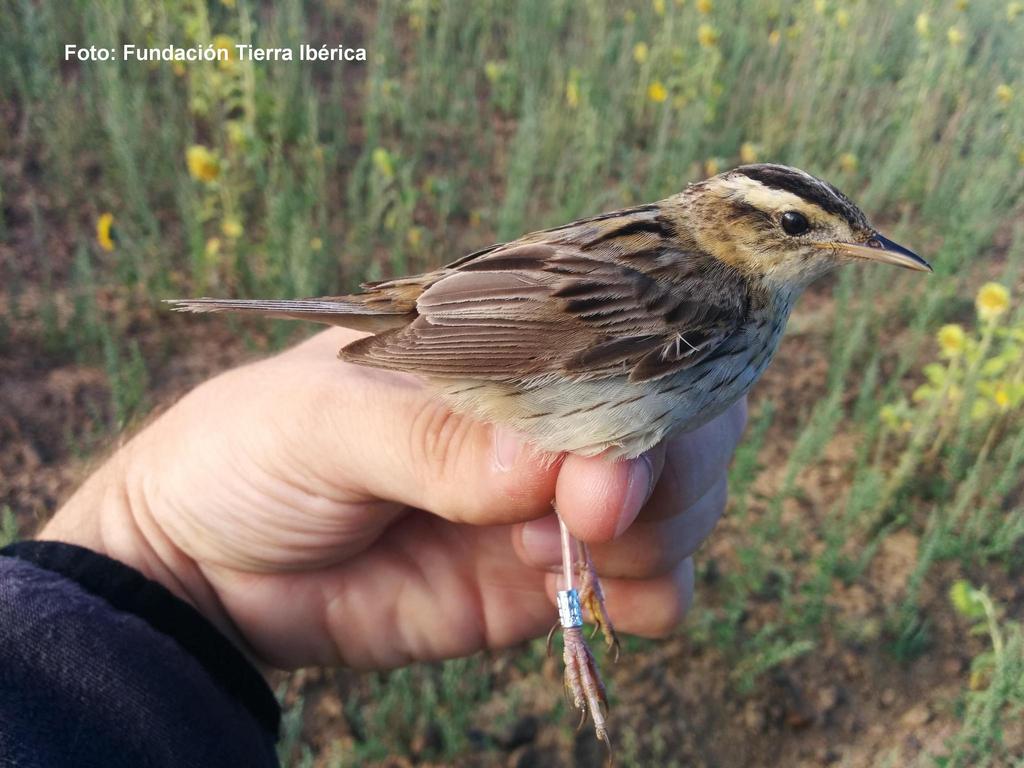
The aquatic warbler (Acrocephalus paludicola) is an Old World warbler in the genus Acrocephalus. It breeds in temperate eastern Europe and western Asia, with an estimated population of 11,000-15,000 pairs. It is migratory, wintering in west Africa. After many years of uncertainty, the wintering grounds of much of the European population were finally discovered in Djoudj National Bird Sanctuary, Senegal, with between 5,000 and 10,000 birds present at this single site. Its south-westerly migration route means that it is regular on passage as far west as Great Britain and Ireland. This small passerine bird is a species found in wet sedge beds with vegetation shorter than 30 cm (12 in). Drainage has meant that this species has declined, and its stronghold is now the Polesie region of eastern Poland and south Belarus, where 70% of the world's population breeds. 3–5 eggs are laid in a nest in low vegetation. This species is highly promiscuous, with most males and females having offspring with multiple partners. This is a medium-sized warbler. The adult has a heavily streaked brown back and pale underparts with variable streaking. The forehead is flattened, and the bill is strong and pointed. There is a prominent whitish supercilium and crown stripe. It can be confused with the juvenile sedge warbler, which may show a crown stripe, but the marking is stronger in this species, which appears paler and spiky-tailed in flight. The sexes are identical, as with most warblers, but young birds are unstreaked on the breast below. Like most warblers, it is insectivorous, but will take other small food items, including berries. The song is a fast, chattering ja-ja-ja punctuated with typically acrocephaline whistles. The genus name Acrocephalus is from Ancient Greek akros, "highest", and kephale, "head". It is possible that Naumann and Naumann thought akros meant "sharp-pointed". The specific paludicola is Latin, from paludis, "swamp", and colere, "to inhabit".
Gallery
Ajouter des photos
Partagez vos photos de cette espèce (jusqu'à 20 à la fois) : elles sont vérifiées automatiquement, puis publiées.
Répartition
Occurrences observées (données GBIF). Les zones hors aire d'origine peuvent indiquer une présence introduite ou invasive.
Sources et crédits
Informations provenant de plusieurs sources vérifiées. Dernière mise à jour : .
Crédits photos (8)
- Photo : Fundación Tierra Ibérica (@tierraiberica) · CC BY-NC 4.0 · via iNaturalist
- Photo : Daniel Raposo (@draposo79) · CC BY-NC 4.0 · via iNaturalist
- Photo : Mikołaj (@mikolaj-) · CC BY-NC 4.0 · via iNaturalist
- Photo : Kateryna Kashpurenko (@dekate) · CC BY-NC 4.0 · via iNaturalist
- Photo : Tomas Pocius (@tomasp) · CC0 (domaine public) · via iNaturalist
- Photo : Jarosław Krogulec (@krogulec) · CC BY-NC 4.0 · via iNaturalist
- Photo : Yury Kvach (@kukarzinio) · CC BY-NC 4.0 · via iNaturalist
- Photo : Miguel Berkemeier (@miguelberkemeier) · CC BY-NC 4.0 · via iNaturalist
Mentions de licence
Texte disponible sous licence CC BY-SA 4.0. Il adapte notamment Wikipedia (CC BY-SA) : Aquatic warbler (Wikipédia, auteurs dans l’historique de l’article).
- Taxonomie : GBIF Backbone Taxonomy (CC BY 4.0)
- Carte : occurrences GBIF, fond © contributeurs OpenStreetMap (ODbL)
- Statut de conservation : Liste rouge de l'UICN, via Wikidata (CC0)
Détail : Sources et licences.
Discussion (0)
Aucun message pour l’instant. Lancez la discussion sur cette fiche (sources, précisions, débats éditoriaux).
Connectez-vous pour participer à la discussion.