
Zino's Petrel
Pterodroma madeira
Zino's petrel (Pterodroma madeira) or the freira, is a species of small seabird in the gadfly petrel genus, endemic to the island of Madeira.
- Kingdom
- Animalia
- Phylum
- Chordata
- Class
- Aves
- Order
- Procellariiformes
- Family
- Procellariidae
- Genus
- Pterodroma
- Species
- Pterodroma madeira
Description
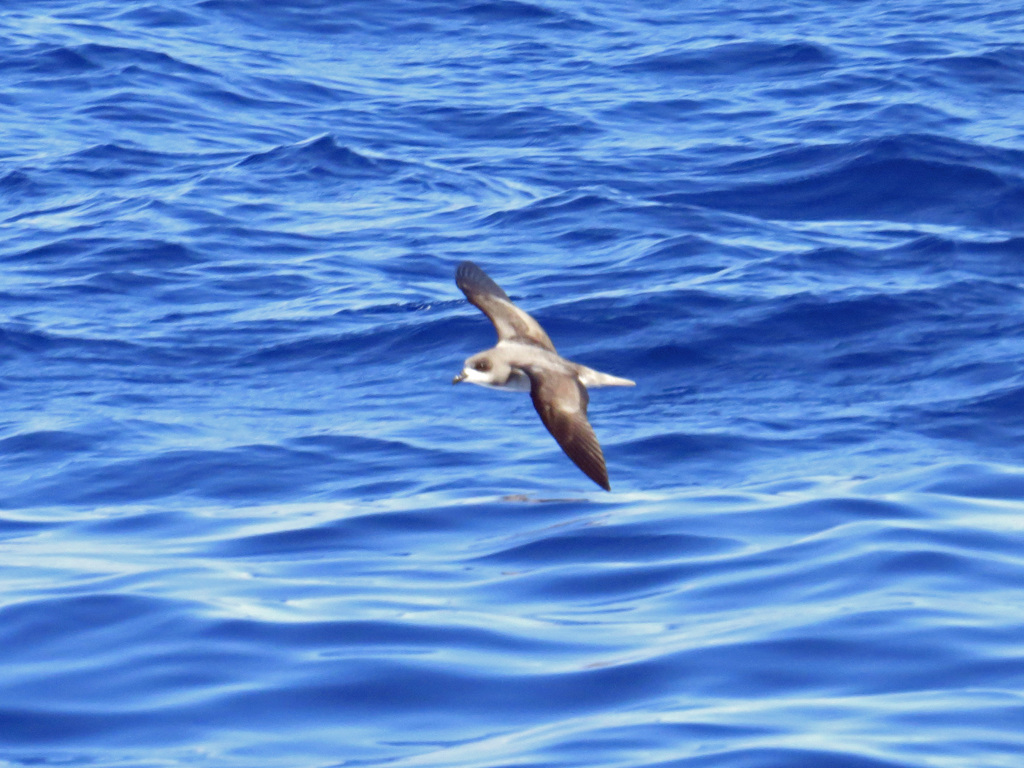
Zino's petrel (Pterodroma madeira) or the freira, is a species of small seabird in the gadfly petrel genus, endemic to the island of Madeira. This long-winged petrel has a grey back and wings, with a dark "W" marking across the wings, and a grey upper tail. The undersides of the wings are blackish apart from a triangle of white at the front edge near the body, and the belly is white with grey flanks. It is very similar in appearance to the slightly larger Fea's petrel, and separating these two Macaronesian species at sea is very challenging. It was formerly considered to be a subspecies of the soft-plumaged petrel, P. mollis, but they are not closely related, and Zino's was raised to the status of a species because of differences in morphology, calls, breeding behaviour and mitochondrial DNA. It is one of Europe's most endangered seabirds, with breeding areas restricted to a few ledges high in the central mountains of Madeira. Zino's petrel nests in burrows which are visited only at night, when they give their haunting calls. The single white egg is incubated by both adults, one sitting during the day while the other feeds on fish and squid at sea. Eggs, chicks and adults have been subject to predation by introduced cats and rats, and in the past have been taken for food by local shepherds. Predator control, and other measures such as the removal of grazing animals that trample the burrows, have enabled the population to recover to 65–80 breeding pairs; the species remains listed as endangered on the IUCN Red List. However, conservation efforts had a major setback in August 2010 when fires killed three adults and 65 percent of the chicks. The population eventually recovered and was stable at 160 individuals by 2018.
Gallery
Ajouter des photos
Partagez vos photos de cette espèce (jusqu'à 20 à la fois) : elles sont vérifiées automatiquement, puis publiées.
Répartition
Occurrences observées (données GBIF). Les zones hors aire d'origine peuvent indiquer une présence introduite ou invasive.
Sources et crédits
Informations provenant de plusieurs sources vérifiées. Dernière mise à jour : .
Crédits photos (8)
- Photo : Simon Bradfield (@scompeti) · CC BY-NC 4.0 · via iNaturalist
- Photo : Martim Melim (@monoks) · CC BY-NC 4.0 · via iNaturalist
- Photo : Christoph Moning (@christoph_moning) · CC BY 4.0 · via iNaturalist
- Photo : Rob Felix (@rob_felix) · CC BY 4.0 · via iNaturalist
- Photo : Stephen John Davies (@stephen220) · CC BY-NC 4.0 · via iNaturalist
- Photo : David Garrigues (@davgarrigues) · CC BY-NC 4.0 · via iNaturalist
- Photo : John Sterling (@jsterling60) · CC BY-NC 4.0 · via iNaturalist
- Photo : Miguel Berkemeier (@miguelberkemeier) · CC BY-NC 4.0 · via iNaturalist
Mentions de licence
Texte disponible sous licence CC BY-SA 4.0. Il adapte notamment Wikipedia (CC BY-SA) : Zino's petrel (Wikipédia, auteurs dans l’historique de l’article).
- Taxonomie : GBIF Backbone Taxonomy (CC BY 4.0)
- Carte : occurrences GBIF, fond © contributeurs OpenStreetMap (ODbL)
- Statut de conservation : Liste rouge de l'UICN, via Wikidata (CC0)
Détail : Sources et licences.
Discussion (0)
Aucun message pour l’instant. Lancez la discussion sur cette fiche (sources, précisions, débats éditoriaux).
Connectez-vous pour participer à la discussion.