
Least Tern
Sternula antillarum
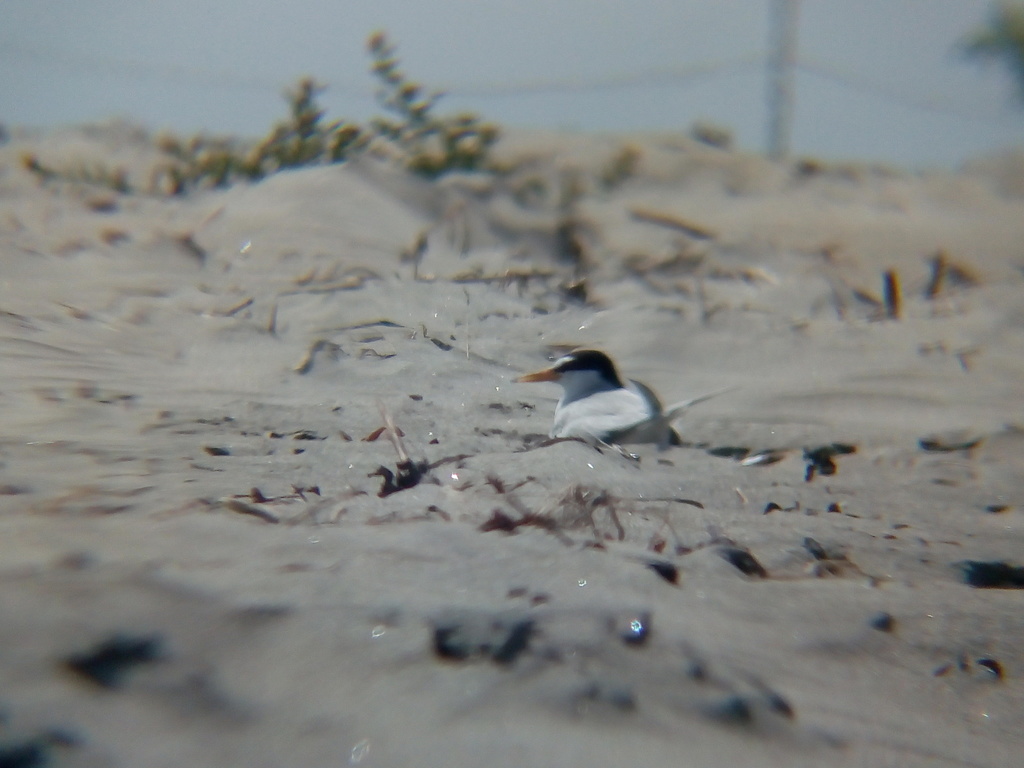
The least tern (Sternula antillarum) is a species of tern that breeds in North America and locally in northern South America.
- Kingdom
- Animalia
- Phylum
- Chordata
- Class
- Aves
- Order
- Charadriiformes
- Family
- Laridae
- Genus
- Sternula
- Species
- Sternula antillarum
Description
The least tern (Sternula antillarum) is a species of tern that breeds in North America and locally in northern South America. It is closely related to, and was formerly often considered conspecific with, the little tern of the Old World. Other close relatives include the yellow-billed tern and Peruvian tern, both from South America. It is a small tern, 22–24 cm (8.7–9.4 in) long, with a wingspan of 50 cm (20 in), and weighing 39–52 g (1.4–1.8 oz). The upper parts are a fairly uniform pale gray, and the underparts white. The head is white, with a black cap and line through the eye to the base of the bill, and a small white forehead patch above the bill; in winter, the white forehead is more extensive, with a smaller and less sharply defined black cap. The bill is yellow with a small black tip in summer, all blackish in winter. The legs are yellowish. The wings are mostly pale gray, but with conspicuous black markings on their outermost primaries. It flies over water with fast, jerky wingbeats and a distinctive hunchback appearance, with the bill pointing slightly downward. It is migratory, wintering in Central America, the Caribbean and northern South America. Many spend their whole first year in their wintering area. It has occurred as a vagrant to Europe, with one record in Great Britain and one in Ireland. It differs from the little tern mainly in that its rump and tail are gray, not white, and it has a different, more squeaking call; from the yellow-billed tern in being paler gray above and having a black tip to the bill; and from the Peruvian tern in being paler gray above and white (not pale gray) below and having a shorter black tip to the bill.
Gallery
Ajouter des photos
Partagez vos photos de cette espèce (jusqu'à 20 à la fois) : elles sont vérifiées automatiquement, puis publiées.
Répartition
Occurrences observées (données GBIF). Les zones hors aire d'origine peuvent indiquer une présence introduite ou invasive.
Sources et crédits
Informations provenant de plusieurs sources vérifiées. Dernière mise à jour : .
Crédits photos (8)
- Photo : Mariana Novelo B. (@mariananb) · CC BY-NC 4.0 · via iNaturalist
- Photo : Abby Darrah (@adarrah) · CC BY 4.0 · via iNaturalist
- Photo : @alexpacheco · CC BY-NC 4.0 · via iNaturalist
- Photo : David Tan (@g33k5p34k) · CC BY-NC 4.0 · via iNaturalist
- Photo : Bhalpriya (@bhalpriya) · CC BY-NC 4.0 · via iNaturalist
- Photo : Tracy Drake (@tedrake) · CC BY-NC 4.0 · via iNaturalist
- Photo : Michael Weisensee (@mikeweisensee) · CC BY-NC 4.0 · via iNaturalist
- Photo : @nfagan22 · CC BY-NC 4.0 · via iNaturalist
Mentions de licence
Texte disponible sous licence CC BY-SA 4.0. Il adapte notamment Wikipedia (CC BY-SA) : Least tern (Wikipédia, auteurs dans l’historique de l’article).
- Taxonomie : GBIF Backbone Taxonomy (CC BY 4.0)
- Carte : occurrences GBIF, fond © contributeurs OpenStreetMap (ODbL)
- Statut de conservation : Liste rouge de l'UICN, via Wikidata (CC0)
Détail : Sources et licences.
Discussion (0)
Aucun message pour l’instant. Lancez la discussion sur cette fiche (sources, précisions, débats éditoriaux).
Connectez-vous pour participer à la discussion.