
Razorbill
Alca torda
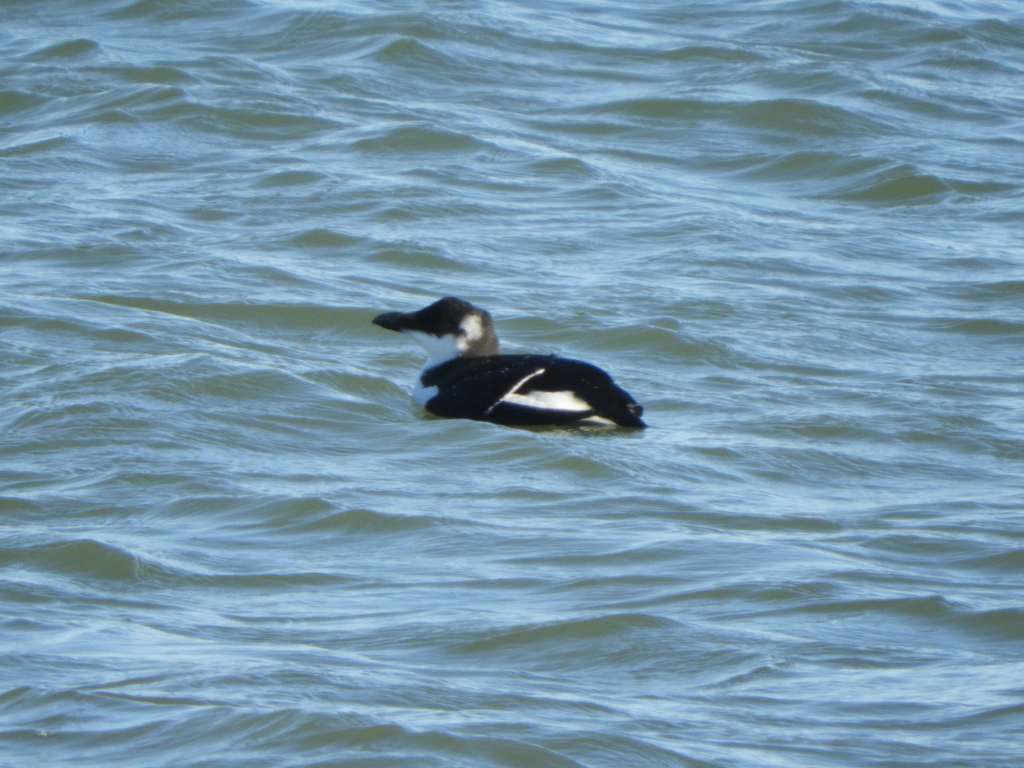
The razorbill (Alca torda) is a North Atlantic colonial seabird and the only extant member of the genus Alca of the family Alcidae, the auks.
- Kingdom
- Animalia
- Phylum
- Chordata
- Class
- Aves
- Order
- Charadriiformes
- Family
- Alcidae
- Genus
- Alca
- Species
- Alca torda
Description
The razorbill (Alca torda) is a North Atlantic colonial seabird and the only extant member of the genus Alca of the family Alcidae, the auks. It is the closest living relative of the extinct great auk (Pinguinus impennis). Historically, it has also been known as "auk", "razor-billed auk" and "lesser auk". Razorbills are primarily black with a white underside. The male and female are identical in plumage; however, males are generally larger than females. This agile bird, which is capable of both flight and diving, has a predominantly aquatic lifestyle and only comes to land in order to breed. It is monogamous, choosing one partner for life. Females lay one egg per year. Razorbills nest along coastal cliffs in enclosed or slightly exposed crevices. The parents spend equal amounts of time incubating, and once the chick has hatched, they take turns foraging for their young. Presently, this species faces major threats, including the destruction of breeding sites, oil spills, and deterioration of food quality. As a result, razorbills have on occasion been seen outside of their normal range as they search for alternative food sources. The IUCN records the population of the species as fluctuating. It decreased from 2015 to 2021, and appears to be increasing or stable at the present. It is estimated that the current global razorbill population lies between 838,000 and 1,600,000 mature individuals. In 1918, the razorbill was protected in the United States by the Migratory Bird Treaty Act.
Gallery
Ajouter des photos
Partagez vos photos de cette espèce (jusqu'à 20 à la fois) : elles sont vérifiées automatiquement, puis publiées.
Répartition
Occurrences observées (données GBIF). Les zones hors aire d'origine peuvent indiquer une présence introduite ou invasive.
Sources et crédits
Informations provenant de plusieurs sources vérifiées. Dernière mise à jour : .
Crédits photos (8)
- Photo : Brian Vigorito (@bmvig) · CC BY-NC 4.0 · via iNaturalist
- Photo : @theboylard · CC BY-NC 4.0 · via iNaturalist
- Photo : Roger Debenham (@rdebenham) · CC BY-NC 4.0 · via iNaturalist
- Photo : Justin Philbois (@jujuwild) · CC0 (domaine public) · via iNaturalist
- Photo : Ryan McLeod (@yveltal) · CC BY-NC 4.0 · via iNaturalist
- Photo : @jcnn · CC BY-NC 4.0 · via iNaturalist
- Photo : Steven McGrath (@stevenmcgrath) · CC BY-NC 4.0 · via iNaturalist
- Photo : Liam Brennan (@liambren) · CC BY-NC 4.0 · via iNaturalist
Mentions de licence
Texte disponible sous licence CC BY-SA 4.0. Il adapte notamment Wikipedia (CC BY-SA) : Razorbill (Wikipédia, auteurs dans l’historique de l’article).
- Taxonomie : GBIF Backbone Taxonomy (CC BY 4.0)
- Carte : occurrences GBIF, fond © contributeurs OpenStreetMap (ODbL)
- Statut de conservation : Liste rouge de l'UICN, via Wikidata (CC0)
Détail : Sources et licences.
Discussion (0)
Aucun message pour l’instant. Lancez la discussion sur cette fiche (sources, précisions, débats éditoriaux).
Connectez-vous pour participer à la discussion.