
Philippine Scops Owl
Otus megalotis
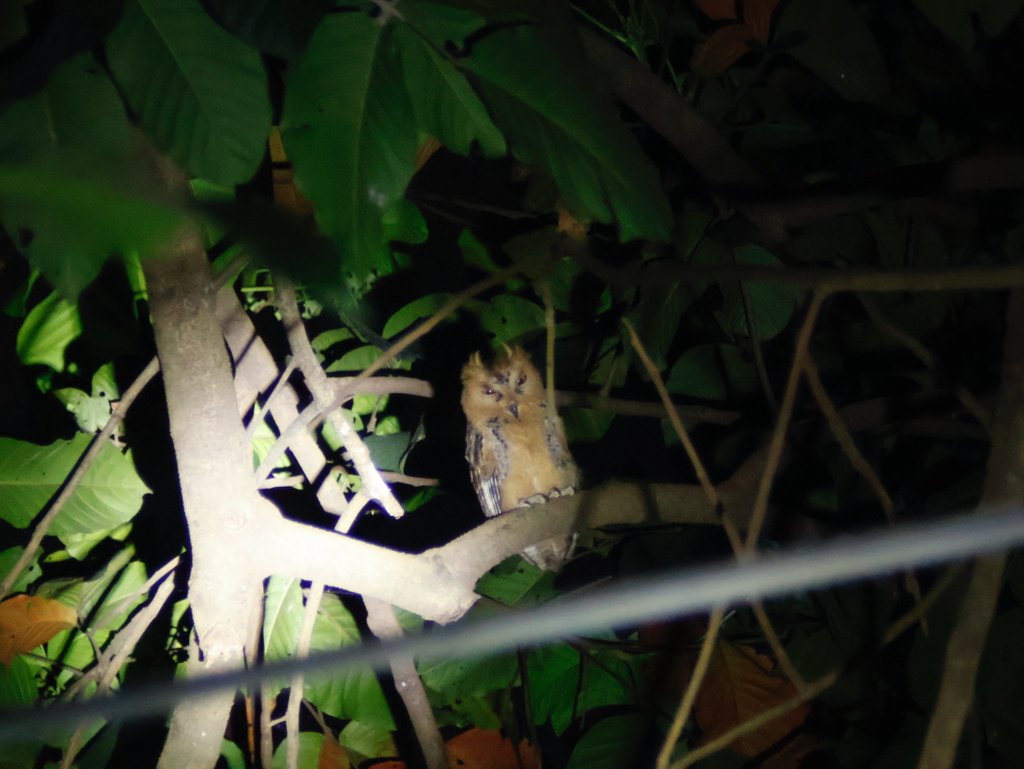
The Philippine scops owl (Otus megalotis), also Luzon lowland scops owl is a common owl, endemic to the Philippines, belonging to the family of the typical owls Strigidae.
- Kingdom
- Animalia
- Phylum
- Chordata
- Class
- Aves
- Order
- Strigiformes
- Family
- Strigidae
- Genus
- Otus
- Species
- Otus megalotis
Description
The Philippine scops owl (Otus megalotis), also Luzon lowland scops owl is a common owl, endemic to the Philippines, belonging to the family of the typical owls Strigidae. Other common names include "Otus Whitehead", "Whitehead scops owl" and "Luzon lowland scops owl". Everett's scops owl (O. everetti) and Negros scops owls (O. nigrorum) were formerly considered conspecific but are now classified as separate species. Distinguishing features of these birds include their large upright ears from which they get their specific name megalotis, Ancient Greek for "large ears". Philippine scops owls are relatively small, sedentary birds that are naturally found in the forest understory. There are three subspecies which show variations in morphology and are distributed among different islands of the Philippine Archipelago. They are a monogamous species that offer parental care and construct their nest in tree cavities. These owls are ferocious nocturnal carnivores that feed on insects and small mammals. The IUCN Red List considers this species as Least Concern but they may be vulnerable to deforestation and fragmentation.
Gallery
Ajouter des photos
Partagez vos photos de cette espèce (jusqu'à 20 à la fois) : elles sont vérifiées automatiquement, puis publiées.
Répartition
Occurrences observées (données GBIF). Les zones hors aire d'origine peuvent indiquer une présence introduite ou invasive.
Sources et crédits
Informations provenant de plusieurs sources vérifiées. Dernière mise à jour : .
Crédits photos (8)
- Photo : Alf Capili (@alf44207) · CC BY-NC 4.0 · via iNaturalist
- Photo : Pauline Carmel Joy Eje (@pcjce_07) · CC BY 4.0 · via iNaturalist
- Photo : Kristian Yara (@ianoh) · CC BY-NC 4.0 · via iNaturalist
- Photo : Marc Thibault (@marcthibault) · CC BY-NC 4.0 · via iNaturalist
- Photo : @blackdogto · CC BY-NC 4.0 · via iNaturalist
- Photo : @astronorm · CC BY-NC 4.0 · via iNaturalist
- Photo : Wilhelm Joshua Tan (@wilhelmtan) · CC BY-NC 4.0 · via iNaturalist
- Photo : @hokoonwong · CC BY-NC 4.0 · via iNaturalist
Mentions de licence
Texte disponible sous licence CC BY-SA 4.0. Il adapte notamment Wikipedia (CC BY-SA) : Philippine scops owl (Wikipédia, auteurs dans l’historique de l’article).
- Taxonomie : GBIF Backbone Taxonomy (CC BY 4.0)
- Carte : occurrences GBIF, fond © contributeurs OpenStreetMap (ODbL)
- Statut de conservation : Liste rouge de l'UICN, via Wikidata (CC0)
Détail : Sources et licences.
Discussion (0)
Aucun message pour l’instant. Lancez la discussion sur cette fiche (sources, précisions, débats éditoriaux).
Connectez-vous pour participer à la discussion.