
Dalmatian Pelican
Pelecanus crispus
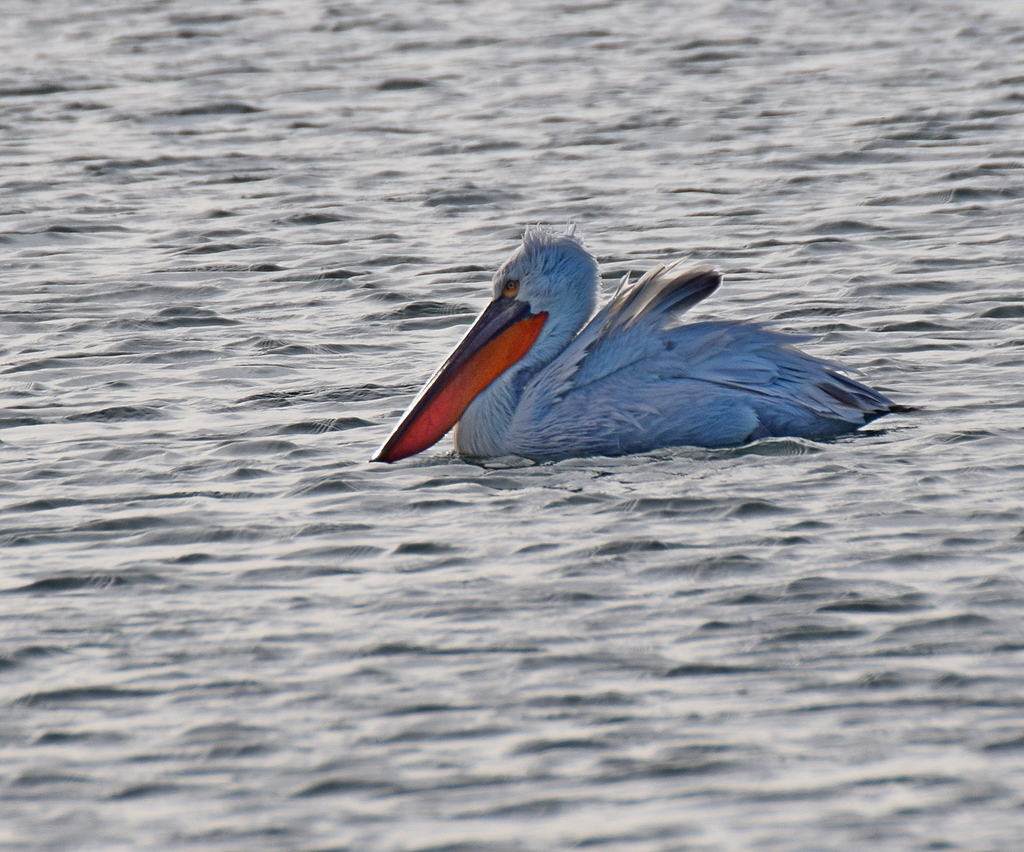
The Dalmatian pelican (Pelecanus crispus), also known as the curly-headed pelican, is the largest member of the pelican family and among the heaviest flying birds in the world.
- Kingdom
- Animalia
- Phylum
- Chordata
- Class
- Aves
- Order
- Pelecaniformes
- Family
- Pelecanidae
- Genus
- Pelecanus
- Species
- Pelecanus crispus
Description
The Dalmatian pelican (Pelecanus crispus), also known as the curly-headed pelican, is the largest member of the pelican family and among the heaviest flying birds in the world. With a wingspan typically ranging between 2.7 and 3.2 metres (8 ft 10 in and 10 ft 6 in), it ranks among the largest soaring birds. These pelicans are known for their graceful flight and often travel in synchronised flocks. With a range spanning across much of Central Eurasia, from the eastern Mediterranean in the west to the Taiwan Strait in the east, and from the Persian Gulf in the south to Siberia in the north, it is a short-to-medium-distance migrant between breeding and overwintering areas. As with other pelicans, its diet is mainly fish, and the males are larger than the females. Its curly nape feathers, grey legs and silvery-white plumage are distinguishing features, and the wings appear solid grey in flight. The adults acquire a drabber plumage in winter, however, making them look more similar to the great white pelican. Its harsh vocalizations become more pronounced during the mating season. It breeds across the Palearctic from southeastern Europe to Russia, India and China in swamps and shallow lakes. It usually returns to traditional breeding sites, where it is less social than other pelican species. Its nests are crude heaps of vegetation, which are placed on islands or dense mats of vegetation. The species' numbers dramatically declined during the 20th century, partly due to land use, disturbance and poaching activities. The core population survives in Russia, but in its Mongolian range, it is critically endangered. Removal of power lines to prevent bird strike or electrocution and constructing nesting platforms or rafts have reversed declines locally.
Gallery
Ajouter des photos
Partagez vos photos de cette espèce (jusqu'à 20 à la fois) : elles sont vérifiées automatiquement, puis publiées.
Répartition
Occurrences observées (données GBIF). Les zones hors aire d'origine peuvent indiquer une présence introduite ou invasive.
Sources et crédits
Informations provenant de plusieurs sources vérifiées. Dernière mise à jour : .
Crédits photos (8)
- Photo : Kostas Zontanos (@kostaszontanos) · CC BY 4.0 · via iNaturalist
- Photo : Παναγιώτης Ραφαηλίδης (@raf-pan) · CC BY-NC 4.0 · via iNaturalist
- Photo : @delrito · CC BY-NC 4.0 · via iNaturalist
- Photo : Марина Горбунова-Ëлкина (@marina_gorbunova) · CC BY-NC 4.0 · via iNaturalist
- Photo : Tom Heijnen (@tomheijnen) · CC BY 4.0 · via iNaturalist
- Photo : Filippo Carlà-Uhink (@filippocarl) · CC BY-NC 4.0 · via iNaturalist
- Photo : Сергей Красноперов (@krasnoperovsn) · CC BY-NC 4.0 · via iNaturalist
- Photo : @nkanunnikov · CC BY-NC 4.0 · via iNaturalist
Mentions de licence
Texte disponible sous licence CC BY-SA 4.0. Il adapte notamment Wikipedia (CC BY-SA) : Dalmatian pelican (Wikipédia, auteurs dans l’historique de l’article).
- Taxonomie : GBIF Backbone Taxonomy (CC BY 4.0)
- Carte : occurrences GBIF, fond © contributeurs OpenStreetMap (ODbL)
- Statut de conservation : Liste rouge de l'UICN, via Wikidata (CC0)
Détail : Sources et licences.
Discussion (0)
Aucun message pour l’instant. Lancez la discussion sur cette fiche (sources, précisions, débats éditoriaux).
Connectez-vous pour participer à la discussion.