
Indian Peafowl
Pavo cristatus
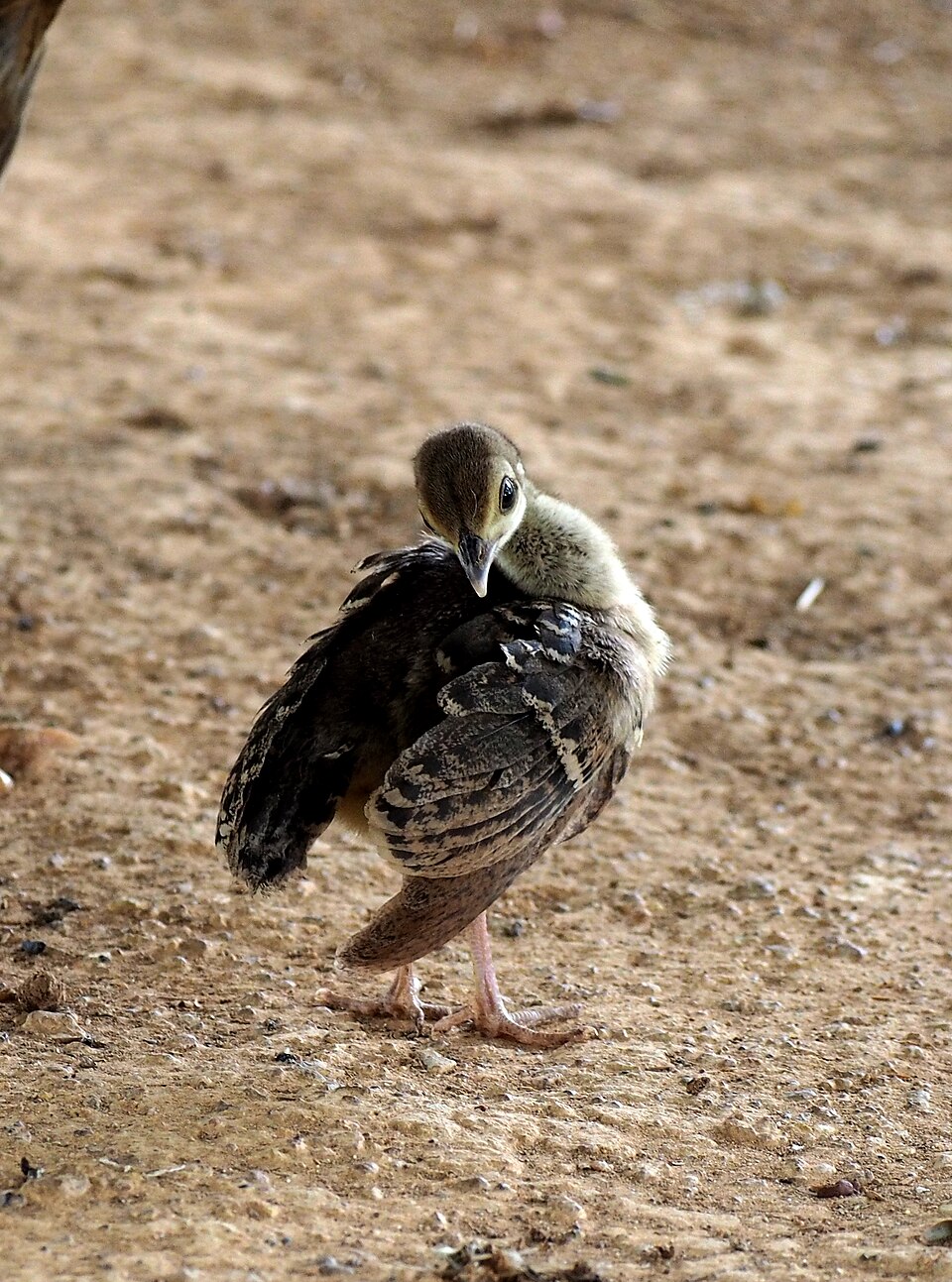
The Indian peafowl (Pavo cristatus), also known as the common peafowl, or blue peafowl, is a species of peafowl native to the Indian subcontinent.
- Kingdom
- Animalia
- Phylum
- Chordata
- Class
- Aves
- Order
- Galliformes
- Family
- Phasianidae
- Genus
- Pavo
- Species
- Pavo cristatus
Description
The Indian peafowl (Pavo cristatus), also known as the common peafowl, or blue peafowl, is a species of peafowl native to the Indian subcontinent. While it originated in the Indian subcontinent, it has since been introduced to many other parts of the world. Male peafowl are referred to as peacocks, and female peafowl are referred to as peahens, although both sexes are often referred to colloquially as a "peacock". The Indian peafowl displays a marked form of sexual dimorphism. The brightly coloured male has a blue coloured head with a fan-shaped crest and is best known for his long train. The train is made up of elongated upper-tail covert feathers with colourful eyespots. These stiff feathers are raised into a fan and quivered in a display during courtship. The peahen is predominantly brown in colour, with a white face and iridescent green lower neck, and lacks the elaborate train. There are several colour mutations of the Indian peafowl including the leucistic white peafowl. Despite the length and size of the covert feathers, the peacock is still capable of flight. The peafowl lives mainly on the ground in open forests or on cultivable lands where it forages for berries and grains, and also preys on snakes, lizards and small rodents. It makes loud calls, which makes it easier to detect, and are often used to indicate the presence of a predator in the forest areas. It forages on the ground in small groups and usually escapes on foot through undergrowth and avoids flying, though it flies into tall trees to roost. The function of the Indian peacock's elaborate train has been debated for more than a century. In the 19th century, Charles Darwin found it a puzzle, hard to explain through ordinary natural selection. His later explanation, sexual selection, is widely but not universally accepted. In the 20th century, Amotz Zahavi argued that the train was a handicap, and that males were honestly signalling their fitness in proportion to the splendour of their trains. Despite extensive study, opinions remain divided on the mechanisms involved. The Indian peafowl is listed as Least Concern on the IUCN Red List. It is the national bird of India and venerated in Hindu and Greek mythology.
Gallery
Ajouter des photos
Partagez vos photos de cette espèce (jusqu'à 20 à la fois) : elles sont vérifiées automatiquement, puis publiées.
Répartition
Occurrences observées (données GBIF). Les zones hors aire d'origine peuvent indiquer une présence introduite ou invasive.
Sources et crédits
Informations provenant de plusieurs sources vérifiées. Dernière mise à jour : .
Crédits photos (6)
- Photo : @rawjeev (Rajeev B) · CC BY-SA 4.0
- Photo : Mark Clarke (@hatwise) · CC BY-NC 4.0 · via iNaturalist
- Photo : Navin Sasikumar (@navin_sasikumar) · CC BY 4.0 · via iNaturalist
- Photo : Thomas Bitsch (@tombitsch) · CC BY-NC 4.0 · via iNaturalist
- Photo : Steve (@shutterdawg) · CC BY-NC 4.0 · via iNaturalist
- Photo : @kstump13 · CC BY-NC 4.0 · via iNaturalist
Mentions de licence
Texte disponible sous licence CC BY-SA 4.0. Il adapte notamment Wikipedia (CC BY-SA) : Indian peafowl (Wikipédia, auteurs dans l’historique de l’article).
- Taxonomie : GBIF Backbone Taxonomy (CC BY 4.0)
- Carte : occurrences GBIF, fond © contributeurs OpenStreetMap (ODbL)
- Statut de conservation : Liste rouge de l'UICN, via Wikidata (CC0)
Détail : Sources et licences.
Discussion (0)
Aucun message pour l’instant. Lancez la discussion sur cette fiche (sources, précisions, débats éditoriaux).
Connectez-vous pour participer à la discussion.